Why a State Park Gate Asks for a Helmet
A Missouri state park gate may ask about your helmet even if you believe state law does not require one for you. The reason is that a park’s riding rules can be stricter than the general rules for roads, and access may depend on meeting those park-specific conditions. Knowing which rules apply helps you avoid a wasted trip and a last-minute scramble for gear.
Why the gate checks for a helmet
A gate check is about the rules for riding inside the park, not just the rules that apply on public roads. Missouri’s statewide helmet requirements and a state park’s operating conditions are separate questions. A rider who is not required to wear a helmet in one setting may still need one to ride on park trails.
That distinction matters because riders often treat a helmet as an age-based requirement only. The park may instead require helmets for riders using its off-road vehicle area, including adults. Before you go, review Helmets at a Missouri State Park and the rules for the specific riding area you plan to visit.
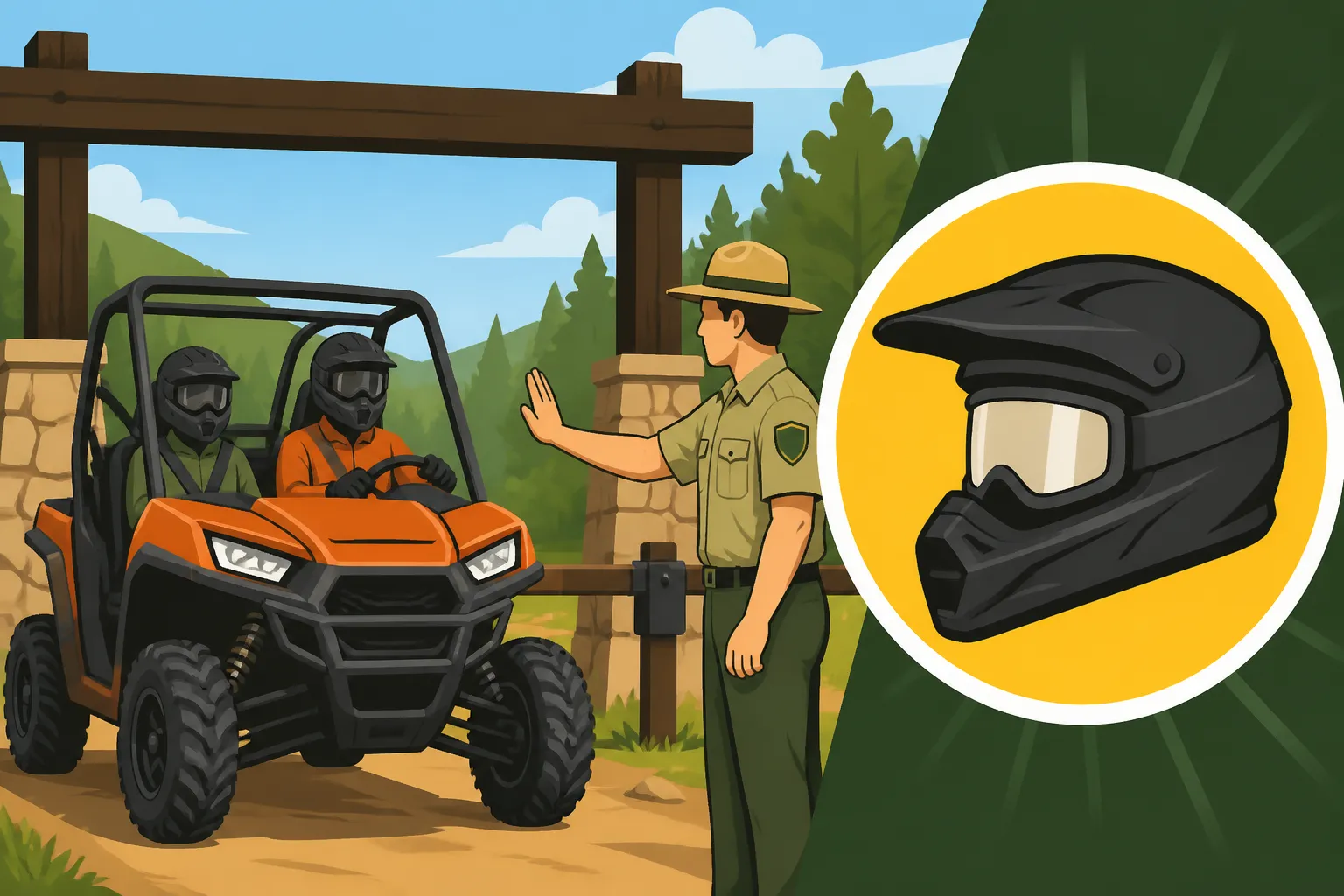
The gate check also gives staff a chance to catch an obvious equipment issue before a machine enters a trail system. A helmet that is missing, visibly damaged, or not secured properly may not meet the park’s requirements. Staff can ask riders to correct the problem before riding, or deny access if they cannot comply.
The question may apply to more than the operator. If several people are traveling together, check the rule for every person who will ride. Do not assume that a passenger is exempt because they are not driving. And do not assume that a helmet rule is the same for every machine type or every place in the park: check the requirements that apply to your ATV, UTV, or other off-road vehicle.
A useful way to think about it is:
| Where you are riding | What to check |
|---|---|
| A public road | State and local road-use rules, including any age-based helmet requirement |
| A Missouri state park ORV area | The park’s current riding and access requirements |
| A different public riding area | That property’s own rules, permit conditions, and equipment requirements |
| Private land | The landowner’s rules, along with any laws that still apply |
This is also why a gate asking about a helmet is not necessarily making a judgment about whether you are old enough or experienced enough to ride. It is checking whether you are prepared to follow the conditions for that property.
Park rules are not the same as road rules
Missouri has different rules for different settings and vehicle categories. Rules for riding on a road do not automatically carry over to state park trails, and a park’s rule does not automatically apply everywhere else. That can make helmet questions confusing, especially for adults who are used to riding elsewhere without one.
The title Why Missouri Adults Skip the Helmet addresses the separate issue of statewide age-based requirements. It should not be read as a guarantee that adults can ride without a helmet on every kind of property. A park can set access and operating conditions for its trail area, and those conditions may be more protective than the baseline rules a rider has encountered on roads.
The same separation applies to permits. A registration decal or other state paperwork does not, by itself, show that you have met every requirement for a particular riding area. For an overview of how the systems differ, see Missouri ORV Permits Explained. In particular, Does Your Decal Cover the Park Trail Permit? explains why a machine’s registration and its permission to use a trail can be separate matters.
That distinction is important for visitors, too. An out-of-state registration or decal may help establish that a machine is registered where it belongs, but it does not necessarily replace a Missouri park permit or satisfy the park’s equipment rules. Check Does Missouri Honor Out-of-State Registration? for the registration question, then confirm the park’s access requirements separately.
Helmets are one part of a broader gate check. A park may have other requirements related to flags, machine dimensions, sound, passengers, permits, or rider supervision. Passing one check does not mean every other requirement is covered. For example, Turned Away at a Park Gate for No Flag and How Park Flag Rules Differ From Highway Rules explain why equipment rules can change between locations.
Why the difference matters for adults and young riders
Adults sometimes assume that a rule they have followed on a road or private property applies at a park. Young riders’ families may make the opposite assumption: that a helmet rule is the only age-related condition they need to consider. Neither assumption is a safe way to plan.
For children and teenagers, check both the helmet rule and the park’s supervision and access requirements. Missouri Park Access for Riders Under 16 covers the additional questions families should settle before unloading. If a young rider is allowed only in a designated area or needs adult supervision, having a helmet does not remove those conditions.
For everyone in the group, make the plan based on the strictest applicable rule for the place you will ride. If you are uncertain whether a rule is statewide or park-specific, ask the park before traveling rather than relying on what another rider remembers from a different location.
What to bring and check before you reach the gate
The easiest way to avoid a gate delay is to treat the helmet as essential riding gear, even if you are unsure whether the rule applies to you. Bring one for each person who may ride, and check that each helmet fits securely, fastens correctly, and is in usable condition. A helmet in the truck does not help if it is the wrong size or cannot be secured.
Before leaving, use this simple process:
- Identify the riding area. Confirm that the property allows the type of machine you plan to bring and that the trail area is open.
- Check the current park rules. Look for the helmet requirement and any specifications about helmet type or certification. Do not assume that a rule from another park applies.
- Count riders, not just machines. Bring appropriate helmets for the operator and anyone else who may ride, subject to the park’s passenger rules.
- Check the rest of your equipment. Review requirements for flags, sound, machine width, and other gear. A helmet does not substitute for another required item.
- Confirm permits separately. Find out whether you need a park or trail permit in addition to any registration or decal.
- Keep the gear accessible. Put helmets where they can be checked or worn before you reach the entry point, rather than buried under cargo.
If the park’s published information is unclear, contact the park or the office responsible for that riding area and ask a direct question: “Does every rider on this machine need a helmet here, and are there specific helmet standards?” That wording helps distinguish a general legal question from the access rule that staff will apply at the property.
It is also sensible to check the rules again close to your trip. Trail access, operating conditions, and local instructions can change. If a park has a current notice or signs at the entrance, follow those instructions even if an older checklist or a friend’s recollection says something different.
If you arrive without the right helmet
Do not assume that staff will make an exception because you have driven a long way or because you are an adult. The park may require you to obtain compliant equipment before riding, or it may refuse access until the issue is resolved. Your practical choices may be limited once you are at the entrance, especially if you are far from a store.
If you discover the problem before leaving home, postpone the ride or get suitable helmets for everyone who plans to ride. If you discover it at the gate, ask staff what options are allowed. Do not ride with a borrowed or ill-fitting helmet just to get onto the trail; it may not meet the park’s rule and may not stay in place in a crash.
A helmet also cannot make an otherwise prohibited ride acceptable. If the park bars passengers on a particular machine or restricts a rider to a particular area, follow that restriction. The related topic Why Passengers Are Barred on Park Trails is useful when planning who will ride and how.
The practical takeaway for your trip
The gate asks because helmet use can be an access condition for riding in a Missouri state park, independent of the rules you may know from roads or other property. Treat the park’s helmet requirement as its own rule. Bring suitable helmets for everyone who may ride, check the current requirements before traveling, and confirm permits and other equipment separately.
For a smooth arrival, do not plan around the narrowest interpretation of the law or assume the gate will treat your machine like one at home. Plan for the place you are going. That means checking the specific park’s requirements, making sure every rider can comply, and keeping helmets easy to reach.
If you are visiting from outside Missouri, the same approach applies: verify registration reciprocity, then verify the park’s access conditions. One does not automatically satisfy the other. When in doubt, call ahead and ask about the exact machine and riders in your group. A quick check before the trip is easier than finding out at the gate that your gear or paperwork is incomplete.
Disclaimer
This article is for general informational purposes only and does not constitute professional advice. Laws, prices and regulations vary by location and change over time. Consult a qualified professional for guidance on your specific situation.