Carrying a Spare Can on a Trail
A spare fuel can can turn a long Missouri trail ride into a manageable trip, but carrying gasoline on an ATV or UTV adds fire, spill, and handling risks. The right setup depends on your machine, route, and riding area. Plan fuel needs before leaving, secure the container carefully, and check the land manager’s rules rather than assuming every trail allows the same arrangement.
Check the rules before packing fuel
There is no safe assumption that one fuel rule covers every Missouri riding area. State parks, national forest routes, private parks, and other managed lands can have different requirements. A machine’s registration or trail permit does not automatically settle whether extra fuel may be carried or where it can be stored.
Before loading, identify who manages the land and check its current notices. Read Missouri Rules for Carrying Fuel and review Missouri Rules for Riding Public Land if your route includes public land. For a national forest trip, check Missouri Rules for Riding a National Forest and contact the relevant land manager if the written information does not address portable fuel containers.
Do not rely only on a general map or an old forum post. Restrictions may apply to a specific trailhead, campground, fire-risk period, event, or type of container. A managed area may also have rules about fueling, maintenance, or storing flammable materials. Confirm before departure, especially if you plan to camp or leave a vehicle and trailer at a staging area.
Use this short check before packing:
- Confirm which land manager controls the route and staging area.
- Check for current fuel, fire, and container restrictions.
- Ask whether the rule applies to fuel carried on the machine, stored in a tow vehicle, or both.
- Confirm whether the trailhead or campground has additional requirements.
- Save the relevant contact information in case conditions or access change.
A phone call can resolve an unclear rule faster than arriving with a full can and having to leave it behind. If staff cannot give a definite answer, take the conservative option: carry only what you need, use a proper container, and keep extra fuel in the tow vehicle when that is allowed and practical.
Trail conditions can also change the amount of fuel you need. Soft ground, steep or rough sections, frequent stops, low tire pressure, towing, and detours can all increase consumption. Check Missouri Trail Conditions Before You Ride and Checking a Missouri Trail Notice Before You Load as part of the same trip plan. A route that looks short on a map may take longer than expected, particularly when you need to ride slowly or turn around.
Decide whether a spare can belongs on the machine
The safest spare is the one you do not need to carry. Start with the machine’s usable range, not the advertised range or a best-case estimate. If you have not measured fuel use on a similar ride, leave a larger margin and choose a route with a realistic opportunity to return to your tow vehicle or refuel.
| Fuel plan | Best fit | Main trade-off |
|---|---|---|
| Ride from a full tank without extra fuel | Short, familiar route with a clear return plan | Little backup if conditions or route plans change |
| Store fuel in the tow vehicle | Longer rides with a staging point or planned return | Requires returning to the vehicle; land rules may still apply |
| Carry a small spare on the machine | Route where returning to the vehicle is impractical | Adds weight and exposes the container to vibration, impact, and heat |
| Carry a larger supply on the machine | Only when the machine and route are designed for that load | Greater handling, leak, fire, and securement concerns |
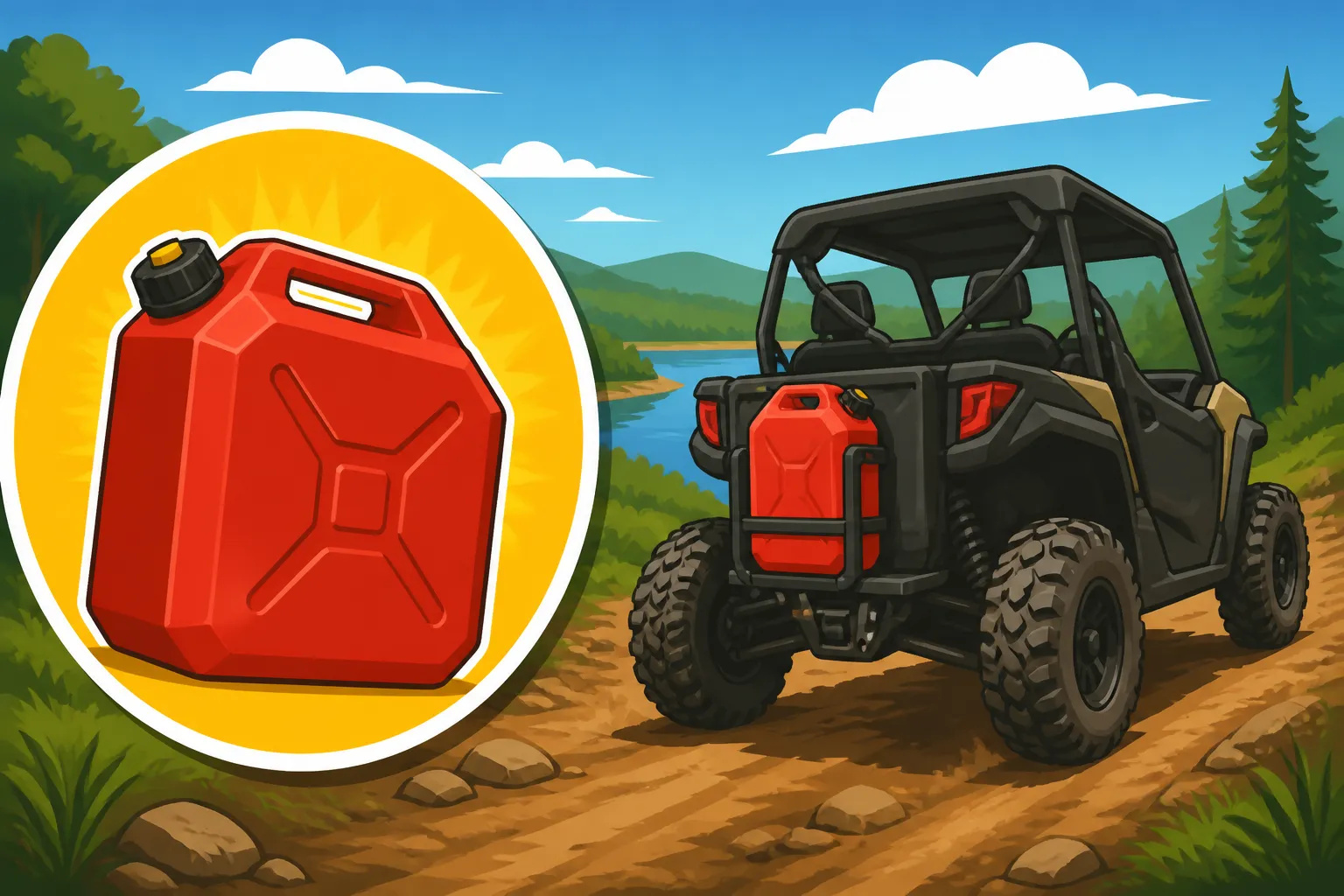
A UTV may have a cargo area that makes a secured container easier to manage than on a quad, but a cargo bed is not automatically a safe fuel locker. Keep gasoline away from passengers, electrical equipment that could spark, and hot parts. A quad has less space and may place the container close to the rider or exposed to a fall. In either case, the manufacturer’s instructions and the riding-area rules come first.
Avoid improvising a mount with loose straps, bungee cords, or a container wedged between gear. The can must stay in place during bumps, hard braking, turns, and a machine’s normal movement. It should not interfere with steering, suspension travel, lights, access to controls, or the rider’s ability to get off quickly. Do not place it where a passenger’s leg, boot, or clothing could snag it.
If a secure, separated mounting position is not available, keep the spare in the tow vehicle rather than tying it to the machine. That may mean changing the route or returning to the trailer at a planned point. It is a less convenient plan, but convenience is not a good reason to carry an unstable container near a hot engine.
When estimating how much fuel to take, consider both the trip and the container’s added weight. More fuel means more load to secure and more weight for the machine to carry. A full can also shift the machine’s balance if it is mounted high or to one side. Carrying a large reserve “just in case” can create a handling problem that a smaller, carefully planned reserve avoids.
If the route depends on refueling in a nearby town, confirm that fuel will actually be available when you need it. Do not assume a store is open, accepts the kind of payment you have, or is close enough to reach safely on the machine. Fuel Between Ozark Towns and Missouri Trails With Fuel Nearby can help you think through route planning, but verify the specific stop before setting out.
Choose and secure a suitable container
Use a container made and labeled for the type of fuel you intend to carry. A household bottle, drink container, or unmarked jug is not an acceptable substitute. The container should have an intact cap and seal, and it should be in good condition with no cracks, dents that affect closure, or signs of leakage. Do not use an old can if you cannot tell what it previously held.
Read the container’s instructions for filling, closure, storage, and handling. Do not fill beyond the stated limit; fuel needs room to expand as temperatures change. Close the cap and vent as directed, and make sure the container remains upright in its secured position. Never assume a cap is leakproof just because it feels tight.
When buying a container, check that it is intended for gasoline and suitable for the way you plan to transport it. If you shop on Amazon or elsewhere, product photos alone are not enough: read the labeling and manufacturer instructions, and make sure the design fits the available mounting space without blocking access or putting the can against a hot component.
Secure the container independently of loose cargo. A can buried under tools or camping gear can be hard to inspect and may get crushed or have its cap knocked loose. It should be visible enough to check for movement or leakage, but positioned so a rider or passenger is not pressed against it. Keep it away from the exhaust, engine, and other hot surfaces, and do not route a strap across a sharp edge that could wear through it.
A few practical checks help catch problems before they become serious:
- Tug the can and its mounting system before the ride. It should not slide, rock, or tip.
- Check the mount again after the first rough section and at stops.
- Look for wetness, fuel odor, a loose cap, or a strap that has shifted.
- Keep a suitable fire extinguisher accessible in the tow vehicle, where you can reach it without unloading the rig.
- Carry absorbent material for a small spill, but do not ride through a spill or wash fuel into a drain, stream, or soil.
Do not carry fuel in a container with an unknown contents history. Do not combine premixed fuel with straight gasoline, or mix fuel types, unless the machine’s manual specifically calls for the mixture. If carrying fuel for a two-stroke machine, label the container clearly so it cannot be mistaken for straight gasoline. Keep it separate from drinking water and food containers.
Fuel should not be transferred while the engine is running or hot. Park in a stable, open location away from dry grass and other combustible material. Shut the machine off, allow hot parts to cool, and keep cigarettes, flames, and sparks away. Pour slowly and avoid spilling fuel on the machine, ground, or your clothing. If fuel spills, stop and deal with the hazard rather than starting the engine or continuing to ride through it.
Make the fuel plan part of the ride plan
A spare can is a backup, not a substitute for planning. Before leaving home, estimate the route distance, likely riding time, and conditions. Then compare that estimate with the machine’s range under similar use. A machine working hard through mud or steep terrain may use much more fuel than it does on an easy, level ride.
Plan where the group will stop and what happens if one machine uses fuel faster than expected. Set a turnaround point that preserves a usable reserve rather than riding until the tank is nearly empty. If the route has no practical way to return to the tow vehicle, reconsider the route, shorten the ride, or confirm an approved way to carry fuel before going.
Share the plan with everyone riding. Make sure the group knows which machine carries the spare, how to reach it, and who is responsible for checking its mount. If one rider separates from the group, the others should not assume that person has access to the reserve. A simple agreement about regrouping and turnaround points can prevent a low-fuel problem from becoming a search or recovery problem.
Check the route’s notices again before unloading. A trail may close after weather damage, fire danger, maintenance, or another change. A closed trail can force a detour that uses more fuel and can also make a previously sensible fuel plan inadequate. Read the trailhead information when you arrive, not just when you are planning at home. Reading the Trailhead Board Before You Unload is a useful reminder to make that last check part of the routine.
If the machine begins to run low, stop early and make a clear decision. Do not continue deeper into an unfamiliar area hoping the fuel gauge is wrong. Check the map, consider the return distance, and use the group’s agreed plan. If you must transfer fuel, choose a stable place away from other riders and ignition sources, and follow the container and machine instructions. Do not transfer fuel beside a hot engine or where a spill could run toward a creek or drain.
If a container leaks or is damaged, do not keep carrying it on the machine. Move people away from the spill and any possible ignition source. Follow the riding area’s directions for reporting a spill, and do not conceal it or attempt to rinse it away. A small leak can become a serious hazard when fuel reaches hot components, dry vegetation, or water.
After the ride, inspect the container and its mount before the next trip. Replace damaged straps or hardware, clean the container’s exterior if fuel has spilled on it, and store fuel only in the location and manner permitted by the container instructions and local rules. Keep it away from living spaces and ignition sources. If the trip exposed a weak point in the setup, fix it before carrying fuel again rather than relying on a tighter knot or another temporary adjustment.
The practical rule is straightforward: check the land rules, carry only a sensible reserve, and secure it where heat, impact, and movement are controlled. If your machine has no safe place for a can, plan to refuel from the tow vehicle or choose a route that does not require carrying extra gasoline.
Disclaimer
This article is for general informational purposes only and does not constitute professional advice. Laws, prices and regulations vary by location and change over time. Consult a qualified professional for guidance on your specific situation.