Why Passengers Are Barred on Park Trails
Missouri park trails can look like a good place to ride double, especially if a child or friend is along for the day. But an ATV’s passenger rule is not the same as a UTV’s, and buying a trail permit does not make an extra rider legal. Here’s why passengers are barred on park-trail ATVs, what the distinction means, and how to plan a compliant ride.
The passenger rule applies to the machine, not just the trail
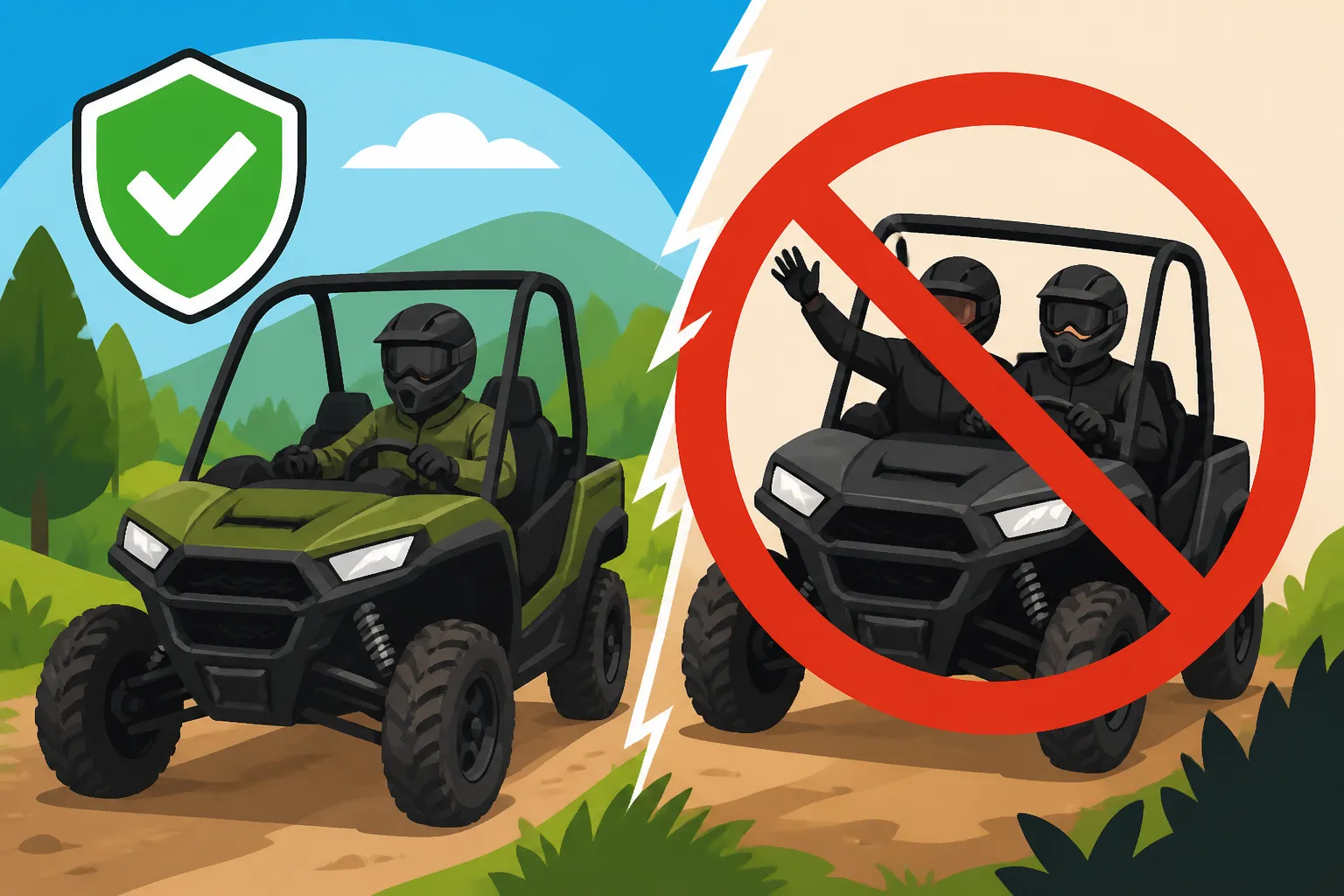
On Missouri state park off-road vehicle trails, don’t carry a passenger on an ATV. The rule is a practical limit on how the vehicle may be used in that setting, not a judgment about whether a particular rider feels comfortable riding along. A second seat, a cargo rack, or a passenger who is willing to hold on does not automatically make an ATV suitable for two people under the park rules.
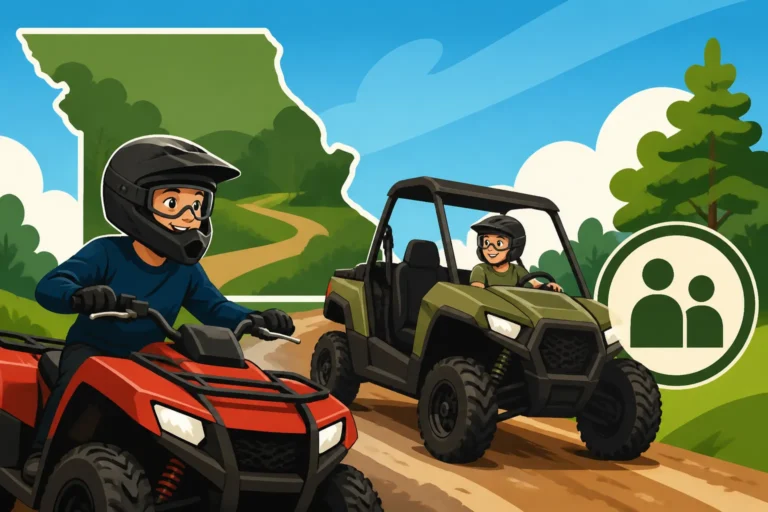
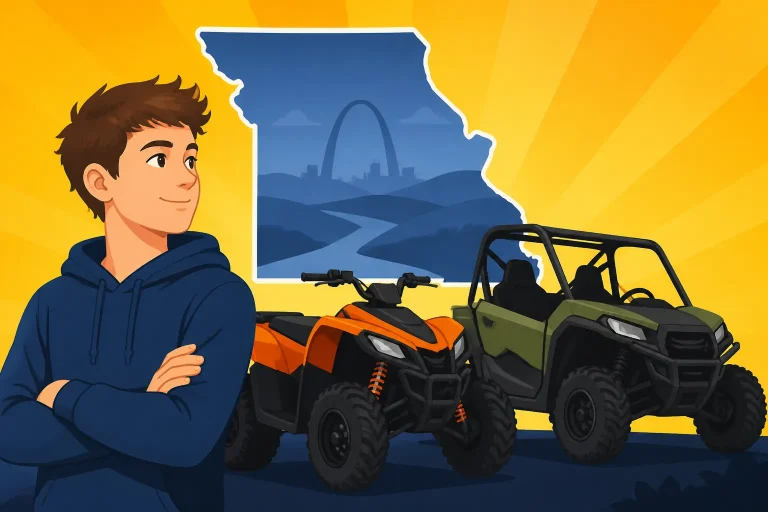
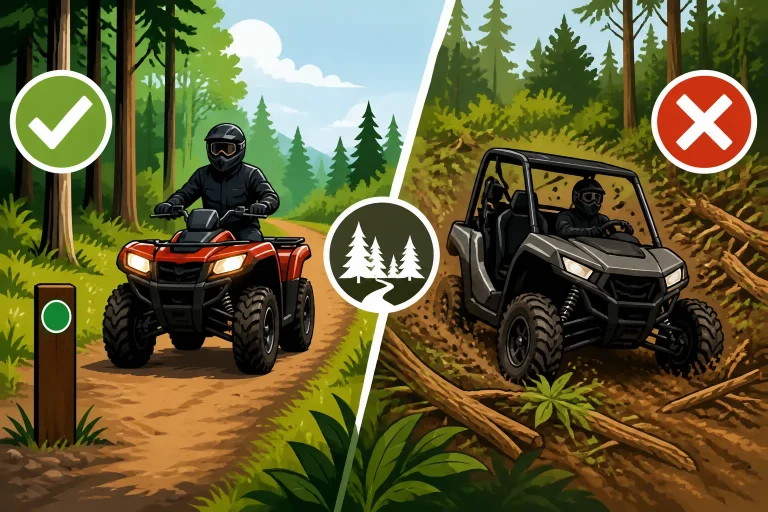
That distinction matters because people often use “ATV” as a catch-all term for several kinds of off-road vehicles. A quad with handlebars and a straddle seat is different from a side-by-side with a steering wheel, bench or bucket seats, and restraint equipment. A two-seat-looking ATV does not necessarily fall into the same category as a UTV.
If you’re unsure how a park classifies your machine, check before hauling it to the trail. The rules can depend on vehicle type and park requirements, not only on the number of seats the manufacturer installed. No Passengers on a Missouri Park ATV explains the ATV restriction in more detail, while Why Missouri Splits ATVs, UTVs and ROVs helps clarify why the categories matter.
| Vehicle or situation | How to think about passengers | What to check |
|---|---|---|
| ATV on a Missouri state park trail | Do not plan to carry a passenger | Park rules for ATVs and the machine’s classification |
| Side-by-side or UTV | Don’t assume the ATV rule applies in exactly the same way, or that passengers are automatically permitted | Whether the vehicle and trail are allowed, and seating and restraint requirements |
| Child riding their own machine | Treat the child as an operator, not as a passenger on an adult’s ATV | Age, supervision, youth-area, and machine rules |
| Permit holder bringing a second rider | A permit does not override passenger restrictions | Permit coverage and the park’s operating rules |
A passenger restriction also shouldn’t be confused with the rule that bars passengers on public ATV trails generally. Public-land rules differ by property and vehicle type. Why Passengers Are Barred on Park Trails is specifically about the park-trail issue; for the broader public-land context, see Missouri Rules for Riding Public Land.
Why “it has two seats” is not a reliable test
A machine’s appearance can be misleading. Some ATVs have long seats, raised rear sections, or accessories that look like a place for a passenger. Those features don’t prove that the vehicle is approved for two-up use or that the park allows it. A passenger perched behind the operator can also shift the machine’s balance and change how it handles.
A UTV is usually built around seated occupants, but that does not settle every question either. The park may have rules about vehicle width, trail access, seat belts, roll bars, or other safety equipment. The safe approach is to confirm the exact vehicle category and applicable rules rather than relying on a seller’s description or a passenger seat alone.
Why parks restrict passengers on ATVs
An ATV is generally controlled by the rider shifting their weight, steering with handlebars, and using a straddle position. Adding another person changes the load and may affect balance, braking, turning, and the operator’s ability to respond quickly. The added weight can also change how the machine behaves on uneven ground.
Park trails can include tight turns, slopes, loose surfaces, ruts, rocks, and other obstacles. A passenger may move at the wrong moment or make it harder for the operator to shift their weight. If the ATV tips or strikes an obstacle, the passenger may have little protection and may be thrown from the machine. These are practical reasons to keep the rider count within the park’s rule; they don’t depend on whether the trail looks easy at the staging area.
The restriction also makes expectations clearer for riders, staff, and other trail users. A consistent one-rider limit for ATVs is easier to understand than a rule that asks staff to judge whether each passenger is small enough, experienced enough, or positioned safely enough. It avoids turning a rider’s personal confidence into an exception to the rule.
A passenger can create risk for other people, too. Extra weight and a different center of gravity may make an ATV less predictable in a turn or on a narrow section. A sudden stop, a loss of traction, or a recovery on a slope can become more complicated when two people are aboard. The passenger may also be unable to see or anticipate the same trail hazards as the operator.
None of this means every ATV ride is unusually dangerous or that a passenger will always cause a problem. It means the machine and trail rules set a limit that riders need to follow. A passenger agreeing to ride does not remove the operator’s responsibility, and a signed waiver or paid permit should not be treated as permission to carry someone in a prohibited position.
A permit and an allowed passenger are separate questions
A trail permit covers access under the permit’s terms. It does not automatically authorize every vehicle setup or riding practice. Before your trip, check both whether your machine may use the trail and whether the proposed number of occupants is allowed. Do You Need a Permit for Missouri State Park Trails? covers the permit question, while Missouri Park Access for Riders Under 16 addresses youth access and supervision.
This distinction prevents a common planning mistake: assuming that because a rider paid for access, every person in the group can ride on every machine. A passenger may need a separate permitted machine and may have to ride as its operator if age, supervision, and park rules allow. Alternatively, the group may need to choose a vehicle designed and permitted for multiple occupants.
A rule at one property may not be identical to the rule at another riding area. State parks, national forest areas, private parks, and other public lands can set different requirements. Check the rules for the specific destination, and ask about the exact vehicle rather than asking only whether “ATVs” or “UTVs” are allowed.
How to plan a ride without carrying an ATV passenger
If another person wants to come along, make the vehicle and rider plan before you leave home. Don’t wait until you reach the gate to decide whether an extra seat or a quick ride on the back will be acceptable. A little preparation can prevent a turned-away machine, a wasted trip, or pressure to break the rule once the group is already on site.
- Identify the machine accurately. Check the owner’s manual, identification documents, and manufacturer description. Note whether it is an ATV or a UTV/side-by-side, and don’t rely on a casual label in an online listing.
- Check the park’s current rules. Look for the park’s permitted vehicle types, passenger restrictions, width limits, and required safety equipment. If the wording is unclear, contact the park before traveling.
- Plan one rider per ATV. Arrange for each eligible rider to have an approved machine rather than assuming someone can ride behind the operator.
- Check youth requirements separately. A child riding their own ATV is an operator, so age, supervision, and permitted riding-area rules still matter. Review Missouri Supervision Rules for Young Riders and Missouri Youth Riding Area Rules before planning a child’s ride.
- Confirm permit coverage. Check what permit each rider or vehicle needs and whether the permit applies to the destination. Do not assume a registration decal replaces a park permit; Does Your Decal Cover the Park Trail Permit? explains why those systems are separate.
- Follow the trailhead instructions. Conditions or access restrictions may differ from what you expected. Read posted notices before unloading and be prepared to choose another activity if the vehicle or passenger setup is not allowed.
If you’re renting, ask the rental provider what vehicle you’ll receive and whether the park permit is included. A rental company’s willingness to provide a machine is not the same as the park’s permission to use it with passengers. Review Missouri Rules for Riding a Rented Machine and confirm the setup with both the rental provider and the riding area.
If your group needs a vehicle for more than one occupant, ask specifically about a UTV or side-by-side that is allowed on the intended trail. Check the seating and restraint requirements, as well as any limits on vehicle size. Don’t assume a UTV can use a trail simply because it can carry passengers safely on other terrain.
For children, avoid treating an adult’s ATV as a substitute passenger vehicle. A child may be able to ride an appropriately sized machine in a permitted area under the required supervision, but that is a separate question from carrying the child as a passenger. The park’s youth rules, the child’s ability to operate the machine, and the type of riding area all matter.
If the group arrives and discovers that the planned passenger arrangement is not allowed, don’t improvise by sharing an ATV. Leave the passenger behind the riding area, switch to a permitted vehicle arrangement, or choose a different activity. Following the rule keeps the ride within the park’s conditions and avoids putting both occupants in a situation the machine may not handle well.
Disclaimer
This article is for general informational purposes only and does not constitute professional advice. Laws, prices and regulations vary by location and change over time. Consult a qualified professional for guidance on your specific situation.