What a Mark Twain Forest Officer Cites Riders For
A ride in Mark Twain National Forest can go wrong when a trail is closed, a permit is missing, or a machine leaves an authorized route. Knowing what an officer may cite—and what to check before unloading—helps you avoid preventable trouble. The key is to treat trail access, permits, and posted restrictions as separate requirements, not assume one document covers everything.
Common reasons a forest officer may cite a rider
An officer’s main concern is whether the machine is being operated where and how it is allowed. A registration decal or a permit does not give blanket permission to ride anywhere in the forest. Routes have different designations, and closures or local restrictions can apply to a particular area.
| Possible problem | What to check before riding |
|---|---|
| Riding without a required forest permit | Confirm whether the area or trail system requires a permit, and how it must be carried or displayed |
| Using a closed route | Check current closure notices and signs at the trailhead |
| Leaving the authorized route | Stay on the route shown as open to your type of vehicle |
| Operating a machine that does not meet a route restriction | Check width and other posted vehicle limits for that specific area |
| Ignoring a gate or barrier | Treat closed gates and barriers as restrictions, not obstacles to ride around |
| Riding in a way that damages land or trail features | Avoid creating new tracks, bypasses, or damage around mud, water, or obstacles |
These are practical categories, not a promise that every situation will be handled in the same way. The facts, location, posted orders, and applicable rules matter. A rider may also encounter more than one issue at once: for example, traveling off an authorized route and damaging the ground while trying to get around a closure.
Permit problems
A forest permit is not the same thing as a Missouri title, registration decal, state park permit, or local road permit. Each serves a different purpose. Before you ride, identify the exact area and trail system, then check what authorization is required there. The details in What the Mark Twain Forest ATV Permit Covers and Missouri National Forest ATV Permit can help you distinguish forest requirements from other permit systems.
Also check how the permit must be carried or displayed. If the permit is associated with a particular machine or rider, do not assume that another person can use it just because they are in the same group. Keep any purchase confirmation or permit information accessible, but follow the forest’s instructions for showing it; having a phone receipt is not necessarily a substitute for a required decal or other display.
A Missouri registration decal is not proof that a rider has met every trail-access requirement. Likewise, a forest permit does not automatically satisfy state registration rules. If you are uncertain which documents apply, review What Gets Checked at a Forest Trailhead before leaving home.
Closed routes and riding off-route
A trail may be closed because of conditions, maintenance, resource protection, or a temporary management decision. A route that was open on a previous visit may not be open today. Signs, gates, and current closure information should take priority over memory, a downloaded track, or an old map.
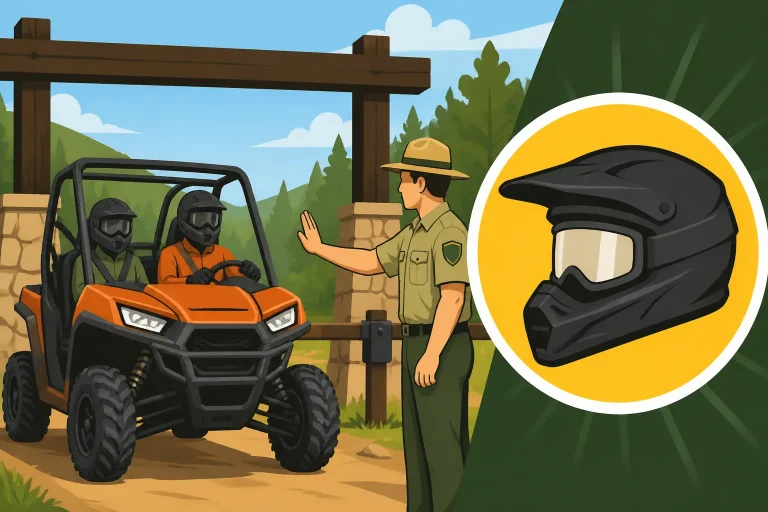
Riding around a gate is particularly risky. A barrier can mark a closed route, not just prevent full-size vehicles from passing. Taking a side path around it may put the machine in an area that is not authorized for motorized use. Similarly, creating a new line around a muddy patch can turn a short detour into off-route travel.
Use the official map and route information for the area, and compare them with conditions on the ground. Missouri Rules for Riding a National Forest and Riding Off a Mark Twain Forest Trail explain why staying on designated routes matters. If a posted sign appears to conflict with a map, do not assume the older information is controlling. Stop and check with the responsible office or ranger district before proceeding.
What to check before you unload
A few minutes of preparation can prevent a citation and avoid a wasted trip. Start with the exact trailhead, not just the general forest name. Mark Twain National Forest covers a large area, and access rules, trail openings, and local notices may differ from one riding area to another.
- Identify the specific riding area. Confirm that your planned route is open to your type of machine. A forest road, a designated trail, and a trailhead access road are not automatically interchangeable.
- Check for current closures. Look for recent notices from the responsible forest office, as well as signs at the entrance and along the route. Weather, maintenance, or resource concerns can change access.
- Confirm the permit requirement. Check whether the area requires a forest permit, which permit applies, and how to carry or display it. Do not rely on a state registration decal to stand in for a forest authorization.
- Check vehicle restrictions. Width limits and other machine requirements can vary by riding area or route. Do not assume a machine allowed somewhere else in the forest is allowed on every trail.
- Review the route map. Use the appropriate motor vehicle map or other official route information. A recreational app or a track shared by another rider can be useful for orientation, but it may not show current closures or legal route status.
- Make the permit and map easy to access. Keep documents protected from mud and rain, and make sure another person in the group knows where they are.
- Recheck at the trailhead. Read the board and signs before unloading. A last-minute closure or restriction is more important than the plan you made at home.
For details about purchasing or carrying a permit, see Buying a Forest Permit Online and Showing a Forest Permit on Your Phone. Those topics can help with preparation, but always follow the instructions for the particular permit and location.
Machine width deserves special attention. A vehicle that fits one trail system may exceed a restriction elsewhere. For example, Sutton Bluff has its own machine-width considerations; that should not be treated as a universal limit for every Mark Twain route. Check the specific area’s current requirements, and use Measuring Your Machine at a 50-Inch Trail Gate as a reminder to verify a limit rather than guess by appearance.
What happens during a stop
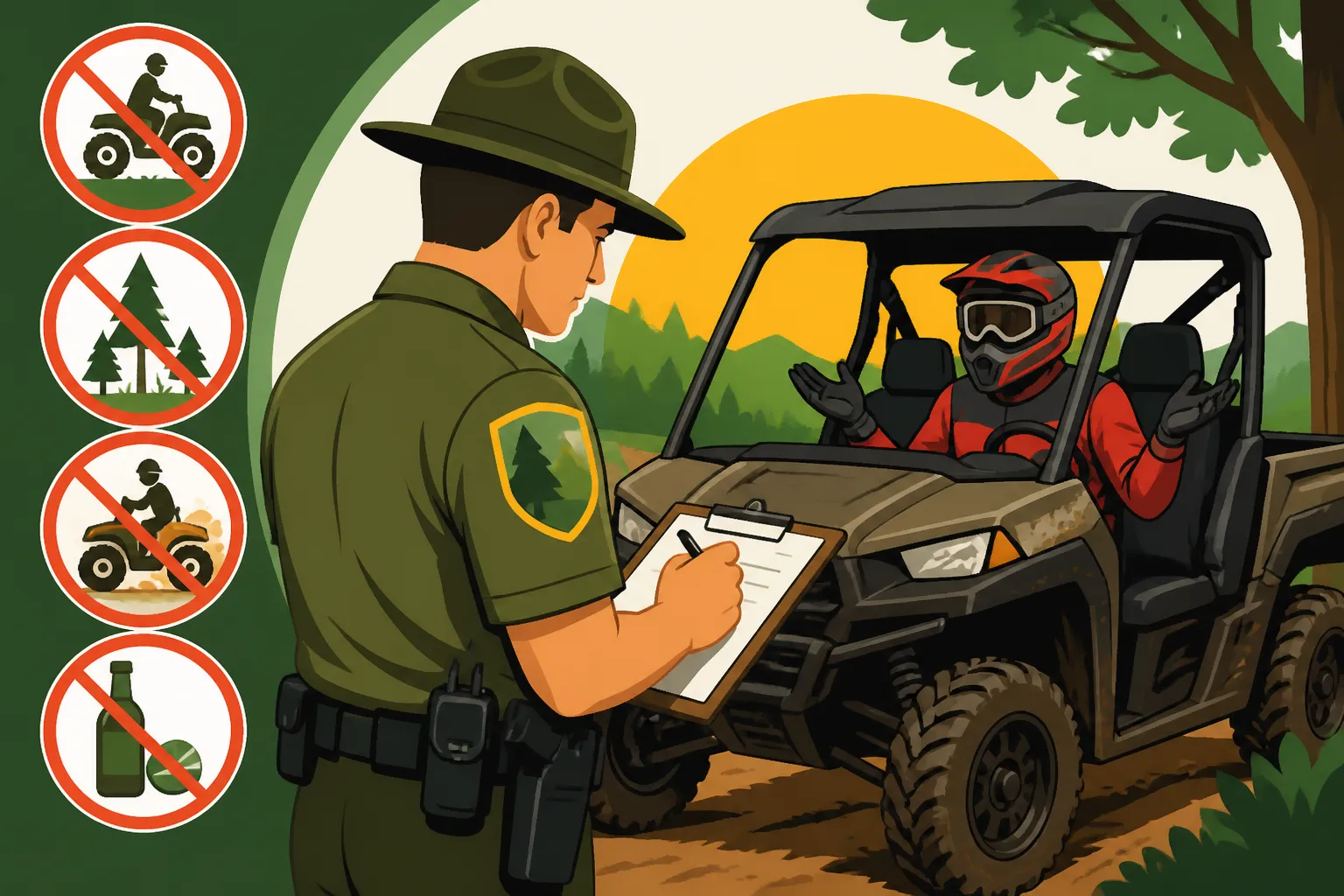
If an officer stops you, pull over safely, shut down the machine when appropriate, and listen to the instructions. Keep your hands visible and avoid reaching into a bag or pocket without explaining what you are doing. A calm, straightforward exchange is safer than trying to debate a trail designation beside a moving route.
The officer may ask where you are riding, what route you came from, or whether you have the required permit. Answer truthfully and show the documents requested. If you believe a sign was missing, a map was unclear, or a route had recently changed, explain that briefly and politely. Do not continue riding while the issue is being addressed.
An officer may give a warning or issue a formal notice, depending on the circumstances and the applicable rule. Do not assume that a warning is guaranteed, and do not treat a citation as a final decision about every disputed fact. Read the notice carefully, keep a copy, and follow the instructions and deadlines printed on it. The process and consequences depend on the specific violation; avoid relying on a rider’s account of a different stop as a substitute for understanding your own paperwork.
If you disagree with a citation, preserve relevant information as soon as you can. Write down the date, approximate time, trail or road name, nearby signs, and what the officer said. Save permit records and take clear photos of signs or route conditions only when it is safe and lawful to do so. Do not move a barrier, re-enter a closed route, or put yourself at risk to collect evidence. If the notice directs you to contact an office or appear in court, follow that process rather than trying to resolve the matter informally at the trailhead.
Keep in mind that an officer’s role is not limited to checking permits. An officer may be concerned about route closures, unauthorized travel, or conduct that damages the trail or surrounding land. What a Mark Twain Forest Officer Cites Riders For is a practical starting point for understanding those concerns, while Checking a Missouri Trail Notice Before You Load can help make the pre-ride check part of your routine.
Avoiding repeat problems on future rides
A citation often points to a planning gap: relying on an old map, confusing one permit with another, or assuming a machine restriction is the same across all riding areas. Fix that gap before the next trip. Keep a simple checklist with the trailhead, current route information, permit instructions, and machine restrictions for the place you plan to ride.
If a group is traveling together, make sure each rider understands the route and closure rules. One person’s permit or map does not necessarily answer questions about another rider’s machine or authorization. Agree on a plan for what to do if the group reaches a closed section: stop, turn back where permitted, and do not create a bypass.
Finally, separate forest access from road use. Permission to ride a designated forest trail does not automatically make a nearby public road legal for an ATV or UTV. Local permits and state rules may apply when a route reaches or crosses a road. For that separate question, see Which Permit You Need to Ride a County Road and Missouri Rules for Riding a National Forest.
A reliable approach is straightforward: verify the route, verify the permit, follow every posted restriction, and stay on the authorized path. Those steps will not guarantee that every ride is trouble-free, but they reduce the most avoidable reasons an officer may stop or cite a rider.
Disclaimer
This article is for general informational purposes only and does not constitute professional advice. Laws, prices and regulations vary by location and change over time. Consult a qualified professional for guidance on your specific situation.