Does Missouri Honor Out-of-State Registration?
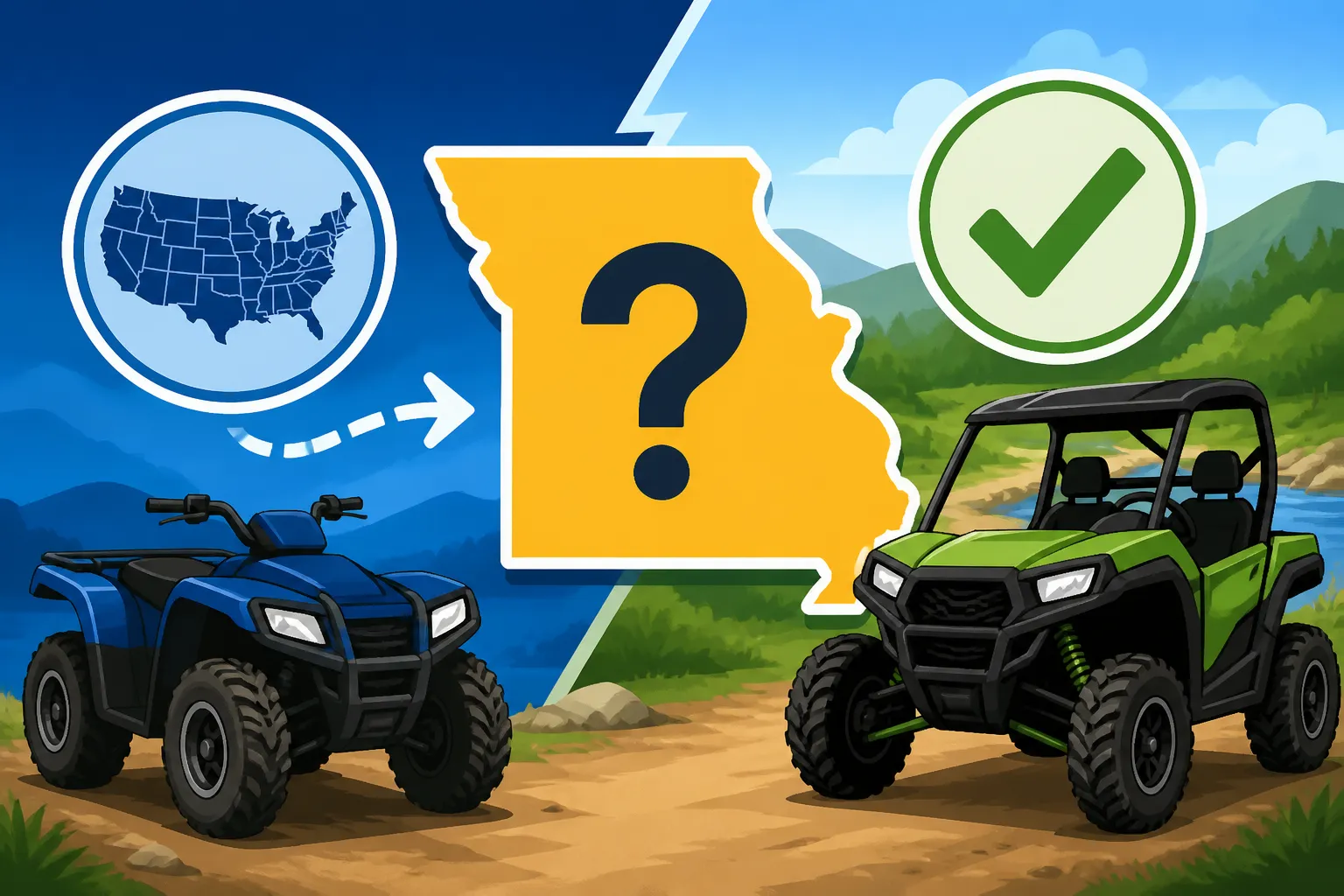
An out-of-state ATV registration may be recognized for a nonresident riding in Missouri, but it does not grant access to every trail or make a machine road-legal. The key is to separate registration reciprocity from land-use permits and road rules. Here’s what to check before you bring an ATV or UTV across the state line.
The short answer: reciprocity is not a trail pass
Missouri generally recognizes valid registration from another state for a nonresident machine when the registration is current and the applicable reciprocity rules are met. That recognition can help establish that the machine is properly registered where it is based. It does not mean that every out-of-state sticker, title, or permit automatically satisfies every Missouri requirement.
The practical distinction is that several different documents can be called a “registration” in casual conversation:
- A state registration or decal may show that the machine is registered in its home state.
- A title establishes ownership; it is not the same thing as a trail permit.
- A riding-area permit may be required to use particular public trails or facilities.
- A road-use permit or local authorization concerns operating on certain roads, not riding on off-road trails.
A visitor should treat each of these as a separate question. Having a valid registration in Kansas, Arkansas, Iowa, Illinois, or another state does not, by itself, answer whether a specific Missouri trail is open to the machine or whether a separate permit is required. For background on the state-to-state issue, see Riding Missouri With an Out-of-State Decal and Missouri Rules for a Visiting Rider.
Reciprocity is also about a nonresident machine being used temporarily. If you have moved to Missouri, bought a machine here, or are keeping it in the state as your regular home base, do not assume that your former state’s registration settles the Missouri paperwork question. The relevant process may differ from a short visit; Registering an Out-of-State Machine in Missouri covers that situation.
| What you have | What it may establish | What it does not automatically establish |
|---|---|---|
| Current registration from your home state | The machine is registered there, subject to that state’s rules | Permission to ride every Missouri trail or road |
| Title or certificate of origin | Ownership or the machine’s ownership history | Trail access or registration reciprocity |
| Missouri riding-area permit | Permission for the area and period covered by that permit | Permission to ride elsewhere or use public roads |
| Local road permit or authorization | Permission under the relevant local road rules | General trail access or statewide road use |
Because requirements can depend on the machine, the rider’s residency, and where the machine will be used, confirm the rules for your exact situation before traveling. Check with the appropriate Missouri agency or riding-area operator, and check the home state’s registration terms if you are unsure what its document authorizes.
The answer can differ for an ATV and a side-by-side
The word “registration” does not always apply to every off-road vehicle in the same way. Missouri’s ATV system has its own definitions and paperwork, while a side-by-side may be treated as a different kind of machine. The machine’s shape and design can matter more than the name on the bodywork or what its owner calls it.
Missouri’s ATV definition looks at characteristics such as the machine’s seating, handlebars, width, and dry weight. If you are uncertain whether your machine fits the state’s ATV category, start with What Missouri Counts as an ATV. A classification difference can change which registration rules are relevant.
A side-by-side, often called a UTV or ROV, should not be assumed to fall under the same Missouri title-and-decal system as an ATV. Missouri does not register side-by-sides through the same ATV process; see Why Missouri Does Not Register Side-by-Sides. That does not mean a side-by-side can be used anywhere without documentation or permission. It means the ATV registration question may not be the right one to ask for that machine.
Before relying on an out-of-state registration, identify what the home state actually registered. It might be:
- An ATV registration that applies to the machine under the home state’s definition.
- A UTV or off-highway vehicle registration issued under a separate category.
- A title, with no separate registration.
- A use permit that is valid only in a particular park or on particular trails.
Those documents are not interchangeable. A title can help show ownership, but it does not necessarily prove that the machine is registered for use. A park sticker from another state may be useful for that state’s facilities without having any effect on Missouri’s requirements.
If the machine is a side-by-side, find out what Missouri requires for the particular place you plan to ride, rather than assuming ATV reciprocity answers the question. Trail systems may have their own width limits, permit rules, and equipment standards. Road use is a separate issue again. An out-of-state registration alone does not turn an off-road vehicle into a street-legal vehicle in Missouri.
Public-land permits are separate from registration reciprocity
Even when Missouri recognizes the machine’s home-state registration for a nonresident visit, you may still need a permit for a specific riding area. Registration and access permission serve different purposes: one concerns the vehicle’s status, while the other concerns whether you may ride at a particular location.
Missouri state parks and national forest riding areas can have their own permit systems. A permit issued for one riding area should not be treated as a statewide pass, and a home-state registration should not be treated as a substitute for a Missouri riding permit. Check the destination’s rules before loading the machine. Missouri ORV Permits Explained outlines why permit requirements depend on where you ride, and Does Your Decal Cover the Park Trail Permit? explains the difference between a vehicle decal and an area permit.
A useful way to plan is to work through these questions in order:
- What type of machine is it? Confirm whether it is an ATV, UTV, ROV, or another category under the relevant rules.
- What document does the home state issue? Check whether it is a registration, title, use permit, or some combination.
- Where in Missouri will you ride? Identify the specific park, forest, private riding area, or other destination.
- Does that destination require its own permit? Ask the land manager or operator about current requirements for your machine and riding dates.
- Will you use any public road? Check road-use rules separately from off-road access rules.
Do not rely only on a friend’s experience or an old sticker. Trail rules and operating conditions can differ between locations, and access rules can change. A destination’s official information is the best place to confirm whether it accepts your machine and what permit, if any, you need.
Private land is different from a public riding area, but that does not make permission automatic. Get permission from the landowner and follow any conditions they set. A machine’s valid registration does not give its owner a right to ride on property without consent. For the general distinction, see [Missouri Landowner Permission Requirements].
What to carry and check before crossing the state line
A little preparation can prevent a registration question from turning into a problem at the trailhead. Keep documents that identify the machine and show your authority to use it, and keep area permits available in the form the destination accepts.
Before you leave, check the following:
- Registration status: Make sure the home-state registration is current and applies to the machine you are bringing.
- Machine identity: Confirm that the identification number on the paperwork matches the machine. If the number is hard to locate or read, resolve that before travel.
- Ownership documents: Carry the title or other ownership paperwork when appropriate, but do not assume it substitutes for registration or a riding permit.
- Riding-area requirements: Confirm the permit, width, safety-equipment, and access rules directly with the destination.
- Road-use plans: If your route includes a public road, verify that the machine may legally use that road and that you have any required local authorization.
- Residency and trip details: If you are moving to Missouri or keeping the machine in the state, ask whether rules for a resident or permanently based machine apply rather than relying on visitor reciprocity.
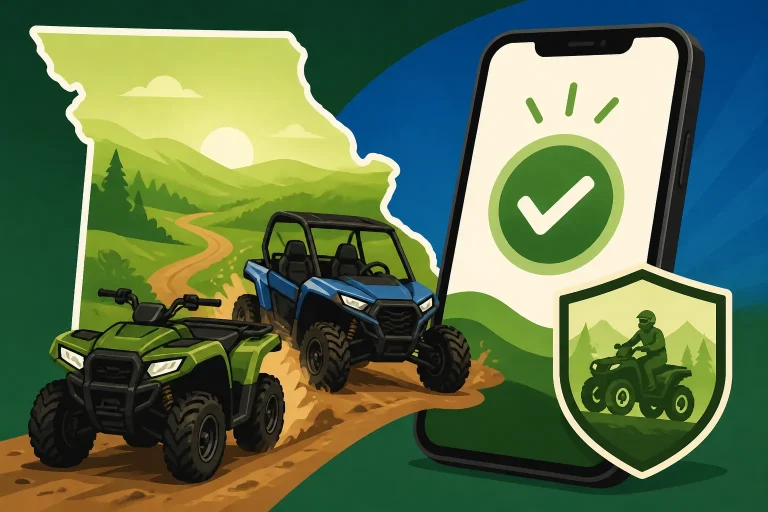
A phone photo can be useful as a backup, but it is not a safe substitute for whatever original or displayed document the relevant authority requires. Keep paperwork protected from rain and mud, and make sure you can retrieve it when asked. A small document pouch in the tow vehicle can keep registration, ownership records, and permit confirmations together without mixing them up.
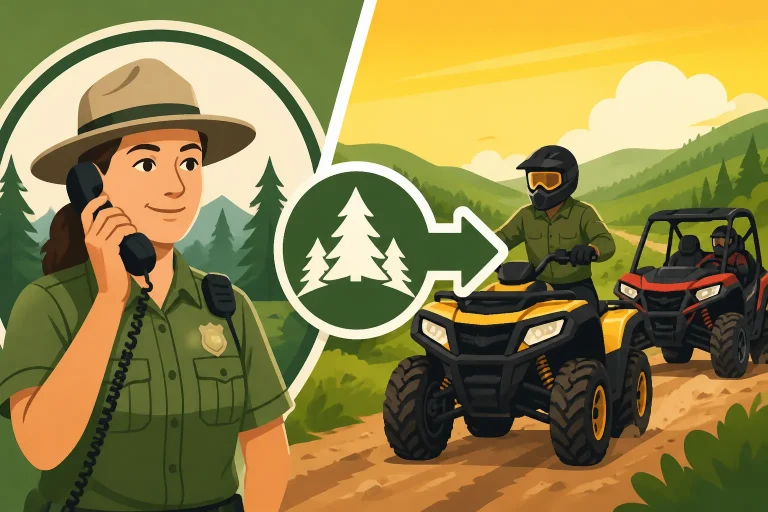
When calling an agency or riding-area operator, describe the machine clearly. Give its make and model, whether it has a straddle seat or side-by-side seating, its width if known, where it is registered, and where you intend to ride. Ask specifically whether the home-state registration is accepted for a nonresident and whether that riding location requires a separate permit. A precise question is more useful than asking only, “Is my registration good in Missouri?”
If your home state is Kansas, Arkansas, Iowa, or Illinois, the state-specific reciprocity references may help you frame the question: Missouri Reciprocity With Kansas, Missouri Reciprocity With Arkansas, Missouri Reciprocity With Iowa, and Missouri Reciprocity With Illinois. Confirm current requirements with the relevant official source before relying on an older document or a general summary.
The safest takeaway is simple: use your home-state registration as evidence of the machine’s status, not as an all-purpose Missouri pass. Confirm the machine’s category, the destination’s permit rules, and any road-use requirements separately. That approach avoids the most common mistake: arriving with valid paperwork for the vehicle but missing permission for the place where you planned to ride.
Disclaimer
This article is for general informational purposes only and does not constitute professional advice. Laws, prices and regulations vary by location and change over time. Consult a qualified professional for guidance on your specific situation.