3 Miles From Your Own Front Door
It’s a tale as old as time for off-road enthusiasts here in Missouri: you've got your beautiful side-by-side or trusty ATV, and you just want to take it down the gravel road a bit, maybe to the mailbox, or perhaps over to the neighbor’s place. But then the nagging questions start. Can you actually do that? What about the infamous "3-mile rule" you’ve heard about? It’s enough to make your head spin trying to figure out the patchwork of state laws and local ordinances. This guide is here to clear up that confusion, specifically honing in on what it means to legally drive your off-road machine within three miles of your home, and what other options you might have.
The Long and Winding Road to Understanding Missouri's ATV/UTV Laws
Many of us get into off-road riding for the freedom, the thrill of the trail, and the ability to get places a regular car can't. So it's naturally frustrating when you hit a wall of complex rules just trying to drive your machine a short distance on a public road. Missouri's approach to ATVs, UTVs, and ROVs on public roadways is, to put it mildly, nuanced. It’s not as simple as "if it has wheels, you can drive it." There are specific definitions, exemptions, and local controls that can make or break your road-legal journey, and ignoring them can lead to a hefty ticket.
The Initial Frustration: Why Can't I Just Ride?
You’ve invested good money in your machine, whether it’s a nimble sport quad or a workhorse utility vehicle. You might live in a rural area where the nearest store is just a mile or two down a county road, or your favorite local riding spot is accessible via a short stretch of pavement. It feels perfectly reasonable to want to use your machine for these quick, convenient trips, especially when it’s designed to handle rough terrain and often feels safer than walking along a busy road. The frustration comes when you realize that even these seemingly innocent jaunts are often prohibited or come with a laundry list of requirements you might not have been aware of. It often seems like the laws weren't written with the average rural resident or off-road hobbyist in mind, leaving many feeling like they're navigating a minefield of potential violations.
The core issue isn't that the state wants to make your life harder, but that ATVs and UTVs are primarily designed for off-highway use. Introducing them into the flow of traffic, even light traffic, raises safety concerns that traditional street-legal vehicles are built to address. Lights, signals, mirrors, and even crash protection are often different or absent on off-road machines. This fundamental difference is what drives much of the legal separation and the strict limitations on road use.
The Core Distinction: ATVs vs. UTVs vs. ROVs
Before we even dive into specific rules, it's absolutely crucial to understand how Missouri law defines these machines. This isn't just semantics; it's the foundation upon which all road-use laws are built. What you call your machine casually might not be what the state calls it, and that difference can be key to whether you’re breaking the law or not.
-
All-Terrain Vehicles (ATVs): Missouri law generally defines an ATV as a motorized vehicle manufactured and used exclusively for off-highway use, weighing less than 1,500 pounds dry weight, 50 inches or less in width, and having a non-straddle seat and handlebars. Think of your traditional quad or four-wheeler. These machines are not eligible for the 3-mile rule that allows limited road use. They are generally prohibited from public roads except for specific, very limited circumstances like crossing a highway or agricultural use on specific types of roads. This means if you have a quad, you'll need to look at other options like trailering it or finding designated off-road areas. You can learn more about [What Missouri Counts as an ATV].
-
Recreational Off-Highway Vehicles (ROVs): This is where the "side-by-side" term usually comes in. Missouri statutes define an ROV as a motorized vehicle manufactured and used exclusively for off-highway use, having four wheels, a steering wheel, non-straddle seating (like bucket seats or bench seats), and generally weighing more than 1,500 pounds or exceeding 50 inches in width. These are the machines that can potentially qualify for the "3-mile from your front door" rule under certain conditions.
-
Utility Vehicles (UTVs): Sometimes, ROVs and UTVs are used interchangeably, but legally, UTVs can also encompass a broader category, particularly when it comes to agricultural or industrial definitions. For the purpose of the 3-mile rule, it's the ROV definition that primarily applies. However, it's important to remember that for farm-related activities, utility vehicles might have different, broader allowances for road use, often under the agricultural exceptions we’ll discuss later. Understanding [Why Missouri Splits ATVs, UTVs and ROVs] is vital for any rider.
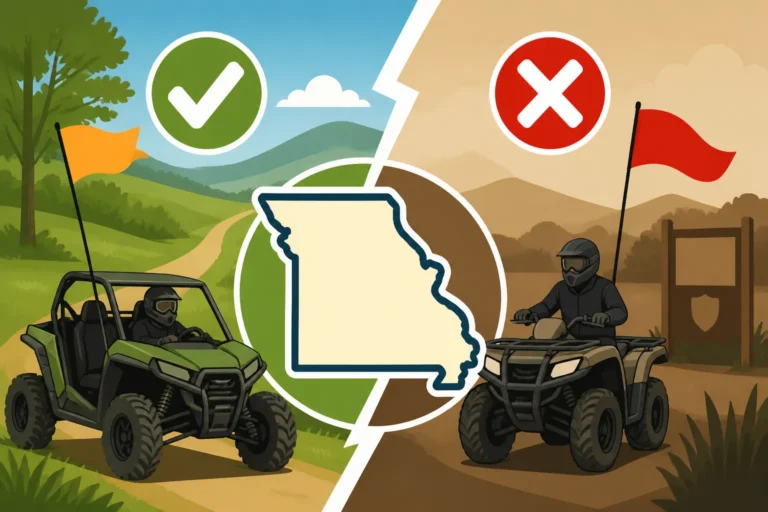
This distinction is probably the most common point of confusion for riders. Many people mistakenly believe the 3-mile rule applies to all off-road vehicles, but it’s specifically carved out for ROVs—your side-by-sides—because their design, with steering wheels, seat belts, and roll bars, makes them marginally safer for limited road use than a traditional ATV with handlebars and a straddle seat.
Deciphering the "3-Mile From Your Front Door" Rule for Side-by-Sides
Ah, the legendary "3-mile rule." It's a phrase often tossed around in garages and at trailheads, sometimes with a lot of misinformation attached. Many people think it's a blanket permission slip for all their off-road vehicles, but in reality, it's a very specific allowance with critical caveats. Understanding its true scope is key to avoiding an unwelcome conversation with a local law enforcement officer. This rule is designed to offer a narrow window for specific types of machines to access amenities or adjacent properties without needing to be trailered.
Who This Rule Actually Applies To (Hint: It's Not Your Quad)
Let’s get this out of the way upfront: if you own a traditional ATV, often called a quad or a four-wheeler, this "3-mile from your front door" rule does not apply to you. It's a common misconception, but Missouri law explicitly limits this allowance to Recreational Off-Highway Vehicles (ROVs), which are your side-by-sides. If you're on a traditional ATV, even if you’re just puttering to the mailbox a quarter-mile away, you are generally doing so illegally unless a very specific agricultural or crossing exception applies. This is why it’s so important to know [Why Missouri Splits ATVs, UTVs and ROVs].
The lawmakers crafted this rule with side-by-sides in mind because they tend to have features like steering wheels, seatbelts, and roll cages that offer a degree of familiarity and safety more akin to traditional automobiles. These features are generally absent on ATVs, making them a different category in the eyes of the law when it comes to road use. So, while it might feel unfair if you're an ATV owner, the law draws a clear line based on vehicle design and perceived safety on public roads. Many riders find themselves disappointed by this distinction, but it's a hard and fast rule in Missouri.
What "Within 3 Miles of Your Primary Residence" Really Means
Okay, so you have an ROV (side-by-side) and you think you qualify for the 3-mile rule. What exactly does "within three miles of your primary residence" mean? Is it a straight-line distance, or by road? What if you live out in the country with no defined "front door" and your closest neighbor is a mile away?
Missouri law generally interprets this as three actual road miles from where you primarily reside. It's not an "as-the-crow-flies" measurement; you can’t cut across fields or straight over hills. It refers to the distance traveled on established public roads from your residence. Your "primary residence" is typically considered your permanent home address, not a temporary hunting camp or a weekend cabin, unless that cabin is legally defined as your primary place of domicile. So, if you're at your deer lease and want to drive your side-by-side to the nearest gas station, you likely won't qualify for this rule unless that lease is legally your primary residence and the station is within the 3-mile radius by road. This specific wording is intended to facilitate local, short-distance travel for essential needs or immediate access, not as a general expansion of riding territory.
This rule also doesn't give you free rein to drive three miles in any direction down any road. It’s important to understand that this allowance is often granted by specific local permits, and those permits themselves might have additional stipulations. The "3-mile" radius is a maximum distance, not a guaranteed right of way everywhere. Always verify with your local municipality or county sheriff about how they interpret and enforce this particular rule.
The Permit Requirement That Goes Hand-in-Hand
You might think that if you meet the 3-mile criteria, you can just hop in your side-by-side and go. Not so fast! The "3-mile rule" for ROVs in Missouri isn't an automatic right; it almost always requires you to obtain a special permit from the local government that has jurisdiction over the roads you intend to use. This could be your city hall, county clerk’s office, or even the local police or sheriff's department. You can read more about [Missouri Special Permit Cost for ATVs].
These local permits are critical. They are the actual legal document that allows you to operate your ROV on public roads within that limited distance. Without it, even if you’re technically within three miles of your home, you're likely riding illegally. The permit process typically involves an application, possibly an inspection of your vehicle to ensure it meets safety requirements (like proper lighting and a safety flag), and a fee. The permit itself acts as your verifiable proof that you're operating within the legal framework. Many jurisdictions use this permit system to control where and how ROVs are used, and it gives them a way to ensure machines meet minimum safety standards before they're allowed on public ways. It's not just a piece of paper; it's your permission slip to share the road.
Essential Equipment and Operator Requirements for Limited Road Use
Even with the right type of machine and a local permit for the "3-mile" rule, you can't just throw caution to the wind. Missouri law (and common sense) dictates that if you're going to venture onto public roads, even for a short distance, your side-by-side needs to be equipped to a certain standard, and you, as the operator, need to meet specific qualifications. These requirements are in place to enhance safety for you and other drivers on the road.
Beyond Just a Permit: Safety Gear and Machine Modifications
Operating an ROV on a public road, even under the limited 3-mile rule, means your machine must meet certain safety equipment standards. These aren't just suggestions; they are often mandatory for obtaining and keeping your local road permit.
- Headlights and Taillights: Your ROV must have working headlights and taillights that are illuminated when operating on public roads, especially from sunset to sunrise, or in conditions of reduced visibility.
- Brake Lights: Functioning brake lights are essential to signal to other drivers when you are slowing down or stopping.
- Turn Signals (Sometimes): While not universally required by state statute for ROVs under the 3-mile rule, many local ordinances or permit requirements will demand turn signals. Always check your local permit's specific stipulations.
- Rear-View Mirror: At least one rear-view mirror is typically required, allowing you to see traffic approaching from behind.
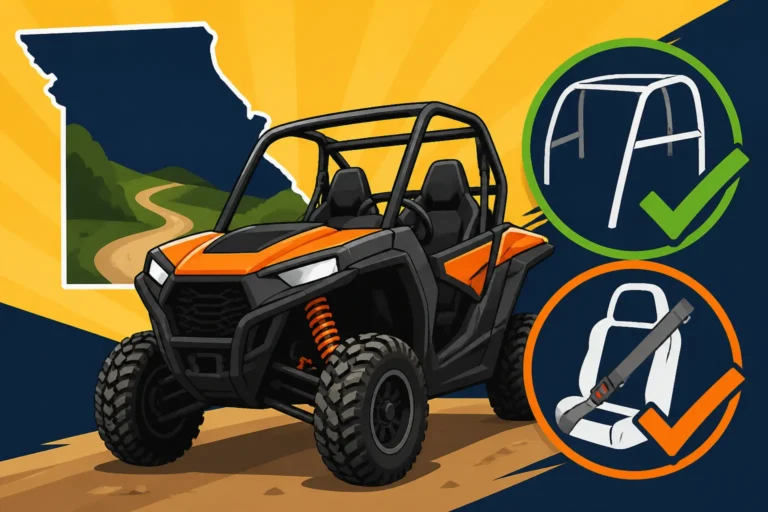
- Seatbelts: Your ROV must be equipped with and you must wear a seatbelt, if the vehicle was originally manufactured with them, as most modern side-by-sides are.
- Roll Bar/Roll Over Protective Structure (ROPS): Your side-by-side must have a factory-installed roll bar or ROPS. Many riders enhance their roll cage with aftermarket accessories, and companies like SuperATV offer robust options for added protection.
- Safety Flag: A safety flag is crucial for visibility. Missouri law often specifies that a flag must be at least 7 feet above the ground when affixed to the ROV, and it needs to be fluorescent orange or red, at least 30 square inches in size. This flag makes your lower-profile machine much more visible to drivers of taller vehicles. You can explore [Missouri Safety Flag Requirements] for more details.
- Spark Arrestor: While primarily a requirement for riding on public lands like state parks or national forests, ensuring your exhaust system has a functioning spark arrester is good practice and may be required by local ordinances for road use, especially in dry conditions.
These modifications aren't about making your side-by-side "street legal" in the same way a car is, but about making it safe enough for short, localized road use. You might find a great selection of high-quality, durable accessories from a company like SuperATV if you need to upgrade your lighting, add mirrors, or enhance your visibility with flags.
Driver's License and Age Requirements
Just like driving a car, operating an ROV on public roads in Missouri, even under the 3-mile rule, comes with operator requirements.
- Operator's or Chauffeur's License: Anyone operating an ROV on a public road under the special permit must possess a valid operator's or chauffeur's license. This means you can't just let anyone who knows how to drive take the wheel if they don't have a valid license. This requirement ensures that the operator has passed basic driving tests and understands traffic laws. This is a critical point that differentiates it from off-road park riding, where license requirements are often less stringent or nonexistent for adults. You can read more about [Missouri Driver's License Rules for ROVs].
- Age Requirement: The operator must be at least 16 years of age to hold a valid driver's license. There are no special provisions for younger drivers, even with supervision, when it comes to operating an ROV on public roads. This contrasts with some off-road parks or private land where younger, supervised riders are permitted. The state takes road safety seriously, and that means licensed, adult operators.
It's about ensuring that anyone behind the wheel on a public road, no matter how short the distance, is a competent and legally qualified driver. This helps mitigate risks and ensures that ROV operators are held to a similar standard as other vehicle drivers when sharing the road.
When the 3-Mile Rule Doesn't Apply: Other Legal Road Uses
While the "3-mile from your front door" rule is a specific allowance for ROVs, it’s not the only way an off-road machine might find itself legally on a public road in Missouri. There are several other, often very narrow, exceptions and allowances that apply to both ATVs and ROVs. Understanding these can prevent fines and ensure you're compliant, even if you're not operating under a specific local permit.
Agricultural and Industrial Exceptions
Missouri law provides specific allowances for ATVs and ROVs when they are being used for legitimate agricultural or industrial purposes. These are crucial for farmers and those in related industries who rely on these machines for their livelihoods.
- Agricultural Use: An ATV or ROV may be operated on a public highway or county road between sunrise and sunset if it is being used for agricultural purposes. This means hauling feed, checking fences, moving equipment between fields, or tending to livestock. It's not an excuse for a joyride; the machine must be actively engaged in farm work. This exemption is vital for farmers who often have land split by public roads and need to move their equipment efficiently. However, even with this exemption, you should still operate safely, be highly visible, and adhere to basic traffic laws. Some jurisdictions may still prefer you obtain a special permit, even for agricultural use, so it's always best to check locally. For example, if you're moving cattle across a gravel road, your quad or side-by-side might be perfectly legal for that short haul. You can find more detail on [Missouri Rules for Agricultural Road Use].
- Industrial Use on the Premises: ATVs and ROVs can also be operated on public roads when used for industrial purposes on the premises of an industrial complex or facility, provided the operation is related to the industry. This is a very specific exemption for situations like maintenance workers crossing a public access road that bisects a large industrial plant. It's not an allowance for industrial vehicles to travel freely on public highways to reach different job sites across town. The "on the premises" part is critical here.
These exemptions acknowledge the practical necessity of using these machines for work-related tasks, but they are not a loophole for recreational riding. Law enforcement can, and will, question whether your use truly falls under these definitions.
Crossing the Highway: A Brief and Direct Encounter
Both ATVs and ROVs generally have a limited ability to cross public highways in Missouri. This isn't about driving down the highway, but rather getting from one side to the other when your property or trail system is bisected by a road.
- Direct Crossing: An ATV or ROV may cross a public highway or road, provided the crossing is made at an angle of approximately 90 degrees to the roadway and at a place where the crossing is safe and does not unduly interfere with other traffic. The crossing should be as direct and quick as possible. This means you can't ride parallel to the highway for any distance, even on the shoulder. It's about traversing the road, not using it as a travel lane.
- Yielding to Traffic: The operator must yield the right-of-way to all other traffic on the highway. This is paramount. You are the one interrupting the flow of traffic, so you must ensure it is clear and safe before proceeding. This is a common allowance in many states, designed to facilitate property access without requiring extensive detours.
It's a very short, specific allowance and absolutely not a justification for traveling any distance on state or federal routes. A Missouri deputy will be watching for anyone trying to stretch this "crossing" rule into a short commute.
City and County Ordinances: The Local Game Changer
Perhaps one of the most significant factors in whether you can ride your ATV or UTV on public roads is the local ordinances passed by individual cities and counties. Missouri law allows local governments to enact their own rules regarding the operation of ATVs and ROVs on public streets and highways within their jurisdiction. This is why you'll find such a patchwork of regulations across the state. You can learn more about [Missouri Cities That Allow UTVs on Streets].
- Expanded Access: Some cities and counties have passed ordinances that permit the use of ROVs (and sometimes even ATVs, though less commonly) on certain public roads. These ordinances often come with specific requirements that go beyond state law, such as higher safety flag requirements, specific hours of operation, additional insurance mandates, or designated routes. These permits often cover a wider area than the state's 3-mile rule. For example, a town might open all its city streets (excluding state highways running through it) to ROVs, requiring a local permit and proof of insurance.
- Permit Specifics: If a city or county has an ordinance, you will almost certainly need to obtain a permit directly from them. This permit may cost money and will outline all the local rules, including speed limits, days or hours of operation, and required safety equipment. What works in Harrisonville might not work in Lake Ozark or Springfield. It's crucial to check with the specific municipality or county sheriff's office for the most current information.
- Limitations: Even with a local ordinance, there are almost always limitations. State highways that pass through a city or county often remain off-limits, as state law generally takes precedence on those routes unless a very specific agreement is in place. These local ordinances are usually a boon for side-by-side owners, providing much more flexibility than state law alone. If you live near a town that has embraced these machines, it's definitely worth looking into their local rules. [Where to Get a Missouri ATV Road Permit] can help you start that process.
This local control is a big part of the "why can't I just ride?" puzzle. What's legal for your buddy in one county might be illegal for you just across the county line. Always, always check local laws before venturing onto public roads.
The "No" List: Where You Absolutely Cannot Ride (Generally Speaking)
While we’ve covered the few instances where ATVs and UTVs might legally touch pavement, it's equally important—perhaps even more so—to understand the vast majority of places where they are explicitly prohibited. These prohibitions are in place for safety, environmental protection, and to maintain the integrity of public infrastructure. Ignoring these rules can lead to serious fines, impoundment of your machine, and even criminal charges.
State Highways and Federal Roads
This is the big one, and it's where many people get into trouble. With very few, specific exceptions (like agricultural use between sunrise and sunset or direct crossings), you absolutely cannot operate an ATV or ROV on state highways (like US routes or Missouri state routes) or federal roads (like Interstates).
- High Speed, High Risk: These roads are designed for high-speed traffic, and off-road vehicles simply aren't built for those speeds or for safely interacting with fast-moving automobiles. The speed differential alone creates an enormous safety hazard.
- Infrastructure Impact: ATVs and ROVs, particularly those with aggressive tires, can cause damage to paved surfaces not designed for their weight distribution or tire type.
- Strict Enforcement: Law enforcement on state highways, including the Missouri State Highway Patrol, is very strict about this. There's little room for interpretation here. If you're caught riding your ATV or UTV on a state highway without a crystal-clear, legal exception (which is exceedingly rare outside of agricultural use), you will likely be ticketed.
- No "Just For a Minute" Excuse: The temptation to just "hop on for a minute" to get to the next gravel road or access point is strong, but it's a risky proposition with serious consequences. Unless you have a specific, documented permit for a very localized road use that happens to cross a state route (which would be rare), stay off these roads. [Crossing a Missouri Highway on a Quad] is one of the only direct allowances.
This prohibition is one of the foundational rules of off-road vehicle operation in Missouri, and it's not one to be ignored.
Off-Limit Areas: Parks, Conservation Lands, and Private Property (Without Permission)
Beyond state and federal highways, there are numerous other areas where ATV and ROV use is generally restricted or outright forbidden, even if they aren't traditional "roads."
- Missouri State Parks and Historic Sites (except designated ORV areas): While Missouri boasts fantastic ORV parks like St. Joe State Park and Finger Lakes State Park, the vast majority of state parks, historic sites, and conservation areas are closed to ATV and UTV operation outside of specifically marked trails or designated areas. You can't just ride your side-by-side down a paved park road unless that road is part of an approved ORV trail system. These areas are preserved for different types of recreation and environmental protection.
- Missouri Conservation Areas: Missouri Department of Conservation (MDC) lands are generally closed to off-road vehicle use, period. These areas are managed for wildlife, forests, and other natural resources, and unauthorized vehicle use can damage habitat, disturb wildlife, and degrade natural resources. There are very few exceptions, usually related to retrieving game with a special permit, but casual riding is strictly prohibited.
- Corps of Engineers Land: Similar to MDC lands, U.S. Army Corps of Engineers land around Missouri’s lakes and rivers is typically closed to off-road vehicle use, unless specifically designated. Unauthorized riding on these lands can lead to federal fines.
- Private Property (Without Permission): This might seem obvious, but it's worth reiterating. You absolutely cannot ride your ATV or UTV on private land without the express permission of the landowner. "No Trespassing" signs are serious business, and even if there isn't a sign, assume all private land is off-limits unless you have explicit permission. Trespassing can lead to legal issues, damage to your reputation, and strained relationships with landowners. Always respect property lines, even if they aren't clearly marked.
Understanding these "no-go" zones is just as important as knowing where you can ride. Part of being a responsible off-road rider is respecting the rules and the environment, ensuring these opportunities remain available for everyone.
Practical Advice for Navigating Missouri's Road Rules
Trying to figure out where you can and can't legally ride your ATV or side-by-side on Missouri's public roads can feel like a full-time job. It’s a maze of state statutes, local ordinances, and common misconceptions. But with a bit of proactive research and careful preparation, you can ensure your rides are both enjoyable and fully compliant with the law. Don't let the complexity deter you from exploring, but rather empower you to do it smartly.
Checking Local Laws Before You Roll
This cannot be stressed enough: always, always check with local authorities before attempting to ride your ATV or ROV on any public road, even if you think you qualify for the 3-mile rule.
- City Hall/County Clerk: If you live within city limits, contact your city hall. If you're in an unincorporated area, reach out to your county clerk's office or county sheriff's department. These are the people who will know if an ordinance exists, what it requires, and where to get a permit.
- Police/Sheriff's Department: It’s a good idea to chat with your local law enforcement. They are the ones who will be enforcing the rules, and they can offer clarity on specific local interpretations and enforcement priorities. A quick phone call can save you a world of trouble down the line. They might even have a printed handout detailing local regulations for ATVs and ROVs.
- Don't Rely on Hearsay: That "my buddy told me" information is rarely reliable when it comes to legal matters. Laws change, and interpretations vary. What was true last year, or in the next county over, might not be true for your specific situation today. Take the time to get the official word. For example, some cities like Lake Ozark or Harrisonville have specific ordinances that dictate use, and knowing those specifics is critical. You can learn about [Harrisonville's Police Department Permit].
Making a few phone calls and doing a bit of legwork upfront is a small price to pay for peace of mind and avoiding a costly citation.
Keeping Your Paperwork in Order
Once you've done your research and obtained any necessary permits, make sure you keep all your essential documents readily accessible whenever you're operating your machine on a public road.
- Permit: Your local road permit is your golden ticket. Keep it with you on the machine. A waterproof bag or compartment is ideal.
- Driver's License: Remember, you need a valid operator's or chauffeur's license to drive an ROV on public roads under the 3-mile rule. Always have it on your person.
- Proof of Insurance: Many local ordinances require proof of liability insurance for operating an ROV on public roads. Check your policy to ensure it covers limited road use. Your insurance card should be kept with your other documents.
- Vehicle Identification: While not always required for road use (as Missouri doesn't title or register all UTVs like cars), it's always wise to have your machine's VIN and any purchase documentation accessible, especially if you get stopped. If you have a titled ATV, keep your [Missouri ATV Title Cost] receipt handy.
Having all your ducks in a row ensures that if you are stopped, you can quickly and clearly demonstrate your compliance, making the interaction much smoother. A deputy will appreciate your preparedness and clear understanding of the rules.
Staying Safe and Visible on the Road
Even when you're legally operating your ROV on a public road, you're still in a vehicle that's much smaller and often less visible than a car or truck. Safety should be your absolute top priority.
- Enhance Visibility: Use your safety flag religiously. Consider adding additional aftermarket lighting, especially if you anticipate riding near dawn or dusk. Headlights and taillights are mandatory. Look at options from brands like SuperATV that offer bright, durable lighting solutions. Wear bright clothing.
- Drive Defensively: Assume other drivers don't see you. Be extra cautious at intersections, driveways, and when making turns. Use hand signals if your ROV doesn't have turn signals (or even if it does, for added emphasis).
- Maintain Your Machine: Ensure your brakes, tires, and steering are in top working order. A mechanical failure on a public road can be far more dangerous than on a trail.
- Follow Traffic Laws: All standard traffic laws apply, including speed limits, stop signs, yield signs, and proper lane usage (even if you're just on the shoulder). Don't weave in and out of traffic or drive erratically.
- No Passengers (on ATVs): Remember, the law generally prohibits passengers on ATVs, even on private land, unless the machine is specifically designed for two riders. While ROVs are designed for multiple passengers, ensure everyone is properly belted in. [Missouri Passenger Rules on an ATV] are strict.
Ultimately, being a responsible and visible rider not only keeps you safe but also helps foster a positive image for the entire off-road community, potentially leading to more favorable local ordinances in the future. Ride smart, ride safe, and always be aware of your surroundings.
| Feature/Requirement | Traditional ATV (Quad) | ROV (Side-by-Side) |
|---|---|---|
| Eligible for 3-Mile Rule? | No | Yes, with local permit |
| Requires Local Permit? | No, not for 3-mile rule (other specific uses might) | Yes, for 3-mile rule (city/county-dependent) |
| Primary Road Use | Primarily off-highway; specific agricultural/crossing exceptions only | Primarily off-highway; 3-mile rule, agricultural, specific local ordinances |
| Required Head/Tail Lights | Generally yes, for any road use | Yes, for all road use |
| Required Safety Flag | Often for specific road uses/areas; always good practice | Yes, typically 7 ft high, 30 sq. in. orange/red |
| Required Seatbelts | N/A (straddle seat) | Yes, if equipped (factory standard on ROVs) |
| Required Roll Bar/ROPS | N/A (open design) | Yes, if equipped (factory standard on ROVs) |
| Operator's License Needed? | For legal road exceptions | Yes, for 3-mile rule & other road use |
| Passenger Restrictions | Generally no passengers, unless designed for two | Yes, only as many as factory seats and seatbelts allow |
Disclaimer
This article is for general informational purposes only and does not constitute professional advice. Laws, prices and regulations vary by location and change over time. Consult a qualified professional for guidance on your specific situation.