A Class C Misdemeanor in Missouri
Riding an ATV or UTV in Missouri offers an incredible sense of freedom, whether you're tackling muddy trails, heading out to the deer stand, or just enjoying the back forty. However, that sense of freedom can quickly turn into a nightmare if you venture onto public roads without understanding the complex rules, potentially landing you with a Class C Misdemeanor. This guide is here to walk you through exactly what that means, how to avoid it, and what to do if you find yourself in hot water, so you can enjoy your machine without unnecessary legal stress.
Understanding Missouri's ATV and UTV Road Rules
It's a common misconception among riders that because their ATV or UTV is "registered" with a decal, it automatically grants them permission to cruise down any road. Unfortunately, Missouri's laws are much more nuanced than that, and a simple decal for off-road use is a far cry from a full street-legal registration. This distinction is often a source of frustration for enthusiasts who simply want to get from Point A to Point B, especially when those points are just a short hop across a county road.
Why Road Use is a Minefield for Riders
The allure of taking your machine from your driveway straight to the local gas station or a nearby trail is powerful. It feels convenient, and in many rural areas, it might even seem like a harmless shortcut. However, Missouri law generally considers ATVs and UTVs as off-road vehicles. This means they are not designed, manufactured, or intended for use on public streets, roads, or highways. Trying to bypass this fundamental legal truth is where most riders unwittingly step into a minefield of potential legal troubles, ranging from simple traffic tickets to more serious misdemeanor charges.
The frustration is understandable, particularly for those living in communities where these machines are a part of daily life, used for everything from checking fences to running errands. Yet, without specific legal exemptions or local ordinances, that quick jaunt down the blacktop can expose you to hefty fines and, as we'll discuss, even a criminal record. It's not about being malicious; it's often about not knowing the specifics of state and local statutes that govern these machines.
This is why it's so critical to understand the boundaries. While your machine might feel perfectly capable on the asphalt, the law often sees it as an unauthorized vehicle, much like a dirt bike without a plate. Ignoring these legal distinctions doesn't make the road safer for you or others, and it certainly doesn't prevent a deputy from pulling you over.
The Core Problem: Off-Road Machines on Public Ways
The fundamental issue lies in the definition and classification of vehicles in Missouri. A passenger car, a truck, or even a motorcycle is designed and regulated for public road use. They have specific safety features, emissions standards, and licensing requirements that ATVs and UTVs, by their very nature, often do not meet. This isn't just a bureaucratic hurdle; it's about road safety for everyone.
When you put an off-road vehicle onto a public road, it often lacks the turn signals, rearview mirrors, proper braking distances, or even the basic crumple zones found in traditional road vehicles. This disparity creates a safety concern, not only for the rider but for other motorists, pedestrians, and cyclists who share the road. Lawmakers, in their effort to maintain public safety, have drawn a clear line between what belongs on a trail and what belongs on a highway.
Therefore, the mere act of operating an off-road machine on a public thoroughfare, outside of very specific exceptions, is seen as a violation. It’s this core principle that underpins many of the citations and charges riders receive. It's not just about speeding or reckless driving; it's about the vehicle itself being out of place in that environment.
Missouri's Strict Definitions for Off-Road Vehicles
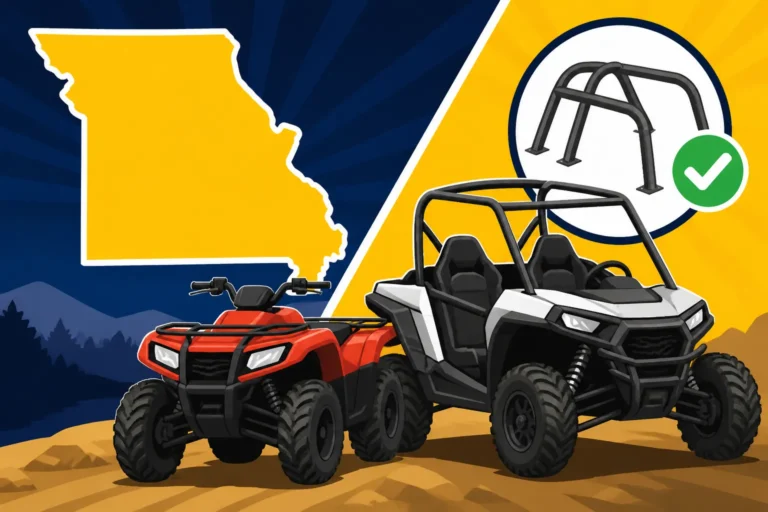
Missouri law is quite specific when it comes to defining what constitutes an ATV and, by extension, other off-road vehicles like UTVs or ROVs (Recreational Off-Highway Vehicles). An all-terrain vehicle, or ATV, is typically defined as any motorized vehicle manufactured and used exclusively for off-highway use, weighing less than 1,500 pounds dry weight, and having a width of 50 inches or less, with three or more wheels and a straddle seat, and handlebars for steering control. [What Missouri Counts as an ATV] This definition is key because it explicitly excludes ATVs from being considered traditional street-legal vehicles.
Utility Vehicles (UTVs), also often called side-by-sides, don't perfectly fit the strict ATV definition due to their side-by-side seating and often greater width and weight. However, they are still fundamentally recognized as off-highway vehicles under Missouri statutes. [What the Law Calls a Utility Vehicle] This means that while they might look more like a small car, their legal status for road use is generally the same as an ATV – prohibited, unless a specific exemption or local ordinance applies.
These definitions aren't just for titling and decal purposes; they are the bedrock for enforcement. When a law enforcement officer encounters a machine on the road, they will evaluate it against these legal definitions. If it falls into the category of an ATV or UTV without meeting the criteria for a special permit or exemption, then the operator is likely to face a citation, which could escalate to a Class C Misdemeanor depending on the specific circumstances and repeat offenses.
What Constitutes a Class C Misdemeanor in Missouri for ATV/UTV Use?
When we talk about a Class C Misdemeanor in Missouri regarding ATVs and UTVs, we're not just talking about a slap on the wrist. This isn't your average parking ticket. This is a criminal offense, and while it's the least severe class of misdemeanor, it still carries significant weight. It typically comes into play when someone operates their off-road machine in a way that directly violates state statutes concerning public roadways, or sometimes, specific safety regulations.
The Specific Laws You Might Be Breaking
Many riders are surprised to learn that illegal ATV or UTV operation on public roads can lead to criminal charges. The primary statute often cited is related to the unlawful operation of an off-road vehicle on a highway or street. This broadly covers instances where your machine is simply present on a paved road, a gravel county road, or even the shoulder of a state highway without legal authorization. It's not always about reckless driving; the act of being there at all can be the violation.
Beyond the general prohibition, other violations can compound the situation or lead to similar charges. For instance, operating an ATV without the required decal, or operating a UTV without meeting any applicable local permit requirements, can draw attention from law enforcement. While these individual infractions might start as minor citations, repeated offenses or combining them with other risky behaviors can quickly escalate the severity of the legal consequences.
Think of it this way: the state wants to ensure public safety. If your off-road machine is being operated in a manner that disregards established safety frameworks for public roads, the legal system will respond. This response often begins with a ticket, but for serious or repeated transgressions, the potential for a Class C Misdemeanor charge looms. [Missouri Fines for Illegal ATV Road Use]
Illegal Road Operation: The Most Common Offense
The most common way to incur a Class C Misdemeanor related to your ATV or UTV in Missouri is straightforward: operating it on a public street or highway when it's not allowed. This includes state highways, county roads, and city streets, unless a very specific exemption or local ordinance is in place. Many riders assume that because a county road is gravel, it somehow falls outside the "highway" definition, but that's a dangerous assumption. County roads are absolutely public roadways.
Imagine you're taking your SuperATV equipped UTV down a scenic county road to access a hunting spot, believing that because it's a quiet stretch, no one will mind. If a state trooper or county deputy spots you, that peaceful ride can quickly turn into a legal interaction. The officer isn't just looking for speeders; they're enforcing the law that designates these machines for off-road use only, outside of very limited circumstances. [Are ATVs Street Legal in Missouri?] [Can You Drive a UTV on a Missouri Road?]
The gravity of this offense increases when you consider what you might be lacking: proper lighting for night driving, turn signals, or even basic insurance for road liability. These are all elements designed to keep road users safe, and when an off-road machine bypasses them, it's not just a technicality; it's a safety gap. Even if you're driving slowly and carefully, the mere act of operating the vehicle on an unauthorized public road constitutes the violation.
Other Violations That Can Lead to a Misdemeanor
While illegal road operation is the primary concern, other actions can also contribute to or directly result in a Class C Misdemeanor. One significant area is age restrictions. Missouri has specific rules about who can operate an ATV, especially on public lands where permitted, and absolutely for any limited road use. If a minor is found operating an ATV on a public road where unauthorized, not only could the minor face consequences, but supervising adults could also be held responsible, potentially facing a misdemeanor charge for allowing the illegal operation. [Missouri Rules for Riders Under 16]
Another area involves passenger rules. ATVs, by their design, are generally intended for a single operator, with limited exceptions for certain two-up models or very specific agricultural uses. Carrying an unauthorized passenger on an ATV, particularly if it contributes to an accident or is combined with illegal road use, could be a factor in escalating charges. [Missouri Passenger Rules on an ATV] For UTVs, while they often have multiple seats, operators must still adhere to seatbelt laws and ensure all passengers are properly secured.
Lastly, safety equipment, especially helmets for riders under 18, is non-negotiable in Missouri. While adults aren't always mandated to wear helmets, minors are. If a minor is involved in an incident or stopped while riding illegally on a road without the required head protection, the severity of the overall situation, and thus the potential for misdemeanor charges, could increase. [Missouri Helmets for Riders Under 18] These aren't just minor infractions; they reflect a disregard for safety regulations that could lead to serious injury or worse.
The Real-World Impact of a Class C Misdemeanor
Receiving a citation for a Class C Misdemeanor isn't just an inconvenience; it can have lasting repercussions that extend far beyond the initial court date. Many people mistakenly think of misdemeanors as "minor" offenses, but the truth is, they are still part of your criminal record and can impact your life in unexpected ways. It's crucial to understand these potential downstream effects so you can appreciate the importance of prevention and proper legal navigation.
Beyond the Fine: The Hidden Costs
When you're issued a ticket for a Class C Misdemeanor, the most immediate and obvious cost is the fine itself. These fines can vary, but they often range into the hundreds of dollars. However, the financial burden doesn't stop there. You'll also face court costs, which can add a significant amount to the total bill. These fees cover administrative expenses, and they are usually non-negotiable, regardless of the outcome of your case.
Beyond the initial out-of-pocket expenses, there are often hidden costs. Your vehicle insurance premiums might increase, especially if the misdemeanor is related to vehicle operation or negligence. Insurers see a criminal record, even for a misdemeanor, as an increased risk. Additionally, if you need to take time off work for court appearances or to consult with an attorney, that's lost income. [Missouri Fines for No ORV Permit] The financial ripple effect can be surprisingly broad, making that "shortcut" on the county road far more expensive than anticipated.
Moreover, if you have any professional licenses or certifications, certain misdemeanors could trigger a review by licensing boards. While unlikely for a first-time ATV offense, it's a consideration for anyone whose livelihood depends on maintaining a clean record. It's not just about the state-mandated fine; it's about the cumulative economic impact on your personal finances and stability.
Legal Ramifications and Your Record
Perhaps the most significant consequence of a Class C Misdemeanor is that it becomes part of your permanent criminal record. Unlike a simple traffic ticket for speeding, which is usually a civil infraction, a misdemeanor is a criminal conviction. This means that if you apply for jobs, housing, or certain professional licenses, you may be required to disclose this information.
While a Class C Misdemeanor is less severe than a felony, it can still present hurdles. Many employers conduct background checks, and a criminal record, even a minor one, could be a deciding factor in hiring decisions. It can also affect your ability to obtain certain types of loans, secure housing, or even travel internationally to some countries. The notion that "it's just a misdemeanor" often downplays the reality of having a permanent mark on your record that could follow you for years.
Furthermore, repeated Class C Misdemeanors, or a single misdemeanor combined with other, more serious offenses, can lead to escalated charges in the future. The legal system often views repeat offenders with less leniency, meaning that a second or third similar offense could carry harsher penalties than the first. It's a slippery slope that underscores the importance of taking even minor legal infractions seriously.
How a Misdemeanor Differs from a Simple Infraction
It's vital to understand the distinction between a civil infraction and a criminal misdemeanor. A simple traffic ticket for, say, a broken taillight or minor speeding, is typically a civil infraction. You pay a fine, maybe accrue some points on your driving record, and that's usually the end of it. These do not result in a criminal record. They're more akin to administrative penalties.
A Class C Misdemeanor, however, crosses the line into criminal law. While it's the lowest class of criminal offense in Missouri, it means you've been charged with a crime. This distinction comes with different legal procedures, including the right to a public defender, potential jury trials (though rare for Class C), and ultimately, a criminal conviction if found guilty or if you plead guilty. The maximum penalty for a Class C Misdemeanor in Missouri can include up to 15 days in jail and/or a fine. While jail time is uncommon for a first-time, non-violent ATV offense, the possibility is there, which immediately elevates its seriousness above a simple civil infraction.
This means you should approach a Class C Misdemeanor charge with the same gravity you would any other criminal matter, even if the perceived offense seems minor. It's not just about paying a fine; it's about navigating the criminal justice system and protecting your future record.
Avoiding a Class C Misdemeanor: Navigating Missouri's Exceptions
The good news is that while general road use for ATVs and UTVs is largely prohibited, Missouri does offer some very specific exceptions. Understanding and strictly adhering to these rules is your best defense against inadvertently running afoul of the law and ending up with a misdemeanor. These exceptions aren't blanket permissions, but rather narrow allowances for particular situations or vehicle types.
The Three-Mile Rule for Recreational Off-Highway Vehicles (ROVs)
One of the most talked-about exceptions in Missouri is the "Three-Mile Rule," but here's the critical caveat: this rule specifically applies to Recreational Off-Highway Vehicles (ROVs), which typically refers to side-by-sides or UTVs, not traditional ATVs. This distinction is paramount. You absolutely cannot apply this rule to a quad or three-wheeler. [Why the 3-Mile Rule Is ROVs Only]
For eligible ROVs, this rule allows an operator to travel on public roadways for a distance of up to three miles from their residence for the purpose of accessing a hunting or fishing area, agricultural land, or a place where the ROV is intended to be used. This is a very limited scope, not a general license to drive to the grocery store. The ROV must also meet certain safety requirements, such as having a roll bar, seat belts, headlamps, tail lamps, and a safety flag extending at least seven feet above the ground. Operators must possess a valid driver's license. [Missouri's 3-Mile Rule for Side-by-Sides]
It’s easy to misunderstand this rule, and many riders get caught because they either apply it to an ATV, exceed the three-mile limit, or fail to meet all the required safety specifications for their ROV. Always remember it's for ROVs, it's limited in distance, and it's for specific purposes only. If you're going to use this exception, make sure your UTV, perhaps outfitted with SuperATV accessories, meets every single requirement, and you have your driver's license on you.
Special City and County Permits
Beyond the state-level "three-mile rule" for ROVs, individual cities and counties in Missouri have the authority to pass ordinances that allow for limited ATV or UTV use on their local streets. This is where local knowledge becomes absolutely essential. What's legal in one town might be strictly prohibited just a few miles down the road. [Missouri Cities That Allow UTVs on Streets] [Missouri Counties That Allow ATVs on Roads]
These local permits are almost exclusively for UTVs, though a few rare exceptions might include ATVs on certain unpaved county roads. To obtain one, you typically need to visit the city hall or county sheriff's office, pay a fee, and prove that your machine meets specific local safety requirements (which might include turn signals, horns, or mirrors). The permit usually comes with a sticker to display on your vehicle. The permit fee can vary significantly from one jurisdiction to another, and these permits usually need to be renewed annually. [Missouri Special Permit Cost for ATVs]
Before you even think about riding your machine on city or county roads, you must check with the local authorities. A quick call to the city clerk's office or the county sheriff's department can save you a world of trouble. Don't rely on hearsay or what your neighbor says is okay. If you're caught without the correct local permit where one is required, you're back in the realm of illegal operation, which can lead to a Class C Misdemeanor.
Agricultural and Industrial Exemptions
Missouri law also provides specific exemptions for ATVs and UTVs when they are used for agricultural or industrial purposes. This is designed to accommodate farmers and those in industrial sectors who rely on these machines as tools for their work. For agricultural use, an ATV or UTV can be operated on a public highway for short distances between fields, or for tasks directly related to the farm operation. This often applies from sunrise to sunset. [Missouri Agricultural Use From Sunrise to Sunset]
However, "agricultural use" is defined narrowly. It's not a free pass to drive your machine to town just because you live on a farm. The operation must be directly connected to the agricultural enterprise. Similarly, for industrial use, the machine can be operated on private industrial premises or for very limited distances on public roads to access adjacent industrial properties. These exemptions are generally understood to be for bona fide work activities, not recreational riding.
These exemptions typically don't require special decals or permits, but the operator must be able to demonstrate that their use of the machine on the road falls squarely within the defined agricultural or industrial purpose. If a law enforcement officer questions your activity, simply saying "I'm a farmer" won't suffice if you're pulling a fishing boat down a highway on your ATV. You must be engaged in legitimate work. [Missouri's Agricultural Highway Exception] Understanding these boundaries is essential to avoid misinterpretations that could lead to a citation.
What to Do if You're Cited for a Class C Misdemeanor
Even with the best intentions and knowledge, sometimes things go wrong. If you find yourself in the unfortunate position of being cited for a Class C Misdemeanor related to your ATV or UTV in Missouri, it's important to know how to react calmly and strategically. Panicking or acting belligerently will only make a bad situation worse.
The Immediate Steps to Take
If you are pulled over by law enforcement while operating your ATV or UTV on a public road, the first and most crucial step is to remain calm and cooperative. Pull over safely and turn off your engine. Keep your hands visible, preferably on the handlebars or steering wheel. Do not make any sudden movements or reach for anything without clearly stating what you are doing.
When the officer approaches, be polite and respectful. They will likely ask for your identification and possibly proof of insurance or ownership for the machine. Provide these documents without argument. You do not need to admit guilt or offer extensive explanations. A simple "Yes, sir/ma'am" or "No, sir/ma'am" is sufficient when answering direct questions. If you are issued a citation for a Class C Misdemeanor, read it carefully, but do not argue with the officer about the details at the roadside. Your job at that moment is to accept the citation and move on. Arguing will not get the ticket dismissed, and it might even lead to additional charges.
Once you have the citation, note the officer's name and badge number, and the details of where and when the stop occurred. This information can be valuable if you decide to contest the ticket later. Most importantly, do not continue to operate the machine illegally after the stop. Arrange for it to be trailered or otherwise legally removed from the public roadway.
Understanding Your Court Date and Options
A Class C Misdemeanor citation will come with a court date. It is absolutely critical that you do not miss this date. Failing to appear in court can result in a warrant being issued for your arrest, which creates an even larger legal headache. Before your court date, take the time to thoroughly review the citation and understand the specific statute you are accused of violating.
You generally have a few options when facing a misdemeanor charge. You can plead guilty, which typically means paying the fine and court costs, and accepting the conviction on your record. You might also be offered a plea bargain, especially if it's a first offense, which could involve a lesser charge, probation, or a suspended imposition of sentence (SIS). An SIS means that if you successfully complete a period of probation, the conviction will not appear on your record, though the arrest record will remain.
Alternatively, you can plead not guilty and prepare to fight the charge in court. This could involve presenting evidence, calling witnesses, or arguing that you fell under one of Missouri's exceptions for road use. Regardless of your decision, thoroughly understanding the implications of each option is vital, which often brings us to the next crucial step.
Seeking Legal Counsel
Given that a Class C Misdemeanor is a criminal offense that can affect your permanent record, consulting with an attorney is highly advisable. A qualified attorney specializing in traffic and misdemeanor cases in Missouri can provide invaluable guidance. They understand the nuances of local ordinances and state statutes much better than the average person.
An attorney can review the details of your case, assess the strength of the evidence against you, and help you determine the best course of action. They can negotiate with the prosecutor on your behalf, potentially securing a plea bargain that minimizes the impact on your record or finances. If you decide to plead not guilty, an attorney can represent you in court, present your defense effectively, and argue against the charges.
While hiring an attorney does come with a cost, the potential long-term ramifications of a criminal record can far outweigh that expense. Especially if you have concerns about your employment, professional licensing, or future opportunities, legal counsel is a wise investment to protect your interests. Don't face the criminal justice system alone if you can avoid it.
Essential Gear and Practices for Responsible Riding
Being a responsible ATV or UTV owner in Missouri extends beyond just knowing the laws; it also involves proactive safety measures and smart riding practices. Equipping yourself and your machine appropriately not only enhances safety but can also help ensure you're compliant with regulations, especially if you plan to utilize one of the limited road-use exceptions.
Safety First: Helmets and Protective Gear
Safety should always be your top priority, whether you're on a designated trail or, under permitted circumstances, briefly on a road. For ATV and UTV riders, this starts with proper protective gear. In Missouri, the law is clear: riders under the age of 18 must wear a helmet when operating an ATV or UTV. [Missouri Helmet Law for Riders Under 18] This isn't just a suggestion; it's a legal requirement designed to prevent serious injury. Even if you're over 18 and not legally required to wear a helmet in some situations, it's still highly recommended, as head injuries are among the most severe in off-road accidents.
Beyond helmets, consider other protective gear. Goggles are essential to protect your eyes from dust, debris, and insects. Long sleeves and pants, sturdy gloves, and over-the-ankle boots can provide crucial protection against scrapes, impacts, and even sunburn. Think about the terrain you'll be riding – whether it's dusty trails at St. Joe State Park or rocky creek beds in the Ozarks – and dress accordingly.
Investing in quality safety gear isn't just about complying with the law; it's about protecting yourself and your loved ones from potential harm. A good helmet and appropriate clothing can make the difference between a minor tumble and a trip to the emergency room.
Outfitting Your Machine for Legal Riding (Where Permitted)
If you plan to use your UTV on public roads under one of the specific exceptions (like the three-mile rule or a local city/county permit), your machine will need to meet certain equipment requirements. These are usually in place to make your off-road vehicle more visible and controllable in a road environment.
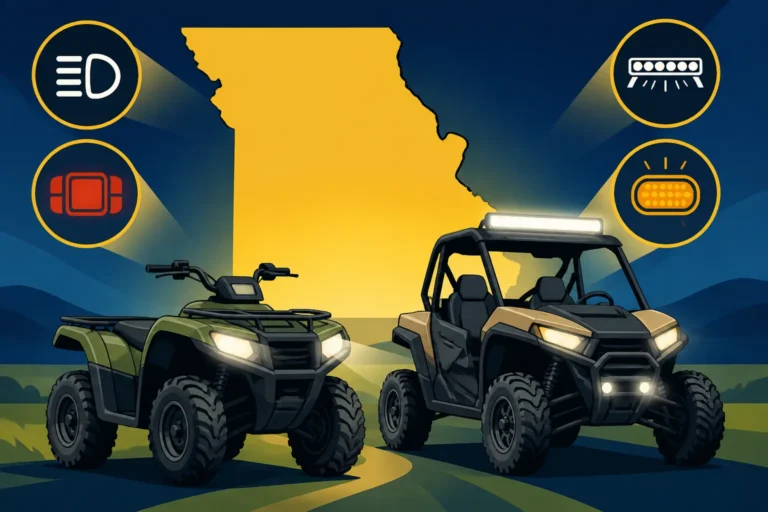
Common requirements include headlamps and tail lamps that are operational and visible, especially during dawn, dusk, or nighttime use. [Missouri Lighting Requirements for ROVs] Some local ordinances might also mandate turn signals, a horn, or even a rearview mirror. A critical safety feature for ROVs on roads is a safety flag. Missouri generally requires a flag to be mounted at least seven feet above the ground, often blaze orange, to enhance visibility to other motorists. [Missouri Safety Flag Requirements] You can find many of these items, from advanced lighting kits to robust safety flags, at retailers like SuperATV.
Before hitting any public road, even under a permit, perform a thorough pre-ride inspection. Check your tires, brakes, lights, and ensure all required safety equipment is properly installed and functioning. Having a well-maintained and properly outfitted machine not only keeps you compliant but significantly reduces the risk of an accident on paved surfaces where your off-road vehicle might not handle as expected.
Know Before You Go: Researching Local Ordinances
The patchwork of ATV and UTV laws across Missouri can be confusing. State laws set the baseline, but local cities and counties have the power to create their own ordinances that might allow or restrict use on their specific roads. What's allowed in Lake Ozark might be strictly forbidden in a neighboring rural township.
Before you ever consider operating your ATV or UTV on a public road, do your homework. A simple call or visit to the city hall or county sheriff's department for the specific area you plan to ride in can clarify the rules. Ask about any required permits, fees, equipment requirements, and specific roads or times of day where operation is allowed. Do not assume. Do not rely on old information or what someone else told you. Laws and ordinances can change.
Keeping a copy of any valid permit or a printout of the relevant ordinance (if you can find it online) with you while riding can also be helpful if you encounter law enforcement. Being informed and prepared is your strongest defense against misunderstandings and potential legal trouble. Enjoy the incredible riding opportunities Missouri offers, but always do so with knowledge and respect for the law.
Missouri ATV and UTV Violation Comparison
Here's a quick look at common violations and their potential consequences in Missouri, keeping in mind that actual fines and penalties can vary based on specific circumstances, local ordinances, and repeat offenses.
| Violation Category | Example Offense | Typical Initial Consequence | Potential Escalation | Criminal Record Impact |
|---|---|---|---|---|
| Illegal Road Operation | Riding an ATV on a public highway without exemption | Traffic citation, significant fine | Class C Misdemeanor (repeated/aggravated) | Yes, for Misdemeanor conviction |
| No Local Permit | Operating a UTV on city streets without a permit | Traffic citation, fine | Class C Misdemeanor (repeated) | Yes, for Misdemeanor conviction |
| Age Restriction Violation | Underage rider on ATV on public road | Citation for rider/supervising adult | Class C Misdemeanor for adult | Yes, for Misdemeanor conviction |
| No Helmet (Minor) | Rider under 18 without helmet on public land/road | Citation, fine | Possible misdemeanor if compounded | Rarely, unless compounded |
| Improper Passenger | Carrying an unauthorized passenger on ATV | Citation, fine | Possible misdemeanor if compounded | Rarely, unless compounded |
| No Safety Flag (ROV) | Operating ROV under 3-mile rule without flag | Citation, fine | Rarely, usually a civil infraction | No |
| No Operational Head/Tail Lamps | Riding ROV on road at night with lights off | Citation, fine | Rarely, usually a civil infraction | No |
Disclaimer
This article is for general informational purposes only and does not constitute professional advice. Laws, prices and regulations vary by location and change over time. Consult a qualified professional for guidance on your specific situation.