Lake Ozark’s 45 mph Streets
Oh, the dream of cruising through Lake Ozark on your UTV, heading from the lake house to a restaurant, or just enjoying the scenery without having to load up the trailer every time! It's a fantastic idea, and for many, it's a huge draw to places like Lake Ozark. But navigating the rules for driving your side-by-side on public streets, especially in a popular tourist destination with specific speed limits like 45 mph, can feel like trying to solve a Rubik's Cube blindfolded. This guide is here to untangle those rules, clarify what's allowed, and help you understand how to make your UTV street-legal for those coveted Lake Ozark cruises.
The Unique Landscape of Lake Ozark and UTV Road Use
When you think about places where you can openly cruise your UTV on paved roads in Missouri, Lake Ozark often comes to mind. It's one of those spots that has embraced the recreational spirit, creating a unique environment for side-by-side enthusiasts. But it's not a free-for-all; there are specific reasons and regulations that make this possible.
Why Lake Ozark Stands Out for UTV Riders
Missouri, by and large, has some pretty strict rules when it comes to riding ATVs and UTVs on public roads. For the most part, state statutes prohibit it, making it a frustrating experience for many who just want to run to the corner store or access a trail without hauling their machine. This is where Lake Ozark has taken a different path, recognizing the local culture and the potential for recreational vehicles to enhance the visitor experience. Many communities around Missouri are seeing the appeal of letting UTVs operate on local streets for convenience and tourism, but Lake Ozark was an early adopter and a model for what's possible. They understand that for many residents and visitors, their UTV isn't just a trail machine; it's a part of their lifestyle, a convenient way to get around the sprawling lake community, access boat docks, restaurants, and shops. This community-focused approach has allowed them to implement local ordinances that permit UTV use where the state otherwise wouldn't. This kind of local control is a lifesaver for riders.
Understanding the 45 MPH Speed Limit
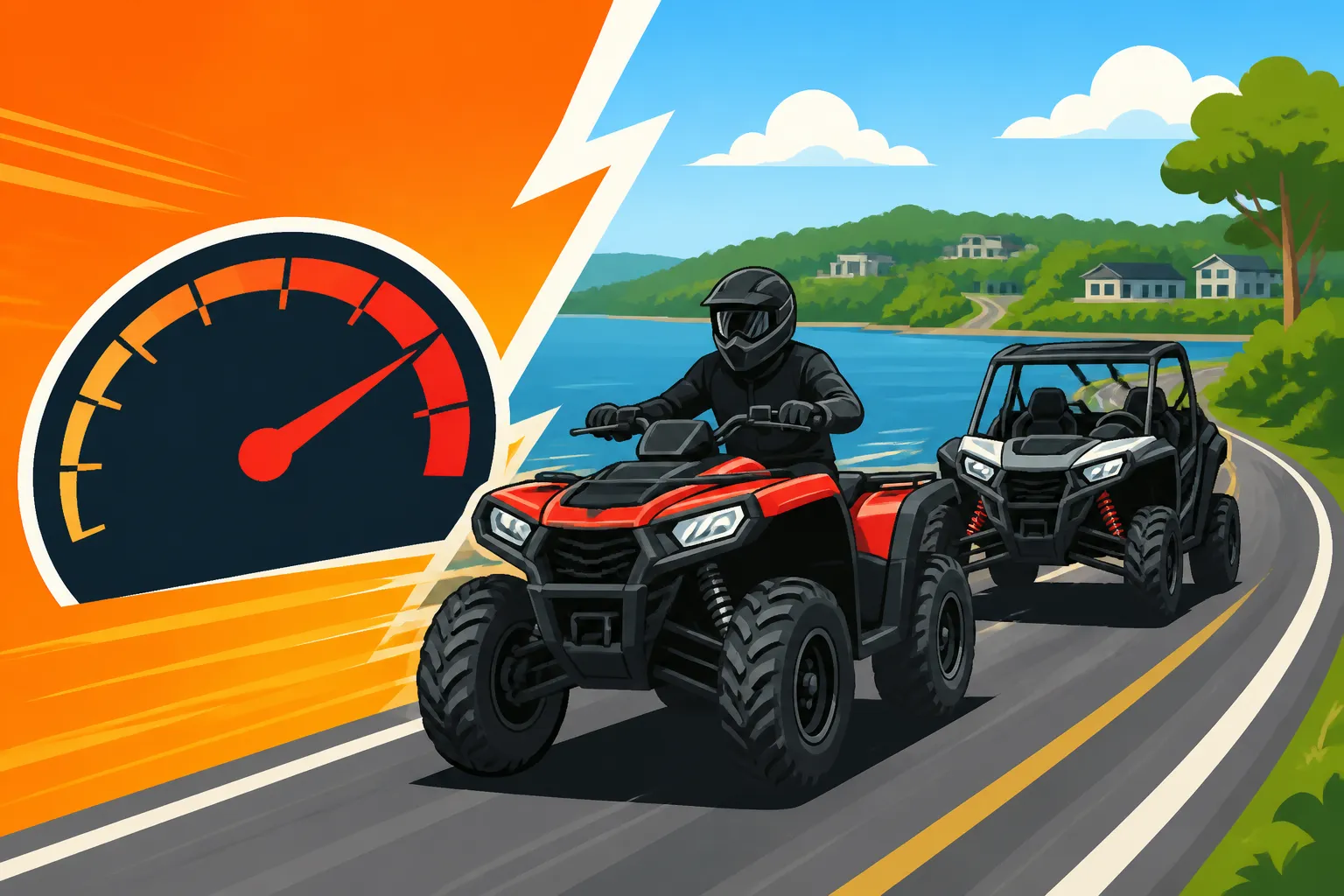
Now, when you hear "45 mph streets" in Lake Ozark, it's crucial to understand what that actually means. It doesn't mean your UTV needs to be capable of hitting and maintaining 45 mph, or that you're expected to cruise at top speed everywhere. Instead, it refers to the posted speed limit of the streets where UTVs are permitted to operate. Many roads in and around Lake Ozark have posted speed limits of 45 mph or less, making them eligible under the local ordinances for UTV travel, provided your machine meets all other street-legal requirements.
The intention is to allow UTVs on roads where traffic typically flows at moderate speeds, not high-speed state highways. This distinction is vital because it addresses safety concerns. A UTV, even one equipped for street use, handles differently than a passenger car, especially at higher speeds. The fact that the city has set these parameters shows a thoughtful approach to integrating UTVs safely into their traffic flow. It's about blending the fun of UTV ownership with the practicalities of navigating a busy community, giving you direct access to everything Lake Ozark has to offer, from the Strip to the quiet coves.
Missouri's General Stance on ATVs and UTVs on Public Roads
Before we dive deeper into Lake Ozark's specific rules, it's really helpful to understand the baseline—how Missouri generally views ATVs and UTVs on its public roadways. This context helps you appreciate why places like Lake Ozark have to go through a special process to allow them at all.
The Core Rules: Why Most Roads Are Off-Limits
For most of Missouri, taking your ATV or UTV out on a public street or highway is simply against the law. The state statutes are pretty clear on this. Generally, these machines are classified as off-road vehicles (ORVs) and are not designed or legally equipped for road use. This is often a source of great frustration for riders, especially those who live in rural areas or near trail systems and just want to get from point A to point B without loading up a trailer.
The legal definitions are key here. Missouri law differentiates between "All-Terrain Vehicles" (ATVs), "Utility Vehicles" (UTVs), and "Recreational Off-Highway Vehicles" (ROVs). While all fall under the broader umbrella of ORVs, their specific definitions can sometimes influence how local ordinances address them. ATVs are typically characterized by a straddle seat and handlebars, designed for a single rider or a rider and one passenger (if designed for it), and usually limited to 50 inches in width. UTVs and ROVs, which most people casually call side-by-sides, are wider, have a steering wheel, and usually bucket seats or bench seats, with a roll bar or cage. Most of the time, when we talk about street-legal conversions, we're talking about these wider, multi-passenger machines.
The bottom line is, without a specific local ordinance or one of the narrow state-level exceptions, if you're riding your quad down a county road or a state route, you're likely breaking the law. This is why it's so important to understand the distinctions and local variations. It's why riders often ask, [Are ATVs Street Legal in Missouri?] and [Can You Drive a UTV on a Missouri Road?]. The answer is usually "no," unless a specific exception or local ordinance applies. It's also why [Why Missouri Splits ATVs, UTVs and ROVs] is not just academic; it has real-world implications for how and where you can ride.
Exceptions to the Rule: Agricultural, Industrial, and Local Ordinances
Now, like almost every rule, there are exceptions. Missouri law does allow for very specific circumstances where an ORV might touch a public road. These typically include:
- Agricultural Use: Farmers can use ATVs and UTVs for agricultural purposes on public roads during daylight hours, but only for short distances to cross roads or travel between fields. This is usually restricted to roads with speed limits of 45 mph or less and requires the display of a slow-moving vehicle sign. It's not for joyriding to town; it's strictly for farm work. [Missouri's Agricultural Highway Exception] explains more about this.
- Industrial Use: Similarly, industrial operations might be permitted to use these vehicles on public roads for short distances within an industrial area.
- Crossing a Highway: There are specific rules for crossing state highways, typically at a 90-degree angle, to get from one section of property to another, but not for traveling along the highway.
- The 3-Mile Rule: A less common but important exception is the "3-mile rule" for ROVs, where an operator can travel up to three miles from their residence to access a hunting or fishing area, or to a gas station/supply store. This is quite limited in its scope and has specific requirements. [Missouri's 3-Mile Rule for Side-by-Sides] delves into this.
However, the biggest and most impactful exception for recreational riders looking to cruise streets like those in Lake Ozark comes from local ordinances. Missouri state law gives cities and counties the authority to pass their own ordinances allowing the operation of UTVs and ROVs on public roads within their jurisdiction, provided those roads have a speed limit of 45 mph or less. This is the legal pathway that places like Lake Ozark, Harrisonville, Union, and others have used to open their streets to side-by-sides, creating the vibrant riding opportunities we see. Without this local control, the dream of cruising a UTV through a town would remain just that—a dream.
Navigating Lake Ozark's UTV Ordinances: What You Need to Know
Alright, let's get down to brass tacks. You're in Lake Ozark, you've got your UTV, and you're ready to hit those 45 mph streets. But what exactly do you need to do to make sure you're riding legally and safely? It's more than just having a UTV; it's about meeting specific local requirements.
The Specific Requirements for Lake Ozark Road Legality
Because local ordinances vary, what works in one town might not fly in Lake Ozark. When a city decides to allow UTVs on its streets, it typically outlines a strict set of conditions that these vehicles must meet to be considered "street-legal" within their jurisdiction. These are usually in place to ensure the safety of the UTV operator, passengers, and other motorists, effectively bringing the UTV up to a standard closer to a low-speed vehicle or even a car for road use.
While specific rules can change, common requirements in such ordinances often include:
- Headlights and Taillights: These aren't just for looking cool; they're vital for visibility, especially during dawn, dusk, or in inclement weather. And they need to be working properly, not just dim trail lights.
- Brake Lights: Essential for signaling your deceleration to vehicles behind you.
- Turn Signals: You need to clearly indicate your intentions when turning or changing lanes.
- Rearview Mirrors: At least one rearview mirror, often two (side mirrors), to provide adequate visibility of traffic behind you.
- Horn: A working horn is crucial for alerting pedestrians or other drivers to your presence.
- Seat Belts: All occupants must be properly restrained with seat belts, and the UTV must be equipped with them from the factory or as an aftermarket addition. [Missouri Seat Belt Rules in a Side-by-Side] emphasizes their importance.
- Windshield: While not always mandatory, a windshield is highly recommended for protection from road debris and weather. If your UTV has one, it needs to be made of safety glass or a similar shatter-resistant material.
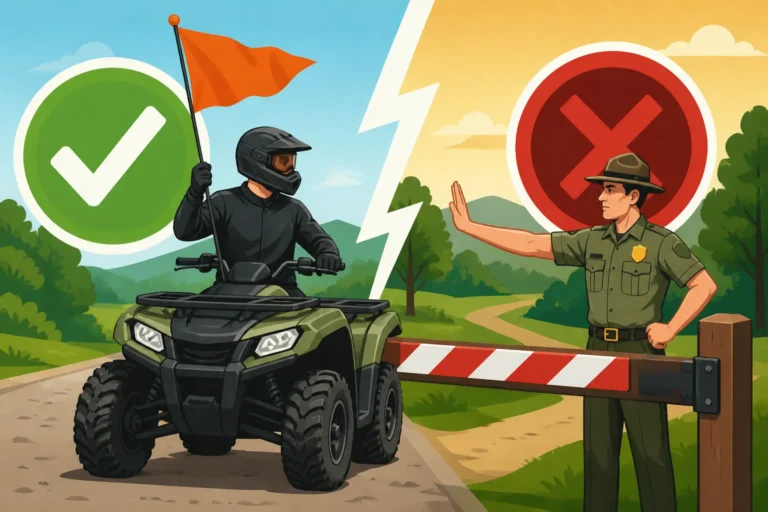
- Safety Flag: Often, a bright orange or red flag, mounted high (typically at least 7 feet from the ground), is required to increase visibility, especially over hills or in traffic. This is a common requirement in Missouri for off-road parks too, but for road use, it serves a different purpose, making your smaller vehicle more noticeable. [Missouri Safety Flag Requirements] covers this.
- Tires: While not always explicitly stated beyond "DOT-approved," tires suitable for pavement use are a good idea for better handling and longevity on asphalt.
- Proof of Insurance: Just like any other vehicle on the road, you'll need liability insurance. [Missouri ATV Insurance Requirement] applies here, even for UTVs under local ordinances.
- Operator's License: The person driving must hold a valid driver's license, typically an operator's or chauffeur's license, depending on the state's classification. [Missouri Driver's License Rules for ROVs] is clear on this.
It's absolutely paramount to check the current, exact ordinances for the City of Lake Ozark. These rules are usually available on the city's official website or by contacting their city hall or police department directly. Do not rely on hearsay or what someone else did last year, as rules can change.
Permit Process and Costs in Lake Ozark
So, you've equipped your UTV with all the necessary safety gear. What's next? In most localities that permit UTVs on their streets, you'll need to obtain a special local permit. This is essentially the city's way of verifying that your machine meets their requirements and that you're aware of the rules.
The process for obtaining a UTV permit in Lake Ozark typically involves:
- Application: Filling out an application form, usually available at the city hall or police department.
- Inspection: Your UTV will likely need to pass a safety inspection to ensure it has all the required equipment (lights, mirrors, horn, seatbelts, etc.). This inspection might be conducted by a police officer or a designated city official. They'll be looking for things like [Missouri Lighting Requirements for ROVs] and that your safety flag meets the [Missouri Safety Flag Height] requirement.
- Documentation: You'll need to provide proof of ownership (title or bill of sale), proof of insurance, and a valid driver's license.
- Fee Payment: There will be an associated fee for the permit. These fees are usually modest and help cover the administrative costs of the program. While I can't provide current figures, be prepared for a nominal annual or multi-year fee. [Missouri Special Permit Cost for ATVs] might give you an idea of what other localities charge, but Lake Ozark's specific UTV permit fee will be unique.
- Permit Display: Once approved, you'll be issued a permit or decal that must be prominently displayed on your UTV, signifying its road-legal status within the city limits.
The best place to start this process is by contacting the Lake Ozark Police Department or City Hall. They can provide you with the most up-to-date application forms, inspection checklists, and fee schedules. [Getting a Road Permit From a Police Department] is usually the first step for these local permits.
Understanding Which Streets Are Permitted for UTVs
Just because you have a street-legal UTV and a permit doesn't mean you can drive it on every street in Lake Ozark. Local ordinances typically specify which roads are open to UTV traffic. This is where the "45 mph streets" designation comes in.
Generally, UTVs are permitted on city streets with posted speed limits of 45 mph or less. This usually excludes major state highways or bypasses that run through or near the city, where speeds are much higher and traffic volume is greater. These faster, arterial roads are often under state jurisdiction, making it more complicated for local ordinances to supersede state law.
You might find maps provided by the city that delineate the approved UTV routes. Pay close attention to these. Some areas, like the highly trafficked Bagnell Dam Strip, might be explicitly included, while others, like the main highways leading into town, might be excluded. It's not uncommon for cities to strategically open certain roads to connect key attractions, residential areas, and commercial districts, while keeping UTVs off high-speed throughways.
Always look for signage or consult an official city map. Riding on a prohibited road, even by accident, can result in a citation and fines, which nobody wants when they're trying to enjoy a beautiful day at the lake. Staying on the designated roads is key to keeping this privilege available for everyone.
Essential Gear and Modifications for Road-Legal UTVs in Missouri
Making your UTV street-legal for Lake Ozark isn't just about getting a permit; it's often about ensuring your machine is properly equipped. This means adding or upgrading certain components to meet safety standards. It's where aftermarket solutions really shine, allowing you to tailor your UTV for both trail and road use.
Upgrading for Safety: Lights, Mirrors, and Horns
When you're sharing the road with cars, trucks, and motorcycles, your UTV needs to be seen and heard. The basic trail lights that came from the factory often just aren't enough for street use.
- Lighting Systems: This is probably the biggest upgrade for most UTVs. You'll need proper DOT-compliant headlights that cast a beam similar to a car's, along with bright taillights. Crucially, turn signals are almost always required. Many aftermarket companies, including well-known brands like SuperATV, offer complete street-legal kits that include all the necessary wiring, switches, turn signals, and often a horn. These kits are designed to integrate seamlessly with your UTV's electrical system, making the conversion much easier than sourcing individual components. Having clear, visible [Missouri Lighting Requirements for ROVs] is non-negotiable for road safety.
- Mirrors: You absolutely need rearview mirrors. Most ordinances require at least one, and many riders opt for a full set—a wide rearview mirror and two side mirrors—to eliminate blind spots. This dramatically improves your awareness of surrounding traffic, which is critical when navigating turns or changing lanes in a UTV. A good set of mirrors can make all the difference when you're backing out of a parking spot at a busy Lake Ozark restaurant.
- Horn: A loud, clear horn is a fundamental safety device. It allows you to alert other drivers or pedestrians to your presence in situations where they might not see you, which can be surprisingly common with a smaller, quieter UTV. Again, many street-legal kits will include a horn.
Investing in high-quality, durable components for these safety upgrades is always a good idea. Not only do they help you meet the legal requirements, but they also significantly enhance your safety and confidence when operating your UTV on paved roads.
Enhancing Visibility: Safety Flags and Reflective Markings
Beyond active lighting, passive visibility aids are incredibly important, especially for UTVs that are lower to the ground than many passenger vehicles.
- Safety Flags: As mentioned earlier, a safety flag is frequently a mandatory requirement for UTVs operating on public roads under local ordinances. The flag, usually bright orange or red, should be mounted on a mast that extends a minimum height above your UTV – often around 7 feet or more from the ground. This extended height makes your UTV much more visible over hills, around bends, and in heavy traffic, acting as an early warning sign for other drivers. Imagine cresting a hill on a busy Lake Ozark road; that flag can be seen long before the UTV itself. You can find excellent flag mounts and high-visibility flags from accessory providers, ensuring you meet the local [Missouri Safety Flag Height] regulations.
- Reflective Markings: While not always explicitly required by law, adding reflective tape to the sides and rear of your UTV is a smart move. It provides an extra layer of visibility, especially at night or in low-light conditions, reflecting light from other vehicles' headlights. This passive safety measure can prevent accidents by making your machine more noticeable from various angles. Think about parking along a street at dusk; reflective tape makes your UTV pop.
Combining these elements creates a much safer profile for your UTV on the road. Remember, the goal is not just to comply with the law, but to ensure you and your passengers are as safe as possible while enjoying your ride.
Performance and Ride Quality for Pavement
While safety is paramount, nobody wants a miserable ride. Transitioning from dirt trails to asphalt changes a UTV's handling characteristics, and some adjustments or accessories can greatly improve the experience.
- Tires: Your knobby, aggressive mud tires are fantastic in the slop, but on pavement, they wear down quickly, create a lot of road noise, and can feel squirmy. Swapping to a set of DOT-approved radial tires designed for mixed terrain or even specific street use can make a huge difference. These tires offer better grip on asphalt, a smoother and quieter ride, and significantly longer tread life when used on roads.
- Suspension Adjustments: While you might not need a full suspension overhaul, some riders find that adjusting their existing suspension can improve the on-road ride. Stiffer settings can reduce body roll on turns, making the UTV feel more stable. However, remember you still want comfort for any trail excursions you might make.
- Windshields and Roofs: While a windshield is often a legal requirement, even if it's not, it's a huge comfort upgrade for road use. It protects from wind, bugs, and road debris, making longer rides much more enjoyable. A roof, if you don't already have one, provides shade from the Missouri sun and protection from unexpected rain showers. Many accessory companies, including SuperATV, offer a wide range of windshields (glass, polycarbonate, flip-up) and hard or soft roofs that can dramatically improve your road-riding experience. These types of creature comforts transform your UTV from a purely utilitarian off-road tool into a versatile recreational vehicle.
These modifications aren't about making your UTV a sports car, but about optimizing its performance and comfort for the specific demands of paved roads. A well-equipped UTV handles better, is safer, and ultimately provides a more enjoyable experience when cruising those Lake Ozark streets.
Operator Responsibilities and Best Practices for Lake Ozark Roads
Getting your UTV street-legal and equipped is a big step, but the most important factor in safe and enjoyable road riding is you, the operator. Even with all the right gear and permits, responsible driving is key to maintaining this privilege in places like Lake Ozark.
Licensing, Insurance, and General Road Rules
Operating any motor vehicle on public roads comes with inherent responsibilities, and a street-legal UTV is no exception. You're expected to act just like any other driver.
- Valid Driver's License: This is non-negotiable. You must possess a valid driver's license (an operator's license or chauffeur's license, depending on the state's classification) issued by your state of residence. [Missouri Driver's License Rules for ROVs] clearly state that you need a proper license to operate these vehicles on roads where permitted. Without it, you're not only risking a citation but also potentially invalidating your insurance.
- Proof of Insurance: Liability insurance is a must. Just as you need it for your car or truck, you need it for your UTV if you're taking it on public roads. This protects you and others in case of an accident. Carry proof of insurance with you, as you would with any other vehicle. When you talk to your insurance provider, be very clear that you intend to operate your UTV on public roads in certain areas, as this might require a specific type of coverage or rider. [Missouri ATV Insurance Requirement] applies here.
- Obey All Traffic Laws: This might sound obvious, but it bears repeating. All traffic laws—speed limits (yes, even on those 45 mph streets, you still need to drive with the flow of traffic but within the posted limits), stop signs, traffic lights, right-of-way rules, and lane markings—apply to your UTV. Don't treat your UTV like a toy on the road; it's a vehicle like any other. This also includes rules against distracted driving, such as using your phone. Remember, the general "rule of cool" does not apply; follow the actual rules of the road.
Passenger Rules and Safe Operation
UTVs are often designed for multiple passengers, making them great for family outings. However, there are still rules and best practices to ensure everyone's safety on the road.
- Passenger Limits: Adhere strictly to the manufacturer's specified seating capacity for your UTV. If it's a two-seater, only two people. If it's a four-seater, no more than four. Overloading a UTV, especially with passengers, can compromise its handling and stability, making it dangerous on paved roads. [Missouri Passenger Rules for a Passenger in a UTV] are there for a reason—to prevent serious injury.
- Seat Belts: All occupants, including the driver and all passengers, must wear their seat belts at all times when the UTV is in motion on public roads. This is usually a core part of any local ordinance allowing UTVs on streets. Ensure your UTV is equipped with proper seat belts for every designated seating position.
- Safe Driving Practices: Drive defensively. UTVs have a higher center of gravity than most cars, making them more prone to rollovers if cornered too fast or handled recklessly. They also have different braking characteristics. Be mindful of your UTV's limitations, especially when merging with faster traffic or navigating busy intersections. Avoid sudden maneuvers, excessive speed, and any behavior that could be perceived as reckless or unsafe by other drivers or law enforcement. Be especially careful if you've added heavy accessories like plows or cargo racks; these can change the weight distribution and handling.
Respecting Local Residents and Maintaining Access
The privilege of riding your UTV on Lake Ozark streets is not universal across Missouri. It's largely due to the proactive decisions of local governments, often influenced by the community itself. To keep this privilege, UTV riders must be good stewards.
- Noise and Emissions: While UTVs are getting quieter, some aftermarket exhausts can be quite loud. Be mindful of residential areas and noise levels. Excessive engine noise, especially late at night or early in the morning, can quickly annoy residents and lead to complaints, which in turn can lead to stricter rules or even the revocation of UTV access. Similarly, ensure your UTV isn't emitting excessive smoke or fumes.
- Dust and Property: Stick to the paved roads. Don't cut through private property, fields, or kick up excessive dust on unpaved shoulders or alleys. Respect private property signs and fences.
- Be a Good Ambassador: Every time you drive your UTV on Lake Ozark streets, you are representing the entire UTV riding community. Your actions, whether good or bad, reflect on everyone. Polite, safe, and respectful riding helps to reinforce the positive image of UTVs as a legitimate and enjoyable mode of transportation and recreation. Conversely, reckless or inconsiderate behavior can quickly sour public opinion and jeopardize future access.
By taking these responsibilities seriously, you not only ensure your own safety but also help secure the future of UTV road access in Lake Ozark and potentially inspire other communities to follow suit. Enjoy the scenic cruises and convenient access that Lake Ozark offers, but always do so with respect for the rules and the community.
Missouri ATV and UTV Road Use Comparison
Here's a quick look at the general differences between how Missouri treats ATVs and UTVs/ROVs on public roads, and how a place like Lake Ozark might apply its own rules.
| Feature / Aspect | General Missouri State Law (ATV) | General Missouri State Law (UTV/ROV) | Lake Ozark Ordinance (UTV/ROV) |
|---|---|---|---|
| Primary Road Access | Generally prohibited. | Generally prohibited. | Permitted on designated city streets (typically ≤ 45 mph). |
| Exceptions | Agricultural/industrial use, highway crossing. | Agricultural/industrial use, highway crossing, 3-mile rule for ROVs. | Requires local permit; specific local requirements apply. |
| Driver's License | Not required for off-road use; required for any permitted road use. | Required for any permitted road use (operator's/chauffeur's). | Required (valid operator's/chauffeur's license). |
| Insurance | Not legally required for off-road use; recommended. | Not legally required for off-road use; recommended. | Required (liability insurance). |
| Required Safety Gear | None specific for off-road; minimal for ag use (SMV sign). | None specific for off-road; minimal for ag use (SMV sign). | Headlights, taillights, brake lights, turn signals, mirrors, horn, seat belts, safety flag. |
| Speed Limit | N/A (prohibited on roads). | N/A (prohibited on roads, except limited exceptions ≤ 45 mph). | Must adhere to posted city speed limits (permits on roads ≤ 45 mph). |
| Permit/Registration | State decal for off-road areas (not road registration). | State decal for off-road areas (not road registration). | City-issued permit/decal required for road use. |
| Passenger Rules | One rider, unless designed for two. | Seating capacity limited by design. | All passengers must be seated and belted; capacity limited by design. |
This article is for general informational purposes only and does not constitute professional advice. Laws, prices and regulations vary by location and change over time. Consult a qualified professional for guidance on your specific situation.