Missouri Rules for Agricultural Road Use
For many Missouri farmers and rural landowners, an ATV or UTV is less about recreation and more about essential daily work. Hauling feed, checking fences, or moving equipment across properties often requires crossing or briefly traveling on public roads. This necessity often bumps up against the general rules prohibiting OHVs on highways, leading to confusion and worry about legal consequences. This guide will clarify Missouri's specific allowances for agricultural road use, helping you understand when and how you can legally operate your machine for farm work.
Understanding Missouri's Agricultural Highway Exception
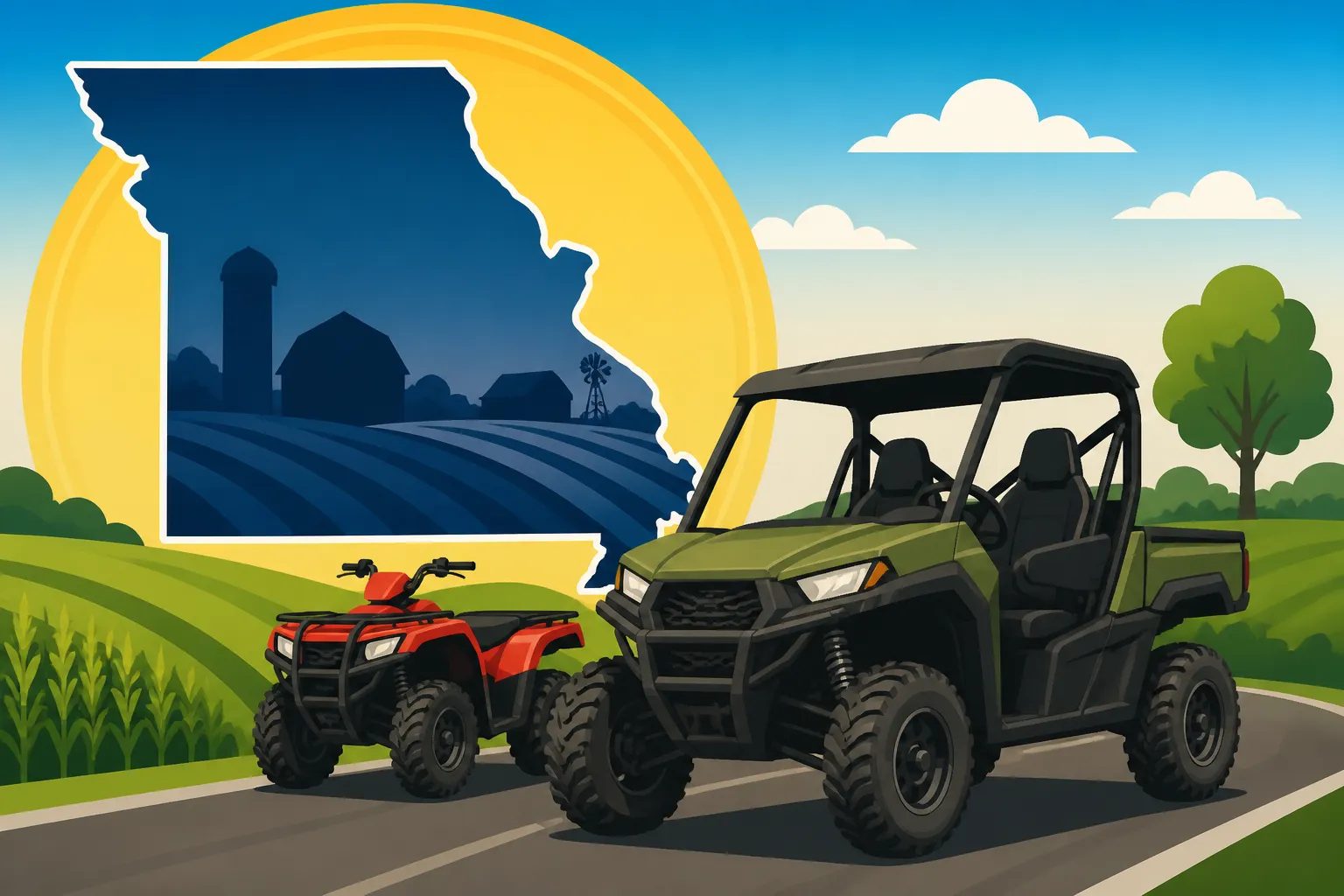
Missouri law, recognizing the practicalities of rural life and farming operations, carves out a specific exception for off-highway vehicles used for agricultural purposes. This isn't a blanket permission to joyride on county roads, but rather a targeted allowance for specific work-related activities. It's designed to help you get your work done efficiently without fear of constant legal repercussions, provided you understand and adhere to the boundaries of the exception. This provision is separate from the more common rules regarding city or county permits for general road use, and it applies strictly to farming or agricultural tasks.
What Qualifies as "Agricultural Purpose"?
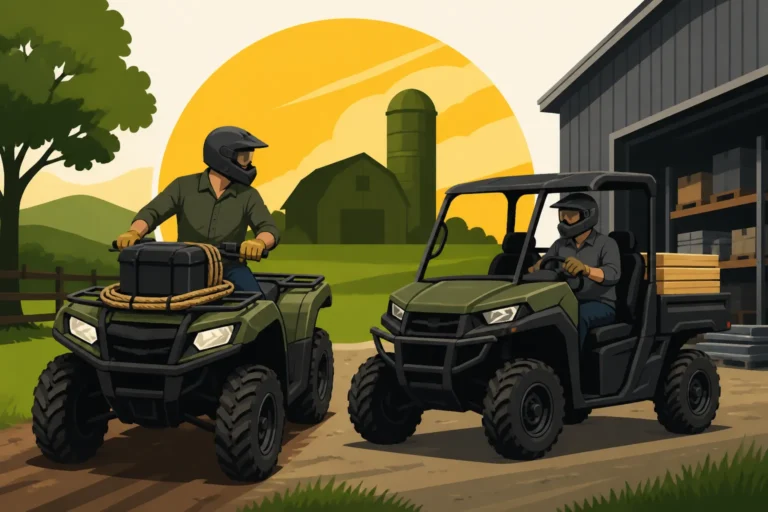
When the law talks about "agricultural purposes," it's generally referring to activities directly related to the operation of a farm, ranch, or agricultural enterprise. This includes things like tending to livestock, planting and harvesting crops, hauling tools or supplies to a field, repairing fences, or performing other necessary farm maintenance. It's about using the machine as a functional piece of farm equipment.
For example, if you're taking your side-by-side, perhaps one fitted with a SuperATV cargo bed, across a gravel road to move mineral blocks to your cattle in the next pasture, that clearly falls under an agricultural purpose. The machine is actively engaged in supporting your farming operations. Similarly, if you're using your quad to inspect irrigation lines that run alongside a public road, that would also be considered agricultural use. The key is that your primary reason for being on the road at that moment is tied directly to your farm's needs, not leisure.
The Sunrise to Sunset Restriction
One of the most important limitations of the agricultural highway exception in Missouri is the "sunrise to sunset" rule. This means that if you're operating your ATV or UTV on a public road under this specific agricultural exemption, you are only permitted to do so during daylight hours. As soon as dusk settles in, or before the sun fully rises, this particular allowance no longer applies.
Imagine you're out checking a fenceline with your UTV just as the sun is dipping below the horizon, and you still have a short stretch of county road to traverse to get back to your barn. While you might still be actively engaged in farm work, technically, once it's dark, you've stepped outside the bounds of this specific exemption. This rule is in place largely for safety reasons, as ATVs and UTVs are not typically equipped with the same robust lighting and signaling systems as street-legal vehicles, making them harder to see in low light conditions. You might be able to ride a [Missouri Agricultural Use From Sunrise to Sunset] vehicle on public roads, but only during certain hours.
Navigating Public Roads for Farm Work
While the agricultural exemption provides a vital lifeline for farmers, it's crucial to understand the nuances of its application on different types of public roads and for different machine types. Missouri distinguishes between various vehicle categories, and these distinctions can impact how and where you can legally operate them for farm-related tasks. It's not just about what you're doing, but also where you're doing it.
Crossing and Traveling on Highways
The agricultural exception primarily allows for crossing highways and, in some cases, traveling short distances along the shoulder of state routes or county roads to get from one part of your property to another. It's not intended for extended travel down busy thoroughfares. The intent is to facilitate necessary movement, not to replace the need for trailers for long-distance transport.
For instance, if your farm spans both sides of a state highway, you can generally cross that highway directly to access your fields on the other side. However, if you need to travel a mile down that same highway to reach another field entrance, that might push the boundaries of what's considered a "short distance" under this exception. On lesser-trafficked county or gravel roads, the interpretation might be a bit more flexible regarding short travel distances, but the core principle remains: the travel must be minimal and directly incidental to the agricultural activity. Remember, the law is primarily about crossing, not cruising. [Crossing a Missouri Highway on a Quad] for farm work is generally allowed, but be quick and cautious.
The Difference Between ATVs and UTVs for Agricultural Use
Missouri law often makes distinctions between ATVs (All-Terrain Vehicles) and UTVs (Utility Task Vehicles) or ROVs (Recreational Off-Highway Vehicles), even when it comes to agricultural use. While both generally fall under the agricultural exemption for specific tasks, how local jurisdictions or even state patrols view their operation can sometimes vary due to their design differences.
ATVs are typically designed for single riders, with a straddle seat and handlebars, making them nimble but less stable for heavy hauling or passengers. UTVs, or side-by-sides, on the other hand, usually have bench or bucket seats, a steering wheel, and a roll cage, often with a cargo bed. Their design makes them inherently more stable for carrying loads and can sometimes feel more "vehicle-like" to law enforcement. When you're outfitting your UTV with robust parts from SuperATV for heavy farm use, it truly functions as a utility vehicle. While the state statute allows both, some local ordinances or even individual officers might be more accustomed to seeing UTVs on agricultural roads due to their utility design. [What the Law Calls a Utility Vehicle] and [What the Law Calls a Recreational Off-Highway Vehicle] clarifies these distinctions in Missouri law, which can be helpful context.
| Feature | ATV (All-Terrain Vehicle) | UTV/ROV (Utility Task/Recreational Off-Highway Vehicle) |
|---|---|---|
| Seating | Straddle seat | Side-by-side seating (bench or bucket) |
| Steering | Handlebars | Steering wheel |
| Roll Protection | None or limited | Roll cage (typically standard) |
| Cargo Capacity | Limited racks, sometimes small trailer hitch | Often features a dedicated cargo bed, higher towing capacity |
| Passenger Cap. | Usually single-rider (some designed for two) | Typically multiple passengers (two to six, depending on model) |
| Agricultural Use | Permitted under specific exemption | Permitted under specific exemption |
| Perceived Safety | Generally seen as less stable on roads | Generally perceived as more stable and car-like on roads |
Staying Compliant and Safe
Even with the agricultural road use exception, operating your OHV on public roads requires a heightened sense of responsibility. This isn't just about avoiding a ticket; it's about ensuring your safety and the safety of others sharing the road. A little common sense and preparation can go a long way in preventing accidents and misunderstandings with law enforcement.
Essential Safety Practices for Road Use
When you do take your ATV or UTV on a public road for farm work, safety must be your absolute top priority. These machines are not designed for road travel, and even a short trip requires vigilance. Always wear appropriate safety gear, including a helmet, even if you’re only going a short distance. While Missouri's helmet law primarily focuses on riders under 18, it's a smart practice for everyone on public roads. Consider adding additional reflective tape or flags to your machine to increase visibility to other motorists.
Maintain a slow, steady speed, especially on gravel roads or when crossing pavement. Remember, car drivers might not expect to see an ATV or UTV, and they might misjudge your speed or intentions. Avoid sudden turns or maneuvers that could upset the balance of your machine. Ensuring your tires are in good condition and at the proper pressure for the load you're carrying can also prevent issues. If you've upgraded to heavy-duty SuperATV tires for your farm UTV, ensure they're appropriate for the mixed terrain of field and road. Being predictable and visible are your best defenses.
Documenting Your Agricultural Purpose
While Missouri law provides the exemption, it's always a good idea to be prepared to explain and, if possible, demonstrate your agricultural purpose if questioned by law enforcement. An officer might not immediately know you're headed to check your cattle's water trough; they just see an ATV on a public road.
Carrying some form of identification that links you to a farm operation, or even just being able to clearly articulate your task, can often smooth things over. For instance, if you're hauling a sprayer to a field, the sprayer itself is a clear indicator of agricultural use. If you're simply riding to check a fence line, you might carry a small tool bag with fencing pliers or wire. The goal isn't necessarily to prove anything in a legal sense on the spot, but rather to quickly and clearly communicate that your activity falls within the spirit and letter of the [Missouri Agricultural Highway Exception]. It prevents a situation from escalating into a misunderstanding that could lead to a citation.
Potential Penalties for Misuse
Operating an ATV or UTV on Missouri public roads outside of the defined agricultural exemption or other legal allowances can lead to significant penalties. These machines are generally prohibited on highways, and violating this can result in citations, fines, and potentially even your machine being impounded. The exact [Missouri Fines for Illegal ATV Road Use] can vary depending on the specific statute violated and whether it's a first offense or a repeat issue.
It's a common misconception that because you live in a rural area, "everyone does it," and therefore it's automatically acceptable. This simply isn't true. A deputy or state trooper has every right to enforce the law, and ignorance of the law is not a valid defense. Always ensure that if you're on a public road, you are strictly adhering to the "sunrise to sunset" rule, engaging in legitimate "agricultural purposes," and making your travel as brief and direct as possible. Straying from these guidelines can quickly turn a necessary chore into an expensive legal headache. Remember that these rules are distinct from those governing [Missouri's 3-Mile Rule for Side-by-Sides] or [Missouri's Special Permit for Road Use], which are for different types of road access.
Disclaimer
This article is for general informational purposes only and does not constitute professional advice. Laws, prices and regulations vary by location and change over time. Consult a qualified professional for guidance on your specific situation.