Belting In Under Missouri’s ROV Rule
It's incredibly frustrating when you just want to take your side-by-side or ROV down the road for a quick trip, whether it's to the local store, a neighbor's house, or to get to a trail, and you're not sure about all the rules. The confusion around what makes a machine "street legal" in Missouri, especially when it comes to safety features like seatbelts, can feel like a minefield. This guide is here to untangle the specifics of belting in under Missouri's ROV rule, so you can ride with confidence and clarity.
Understanding Missouri's ROV Definition and Road Use Exceptions
Before we dive into seatbelts, it's crucial to understand what Missouri classifies as an ROV (Recreational Off-Highway Vehicle) and under what very specific circumstances these machines are allowed on public roads. This isn't just bureaucratic red tape; it's about safety and knowing where you stand with law enforcement.
What Exactly Qualifies as an ROV in Missouri?
In Missouri, the law is pretty particular about distinguishing between different types of off-road machines. An ROV, often what folks commonly call a "side-by-side" or UTV, is defined as any motorized vehicle manufactured and used exclusively for off-highway use. Key identifiers include four or more wheels, a steering wheel, non-straddle seating (meaning you sit in seats like a car, not on a saddle like an ATV), and side-by-side seating for the operator and a passenger. This is a critical distinction because the rules for an ATV (which typically has handlebars and a straddle seat) are different from those for an ROV. You can read more about [Why Missouri Splits ATVs, UTVs and ROVs]. Understanding [What the Law Calls a Recreational Off-Highway Vehicle] is your first step to knowing which rules apply to your machine. For instance, many of the impressive full-cab models from SuperATV with their robust roll cages and multiple seats would fit perfectly into Missouri's ROV definition, setting them apart from a traditional quad.
Utility Vehicles (UVs) are sometimes grouped with ROVs by casual riders, but legally, Missouri often views them differently, especially concerning road use. UVs are typically designed more for work than recreation, often featuring cargo beds, and sometimes fall under different agricultural exemptions. The focus here is strictly on ROVs as defined by their recreational nature and specific design elements.
The Limited Scenarios for ROV Road Travel
Unlike regular cars, ROVs are not generally street-legal for widespread use on Missouri roads. The state has carved out very specific exceptions, recognizing that sometimes, you just need to get from point A to point B on a public road, or use your machine for legitimate work purposes. These exceptions are not a free pass to drive anywhere; they come with strict conditions.
One of the most talked-about exceptions is the [Missouri's 3-Mile Rule for Side-by-Sides]. This rule allows ROVs to be operated on state roads within a three-mile radius of the operator's primary residence, but only during daylight hours and with specific safety equipment in place. It’s designed to allow quick trips for essentials or to access nearby private property without having to load the machine onto a trailer. You can't just drive across the county under this rule. Beyond that, many cities and counties have the authority to issue a [Missouri's Special Permit for Road Use] that allows ROVs on their local roads. These permits come with their own set of requirements, fees, and often geographical limitations, so it's vital to check with your local municipality. Lastly, there's the [Missouri's Agricultural Highway Exception], which permits ROVs (and ATVs) to be used on highways for agricultural purposes between sunrise and sunset. This covers tasks like moving equipment, checking fences, or transporting livestock feed, but strictly for farm-related work. It’s not for a joyride after chores are done.
The Crucial Role of Seatbelts for Road-Legal ROVs
Now, let's get to the heart of the matter: seatbelts. If you're going to use your ROV on any public road in Missouri under one of the allowed exceptions, strapping in isn't just a good idea for your safety; it's an explicit legal requirement.
Why Belting Up Isn't Just Good Sense, It's the Law
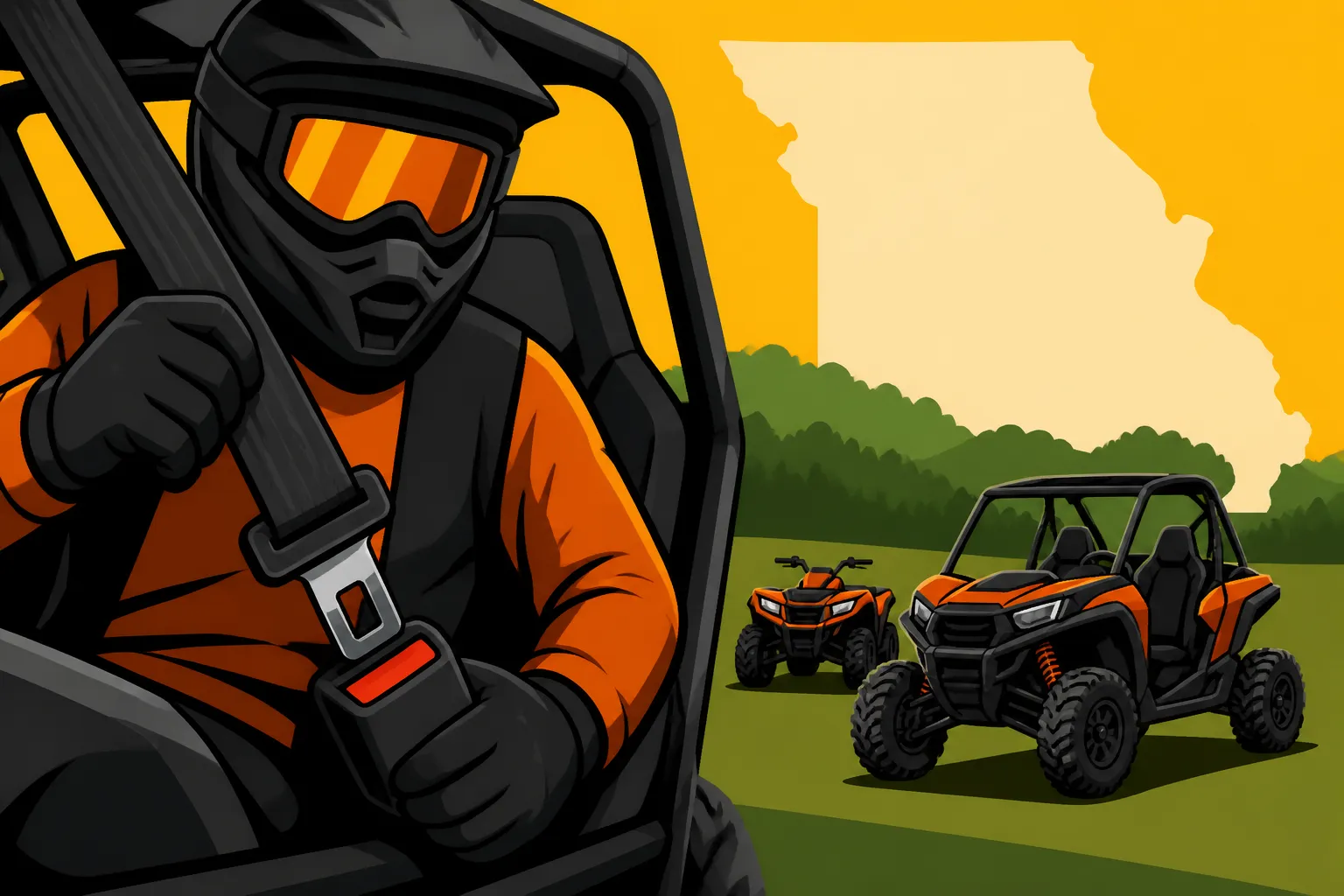
Missouri's regulations are clear: if an ROV is equipped with safety belts by the manufacturer, then the operator and all passengers must wear them whenever the vehicle is operated on a public road under one of the specified exceptions. This is detailed within the statutes governing [Missouri Seat Belt Rules in a Side-by-Side]. It's not a suggestion; it's a mandate. The reason is obvious: ROVs, while incredibly fun and useful off-road, handle differently on paved surfaces, and collisions or rollovers can be catastrophic. Seatbelts significantly reduce the risk of ejection and serious injury in such events. Imagine a scenario where you're quickly crossing a state highway under the 3-mile rule, and another vehicle misjudges your speed. Without a seatbelt, you could be thrown clear of the vehicle, which dramatically increases the severity of any injuries. Law enforcement officers are aware of these rules and can issue citations if occupants are not properly belted. It's not just about avoiding a fine; it's about protecting yourself and your passengers.
This requirement also extends to situations like [Missouri Agricultural Use From Sunrise to Sunset]. Even if you're just moving between fields, if that journey involves a public road, those seatbelts need to be buckled. The state views these machines as vehicles operating in a vehicle-specific environment when on roads, and thus, standard vehicle safety practices, like seatbelt use, apply.
Factory vs. Aftermarket Seatbelts: What Missouri Expects
Missouri's law generally refers to "safety belts with which the vehicle is equipped by the manufacturer." This means the factory-installed seatbelts are the ones you're expected to use and maintain. These are typically three-point harnesses (lap and shoulder) for each seating position. When you're considering road use, ensure your ROV's factory seatbelts are in good working order – no frays, buckles functioning correctly, and properly anchored.
What about aftermarket seatbelts? Many riders upgrade their ROVs with four-point or five-point harnesses for enhanced safety during aggressive off-road riding, especially those from reputable brands like SuperATV, known for their robust safety accessories. While the law specifically mentions manufacturer-equipped belts, if you have upgraded to a higher-quality, properly installed aftermarket harness that meets or exceeds the safety standards of the original, it would generally be considered compliant, as long as it's being used. The key is that the occupants are restrained. However, it's always best practice to ensure any aftermarket modifications, especially safety-critical ones, are installed correctly and do not compromise the vehicle's original safety features. If you've modified your seating or roll cage, it's even more crucial to ensure your new seatbelt system is robust and secure.
Beyond Seatbelts: Other Safety Requirements for Road-Legal ROVs
Seatbelts are a major component, but they're part of a larger safety system. When operating an ROV on Missouri roads, there are several other critical requirements that work in conjunction with belting up to ensure your safety and visibility.
Rollover Protective Structures and Operator Restraints
Missouri's definition of an ROV often implies the presence of a Roll-Over Protective Structure (ROPS), commonly known as a roll cage. These structures are integral to the design of most side-by-sides and are a primary reason why they are seen as safer than ATVs in certain accident scenarios. For road use, these structures are non-negotiable. Your ROV must have its factory-installed roll cage intact and in good condition. [Missouri Roll Bar Requirements] are fundamental to the safe operation of these machines, especially on roads where the risk of tipping due to uneven pavement or unexpected turns is present.
Beyond the roll cage and seatbelts, some ROVs come with doors or nets as part of their factory restraint system. While these might not be explicitly mandated for road use in the same way seatbelts are, they contribute to occupant retention within the vehicle's protective shell. If your machine came with them, it's always safest to have them in place and secured. Think of the combined effect: the roll cage protects the cabin, the seatbelts keep you inside the cage, and doors/nets prevent incidental limb protrusion. This holistic approach to safety is what Missouri expects, even if not every single element is called out in every statute.
Essential Lighting, Flags, and Other Visibility Gear
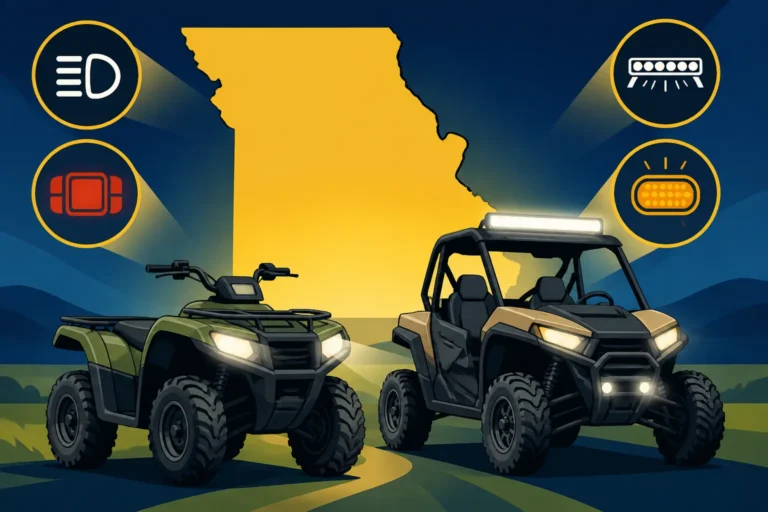
Visibility is paramount when an ROV shares the road with larger, faster vehicles. Missouri law specifies several lighting and visibility requirements for any ROV operating on public roads. This includes at least one headlamp that emits a white light visible from a distance of 500 feet to the front, and at least one tail lamp that emits a red light visible from 500 feet to the rear. Brake lights are also crucial to signal your slowing or stopping intentions to traffic behind you. Turn signals, while not universally required for all road use exceptions, are highly recommended for clear communication on the road.
Furthermore, a [Missouri Safety Flag Requirements] mandate a "safety flag" be displayed. This flag must be bright orange, at least 30 square inches in size, and mounted on a pole that extends at least 7 feet from the ground. This ensures your smaller profile ROV is visible over dips in the road, over traffic, or around corners. Imagine coming over a hill where sightlines are limited; that flag could be the first thing a driver sees, giving them precious extra seconds to react. Many riders often supplement their factory lighting with additional LED light bars or auxiliary lights, for example, from SuperATV, for enhanced visibility both on and off-road, which is a smart move for safety. Additionally, a slow-moving vehicle emblem must be displayed on the rear of the ROV, further signaling your presence to other motorists.
Practical Tips for Ensuring Your ROV Meets Road Requirements
Getting your ROV ready for limited road use in Missouri isn't overly complicated, but it does require attention to detail. A little preparation can save you a lot of hassle and potential fines.
Pre-Ride Checks and Documentation
Before you ever leave your property and enter a public road with your ROV, make it a habit to perform a quick safety check. This includes verifying that all lights (headlamps, tail lamps, brake lights, and any turn signals if applicable) are functional. Check your tires for proper inflation and ensure they are in good condition. Most importantly, ensure your seatbelts are accessible, functional, and that every occupant understands they must be buckled in.
Beyond the physical checks, have your necessary documentation readily available. This includes your driver's license – remember, if you're operating an ROV on a public road, you need a valid [An Operator's or Chauffeur's License in Missouri]. You'll also need proof of ownership, such as your title, and potentially any local permits required by your city or county. While Missouri generally doesn't require specific ATV/ROV insurance for off-road use, some local ordinances that grant road access might stipulate proof of liability insurance. It's always a good idea to check this with your local authorities. Having this paperwork organized and easily accessible in a waterproof bag can make all the difference if you're stopped by law enforcement.
| Requirement Category | Specific Item | Key Action for Compliance |
|---|---|---|
| Operator & Vehicle | Valid Driver's License (ROV Operator) | Ensure you hold a current, appropriate driver's license. |
| Restraint System | Manufacturer-equipped Seatbelts | Verify all belts are functional and used by all occupants. |
| Roll-Over Protective Structure (ROPS) | Confirm roll cage is intact and undamaged. | |
| Visibility | Headlamps (white, 500 ft visibility) | Test functionality; ensure they are clean and unobstructed. |
| Tail Lamps (red, 500 ft visibility) | Test functionality; ensure they are clean and unobstructed. | |
| Brake Lights | Test functionality. | |
| Safety Flag (orange, 30 sq. in., 7 ft high) | Properly mounted, visible, and correct dimensions. | |
| Slow-Moving Vehicle Emblem | Securely affixed to the rear of the ROV. | |
| Documentation | ROV Title/Proof of Ownership | Carry or have readily accessible. |
| Local Road Use Permit (if applicable) | Obtain and carry any necessary permits for local roads. | |
| Proof of Insurance (if required by permit) | Carry documentation if liability insurance is mandated. |
Navigating Local Ordinances and Permits
The biggest variable in ROV road use in Missouri often comes down to local rules. While state law provides general frameworks like the 3-mile rule or agricultural exceptions, individual cities and counties have the power to create ordinances that either allow or restrict ROV operation on their specific roads. This means that an ROV permit that works in one town might not be valid in the next.
It's absolutely essential to contact the local police department or county sheriff's office for the specific area where you intend to ride on public roads. They can provide accurate, up-to-date information on any local ordinances, permit requirements, associated fees, and safety equipment beyond state minimums. Some localities might require additional lighting, mirrors, or even specific types of tires for road use. Don't assume that because your neighboring town allows it, your town does too. Taking the time to understand these local nuances will prevent fines and ensure your road use is legal and safe. Many communities are actively reviewing and updating their ordinances for ROVs, so staying informed is key.
Disclaimer
This article is for general informational purposes only and does not constitute professional advice. Laws, prices and regulations vary by location and change over time. Consult a qualified professional for guidance on your specific situation.