Can You Carry a Passenger on a Two-Seat Quad?
The thought of heading out on the trails or even just cruising around your property with a buddy or a loved one riding shotgun on your ATV can be really appealing. It feels natural to want to share the fun, especially if your machine looks like it has plenty of room. But in Missouri, just because an ATV has a longer seat doesn't automatically mean it's legally or safely designed to carry a passenger everywhere you go. This guide will walk you through the distinct rules, safety considerations, and common misunderstandings surrounding carrying passengers on ATVs, and what happens when you step up to a true two-seat machine like a side-by-side or recreational off-highway vehicle (ROV) in the Show-Me State.
Understanding Missouri's Definition of an ATV Versus a Multi-Passenger Machine
This is where a lot of the confusion begins, and it's absolutely crucial to get right. Missouri law, like that in many other states, makes a very clear distinction between what it considers an all-terrain vehicle (ATV) and other types of off-road machines, particularly when it comes to carrying passengers. Many folks will look at a utility-focused ATV with a long seat, or even one specifically marketed as a "2-up" model, and assume it's perfectly fine for two riders. However, the legal definition often overrides how a machine is designed or advertised for certain purposes.
The Single-Rider Expectation for ATVs
In Missouri, an ATV is generally defined as any motorized vehicle manufactured and used exclusively for off-highway use, weighing less than 1,500 pounds dry weight, 50 inches or less in width, and having three or more wheels designed to travel on unpaved surfaces, with a seat designed to be straddled by the operator, and handlebars for steering control. Notice that key phrase: "a seat designed to be straddled by the operator." This definition inherently points to a single rider. Even if your ATV has a longer seat, or is designed to accommodate a second person with additional footrests, the fundamental classification by the state for most public riding purposes defaults to single-operator use. [What Missouri Counts as an ATV] delves deeper into these specific measurements and design elements.
This legal framework means that for the vast majority of regulated riding scenarios, if your machine fits the "ATV" definition, it's expected to have only one person operating it. Trying to squeeze a passenger onto an ATV, even a larger one, can lead to safety concerns and potential legal trouble, especially on public lands or roads where specific rules apply. It's not just about the seat length; it's about the machine's balance, braking, and handling characteristics being engineered for a single occupant's weight distribution and control. Adding a passenger significantly alters these dynamics, making the machine less predictable and harder to manage, particularly in challenging terrain.
What Missouri Considers a Multi-Passenger Machine
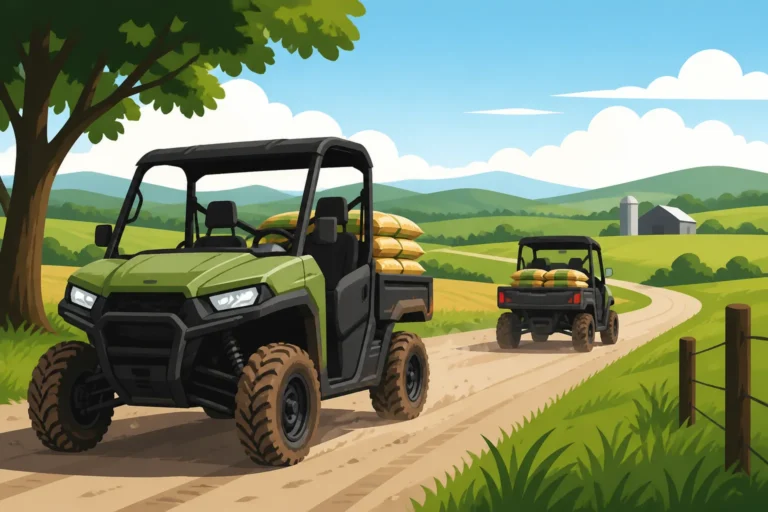
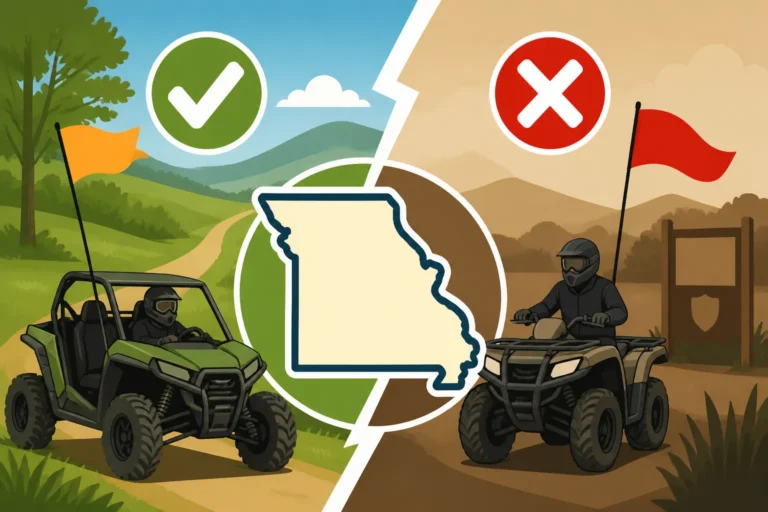
When you want to carry passengers legally and safely in Missouri's regulated riding areas, you're generally looking at what the state defines as a utility vehicle (UTV) or a recreational off-highway vehicle (ROV). These are the side-by-side machines that have multiple designated seats, often with seatbelts and a roll cage. They are designed from the ground up for more than one person, with a steering wheel instead of handlebars, and often a much wider stance for stability. [Utility Vehicles Outside the Missouri System] explains why these machines don't get decals.
These machines are built with passenger safety in mind, featuring separate seating positions, seatbelts, and typically a protective structure like a roll cage. While they are still powerful off-road machines and require responsible operation, their design fundamentally supports carrying one or more passengers. This distinction is vital because the rules for UTVs and ROVs regarding passengers on public roads or in parks are entirely different from those applied to traditional ATVs. If you're looking to share the ride, a side-by-side from a brand known for robust designs, like a Polaris RZR or Can-Am Defender, is the type of machine Missouri's regulations are designed to accommodate for multi-person use.
Passenger Rules on Private Land in Missouri
When you're riding on your own property or private land where you have explicit permission to operate your off-road vehicle, the rules regarding passengers become a lot more flexible. This is where personal judgment, safety, and liability considerations really come into play, rather than strict state statutes governing public access. It's a common scenario for many Missouri riders who primarily use their machines for recreation or work around the farm, and it's often where the "two-up" ATV design seems most practical.
Owner's Discretion and Liability
On private land, the primary decision-maker about carrying a passenger is you, the owner or operator, or the landowner. Missouri law generally doesn't dictate how many people can ride an ATV on private property. This means if you have a "two-up" ATV model with an extended seat and footrests specifically designed for a second person, or even a traditional ATV where you feel confident with a passenger, you technically can do it. However, with this freedom comes significant responsibility. If an accident occurs while you have a passenger on your ATV on private land, you could be held liable for any injuries or damages. This is a serious consideration, and it's why having appropriate insurance that covers off-road vehicles and potential passenger injuries, even on private land, is always a wise decision.
Think about it this way: you're creating your own rules, but the laws of physics and personal responsibility still apply. If you're lending your machine to a friend or allowing others to ride with passengers, ensure they understand the risks and are capable of handling the machine with the added weight. It's not just about what you can do, but what you should do to ensure everyone's safety and avoid costly legal battles down the line. A simple [Missouri Bill of Sale for an ATV] might seem like just for a transaction, but clear agreements on lending or use can prevent future headaches.
Safety Considerations on Private Property
Even without specific laws dictating passenger limits on private land, safety should always be your number one priority. An ATV, by its very nature, is a dynamic machine designed for agility and single-rider control. Adding a passenger, even a small one, changes the center of gravity, affects braking distances, and alters how the machine handles turns and obstacles. This is especially true on uneven terrain, steep inclines, or during quick maneuvers. If you choose to carry a passenger, ensure they are wearing appropriate safety gear, including a helmet (especially if under 18, as this is a statewide rule regardless of location for ATV riders), eye protection, long sleeves, and sturdy boots.
Beyond gear, consider the passenger's ability to hold on securely and maintain balance. Many aftermarket accessories, like additional grab handles or specialized passenger seats, can enhance comfort and perceived safety for a second rider. Companies like SuperATV offer a range of utility and comfort accessories that might seem appealing for private land use, but remember, these are enhancements, not replacements for the machine's inherent design limitations or the operator's skill. Take it slow, avoid aggressive riding, and practice riding with a passenger in a safe, open area before tackling more challenging terrain. Remember that just because a machine can technically fit two doesn't mean it's designed to perform optimally or safely with that extra load in all conditions.
Passenger Rules in Missouri State Parks and Public Riding Areas
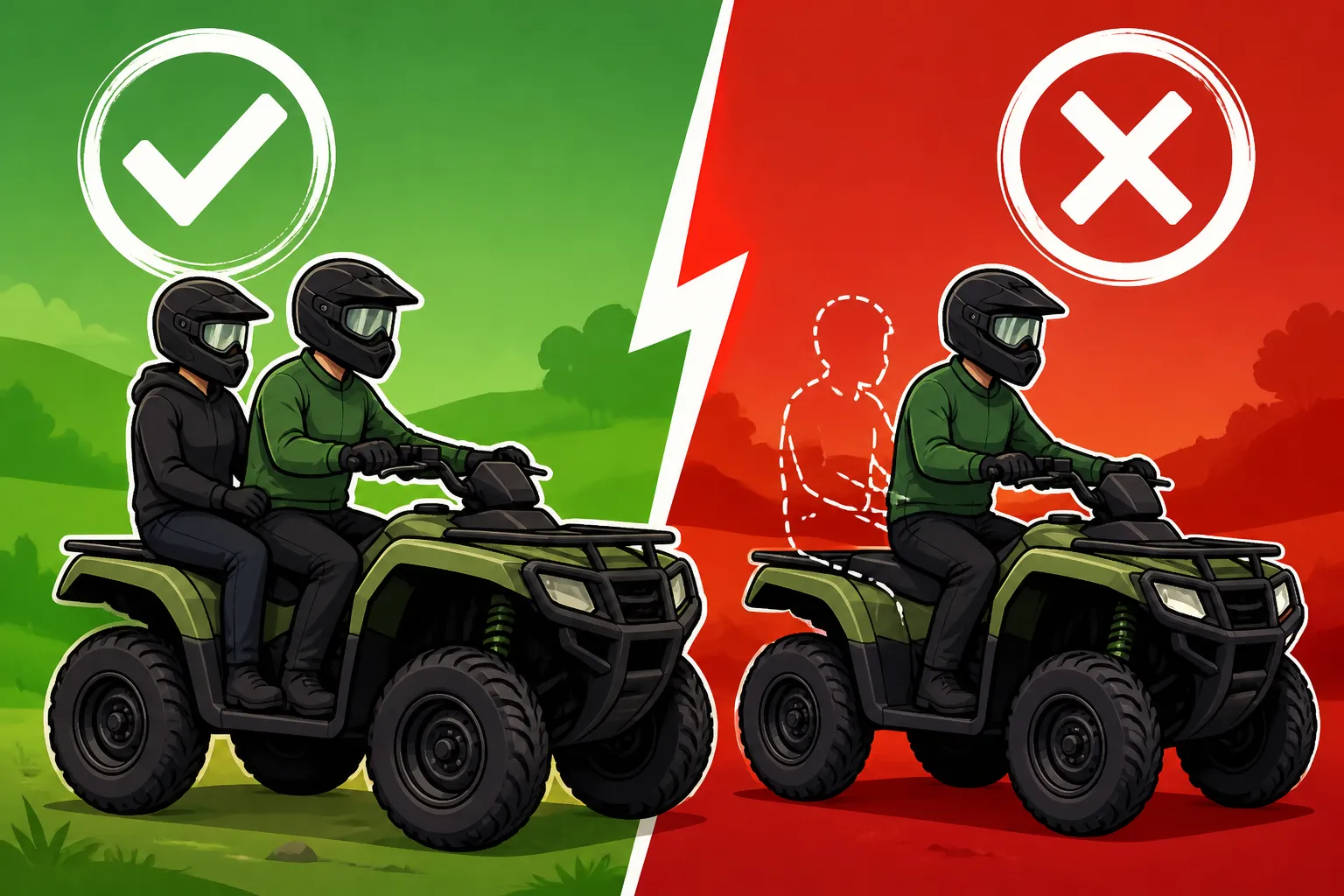
Now, let's talk about public lands – state parks and designated off-road riding areas in Missouri. This is where the rules become much stricter and the distinction between an ATV and a side-by-side (ROV/UTV) is absolutely critical. Many riders are surprised, and sometimes frustrated, to learn that their "two-up" ATV, which seems perfectly fine for two riders at home, is not permitted to carry a passenger on public trails.
Strict "No Passenger" Rules for ATVs
For traditional ATVs – those machines fitting Missouri's definition of less than 1,500 pounds, 50 inches wide or less, with a straddle seat and handlebars – the rule in Missouri State Parks and other designated public riding areas is generally no passengers allowed. Period. This applies even if your ATV is explicitly designed as a "2-up" model with an extended seat. The reasoning behind this rule is purely safety and control. ATVs are inherently single-operator machines; adding a passenger, even a small one, significantly changes the machine's balance, stability, and braking capabilities, making it much harder to control safely on varied public trails. [Missouri Passenger Rules on an ATV] explains this further.
Park rangers and conservation agents are often very vigilant about this rule. If you're caught with a passenger on a single-rider ATV in a state park or public riding area like St. Joe State Park or Finger Lakes State Park, you could face a citation and be asked to remove the passenger from the trail. It's not about being difficult; it's about minimizing the risk of accidents and ensuring everyone's safety on shared trails. Always check the specific rules of the park or riding area before you go, as some may have even more granular restrictions.
Designated Multi-Passenger Machines (ROVs/UTVs) are Different
If your goal is to share the thrill of Missouri's public trails with a passenger, then a Recreational Off-Highway Vehicle (ROV) or Utility Vehicle (UTV) – often referred to as a side-by-side – is the machine you need. These vehicles are designed with multiple, designated seating positions, typically feature seatbelts, and often come equipped with a roll cage for occupant protection. Missouri State Parks and other public riding areas generally do permit passengers in ROVs, provided the machine is designed for the number of occupants present and all safety equipment (like seatbelts) is properly utilized.
For instance, at popular spots like Chadwick Motorcycle and ATV Use Area in the Mark Twain National Forest, or the state parks that allow ORV use, you'll see plenty of side-by-sides with multiple people enjoying the trails. When considering an ROV for passenger use on public land, ensure it meets the park's width restrictions (some parks have limits, for example, [Machines Under 64 Inches for Missouri Parks] is a common one) and that all passengers are safely seated and buckled in. This is also where accessories that enhance safety and comfort, such as improved harnesses or additional roll bar padding, might be considered from reputable brands. But remember, the core machine must be designed from the factory to carry passengers safely.
Carrying Passengers on Missouri Public Roads
Attempting to carry a passenger on an ATV on public roads in Missouri is where the regulations become the most restrictive and confusing for many riders. Unlike private land or even some designated public trails, public roads are governed by a different set of statutes, and ATVs are generally not considered street-legal vehicles in Missouri. This distinction is critical and often leads to fines if misunderstood.
General Prohibition for ATVs
For standard ATVs – those designed for a single rider with a straddle seat and handlebars – carrying a passenger on any public road, street, or highway in Missouri is almost universally prohibited. This rule holds true even for those "two-up" ATV models with extended seats that might suggest passenger capability. The state's vehicle code does not classify ATVs as vehicles suitable for road use, and that extends to their passenger-carrying capacity on asphalt or gravel roads. Attempting to do so can result in serious legal consequences, including fines and potential impoundment of your machine. [Are ATVs Street Legal in Missouri? The Short Answer] will tell you more about the basic limitations.
The primary concern here is safety. ATVs are not designed with the suspension, tires, lighting, or stability needed for safe operation on public roads, especially with the added weight and altered center of gravity of a passenger. They handle very differently on hard surfaces compared to dirt or gravel, and the risk of a rollover or loss of control increases dramatically. Law enforcement officers are well aware of these limitations and will not hesitate to issue citations for illegal road use, particularly if a passenger is involved.
Exceptions for Agricultural Use and Permitted ROVs
While general road use for ATVs with passengers is a no-go, Missouri does have specific, limited exceptions, primarily for agricultural purposes and for specially permitted Recreational Off-Highway Vehicles (ROVs).
For agricultural use, an ATV can sometimes be operated on a public road for short distances during daylight hours, but strictly for farm-related activities. This exception may allow for a passenger if that passenger is directly involved in the agricultural task, and the ATV is designed to accommodate them safely for that specific purpose. However, this is a narrow exception and not a blanket permission to carry passengers on farm machines on public roads. It's always best to err on the side of caution and understand the specific limitations of [Missouri Rules for Agricultural Road Use].
For Recreational Off-Highway Vehicles (ROVs) or side-by-sides, the rules are completely different. Many Missouri cities and counties have enacted local ordinances that allow ROVs to be driven on certain public roads, often requiring a special permit, insurance, and specific safety equipment (like a safety flag, horn, and lighting). If your ROV is legally permitted for road use under one of these local ordinances, and it's designed with multiple seats and seatbelts, then carrying passengers in those designated seats is generally allowed. [Can You Drive a UTV on a Missouri Road?] dives deep into these local permits. However, ROVs must meet specific requirements, such as having a roll bar and seatbelts for all occupants, and the operator must hold an appropriate driver's license. Companies like SuperATV offer a variety of aftermarket safety accessories, from mirrors to turn signal kits, which are often required to make an ROV compliant with these local street-legal ordinances. Always ensure your ROV is fully compliant with all local requirements before taking it on the road with passengers.
Legal Ramifications and Prioritizing Safety
Navigating the world of ATVs and UTVs in Missouri, especially concerning passengers, can feel like a minefield of rules and regulations. But at the end of the day, understanding the consequences of non-compliance and making safety your absolute top priority will serve you best, regardless of where you're riding.
Potential Fines and Citations
Ignoring Missouri's passenger rules, especially on public lands or roads, can lead to more than just a stern warning. Law enforcement officers, whether state troopers, county deputies, or park rangers, have the authority to issue citations for violations. These can range from minor infractions to more serious misdemeanors, depending on the specific circumstance and location. For example, operating an ATV on a public road where it's not permitted, especially with an illegal passenger, could result in a fine, court costs, and potentially even points on your driver's license if the violation is tied to road use. In state parks, violating passenger rules might lead to a fine and being asked to leave the premises. [Missouri Fines for Illegal ATV Road Use] outlines some of these potential penalties.
Beyond the immediate financial hit of a fine, there's the long-term impact on your insurance. An accident involving an illegal passenger could complicate your insurance claim, or even lead to your policy being voided if you were operating outside the terms of use. This means you could be personally responsible for all medical bills and property damage, which can be devastating. Understanding and adhering to the rules isn't just about avoiding a ticket; it's about protecting yourself legally and financially.
Prioritizing Rider Safety
More important than any fine or legal ramification is the safety of everyone involved. An ATV is a powerful machine, and adding a passenger fundamentally changes how it handles. The risks of rollovers, ejections, and collisions increase when a machine is overloaded or operated outside its intended design parameters. Always ensure that both the operator and any permitted passengers are wearing appropriate personal protective equipment (PPE), including DOT-approved helmets, eye protection, sturdy footwear, and long clothing. For any rider under 18, a helmet is legally required in Missouri, even on private land. [Missouri Helmet Law for ATV Riders] is clear on this.
If you're operating a side-by-side or ROV that is designed for passengers, make sure everyone is properly seated and buckled into their seatbelts. Never allow extra passengers beyond the manufacturer's designated seating capacity. Conduct regular safety checks on your machine, including tires, brakes, and steering, especially if you frequently carry passengers or heavy loads. Taking an ATV safety course is always a good idea, even for experienced riders, to brush up on safe operating practices and learn how to handle different situations. Remember, the goal is to have fun and enjoy the incredible outdoor opportunities Missouri offers, but to do so safely and responsibly so everyone can return home without incident.
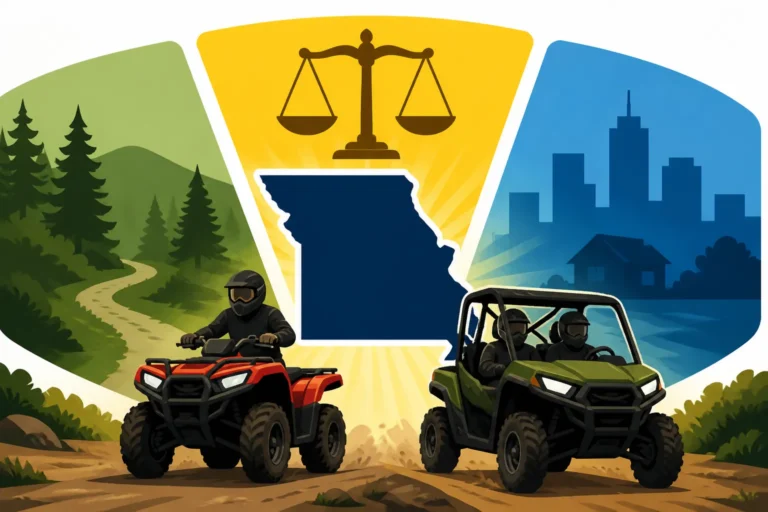
| Feature / Scenario | Traditional ATV (Single-Rider Design) | ROV / Side-by-Side (Multi-Passenger Design) |
|---|---|---|
| Private Land | Permitted (Owner's Discretion) | Permitted |
| Missouri State Parks | Generally NOT Permitted | Permitted (Within Seating Capacity) |
| Public Roads (General) | Generally NOT Permitted | Generally NOT Permitted (unless permitted locally) |
| Public Roads (Ag Use) | Limited Exception (Operator + Ag-related passenger) | Limited Exception (Operator + Ag-related passenger) |
| Road Use Permit (Local) | N/A (ATVs generally not eligible) | Permitted (within seating capacity, must meet local ordinance) |
| Safety Gear | Helmet, Eye Protection (all riders) | Helmet, Eye Protection (all riders/passengers, where required) |
| Seatbelts/Restraints | N/A (or simple grab handles) | Required for all passengers (if equipped) |
| Liability | High (operator's responsibility) | High (operator's responsibility) |
Disclaimer
This article is for general informational purposes only and does not constitute professional advice. Laws, prices and regulations vary by location and change over time. Consult a qualified professional for guidance on your specific situation.