Showing a Decal and a Permit
It's incredibly frustrating to be out enjoying the trails or making a quick run down a county road on your ATV or UTV, only to wonder if you have all the right paperwork should a law enforcement officer pull you over. The rules in Missouri for off-highway vehicles, especially when they touch public roads, can feel like a tangled mess of decals, permits, and specific exemptions. This guide is here to untangle that confusion, explaining exactly what documents you need to carry, when you'll be asked for them, and how to make sure you're always prepared, giving you peace of mind on every ride.
Decoding Missouri's Decal and Permit Requirements
Let's start by clarifying the foundational pieces of documentation you'll encounter in Missouri for your ATV or UTV: the decal and the permit. These are often confused, but they serve distinct purposes, and understanding the difference is crucial for legal riding, particularly when you might encounter roads.
The Essential Missouri ATV Decal
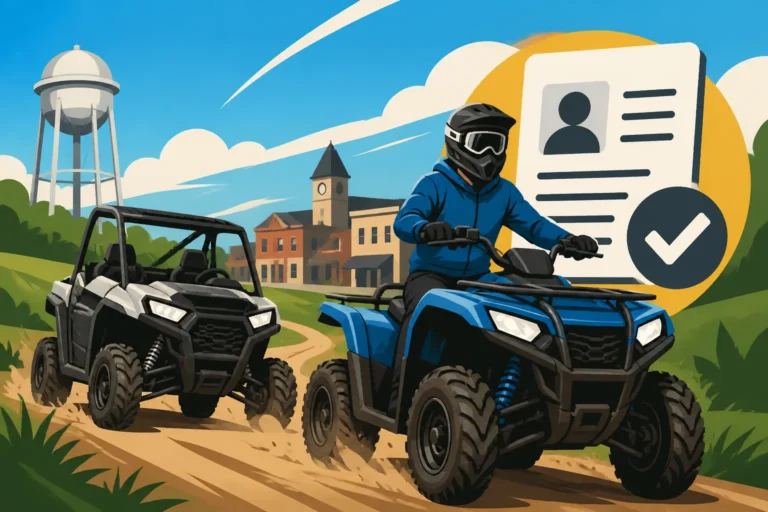
First up, the decal. If you own an ATV in Missouri, you're likely familiar with this sticky little square. This is Missouri's form of "registration" for ATVs, and it signifies that your machine has gone through the titling process with the Missouri Department of Revenue. Unlike a license plate for a car, this decal doesn't allow free rein on public roads, but it is a fundamental requirement for operating your ATV on any land that isn't your own private property, including state parks and national forests. [Missouri's Three-Year ATV Decal] is your proof that your machine is properly identified within the state system. Without it, even on designated trails, you could face questions from park rangers or conservation agents. Think of it as your ATV's unique ID badge.
The decal itself carries a number that corresponds to your ATV's title. It's meant to be mounted in a specific location, usually on the right front fork, clearly visible for easy inspection. This isn't just a suggestion; it’s a requirement designed to make compliance checks straightforward. Keeping it clean and free from obstruction is part of being a responsible rider. While it feels like a small thing, overlooking this simple piece of documentation can lead to unnecessary hassle.
Understanding Missouri's Special Road Permits
Now, let's talk about permits – this is where things get a bit more complex, especially for UTVs. A permit in Missouri refers to specific authorization to operate an off-highway vehicle (OHV) on certain public roads. Crucially, ATVs are generally excluded from these road-use permits, with only very limited exceptions. It's primarily recreational off-highway vehicles (ROVs), which often include side-by-sides, that can qualify for special road permits at the city or county level. [Can You Drive a UTV on a Missouri Road?] delves deeper into this. These permits are not issued by the state Department of Revenue, but rather by local authorities – your city police department or county sheriff's office.
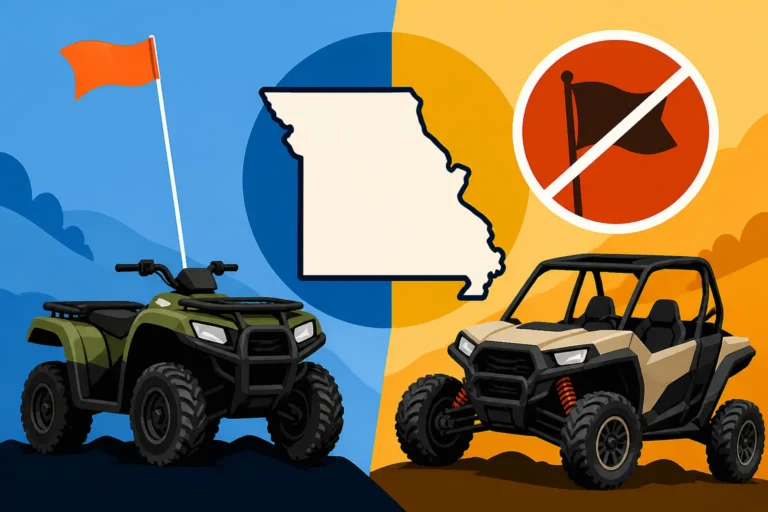
These permits come with their own set of rules and often require your machine to meet certain safety standards, like having lights, mirrors, and often a safety flag. Many riders who've upgraded their machine with accessories from companies like SuperATV to enhance their UTV's road-worthiness will find these permits are essential. The intent of these local permits is usually to allow residents to travel short distances on local roads, perhaps from their home to a gas station, a trailhead, or a neighbor's house, within a defined municipal or county boundary. This permit is separate from your ATV decal and is absolutely necessary if you intend to legally travel on public roads where allowed.
What to Present During a Stop in Missouri
When a law enforcement officer or park ranger approaches you while you're on your ATV or UTV in Missouri, knowing exactly what to have ready can make the interaction smooth and quick. It's not just about having the documents; it's about being able to access them efficiently.
Decal, Permit, and Personal Identification
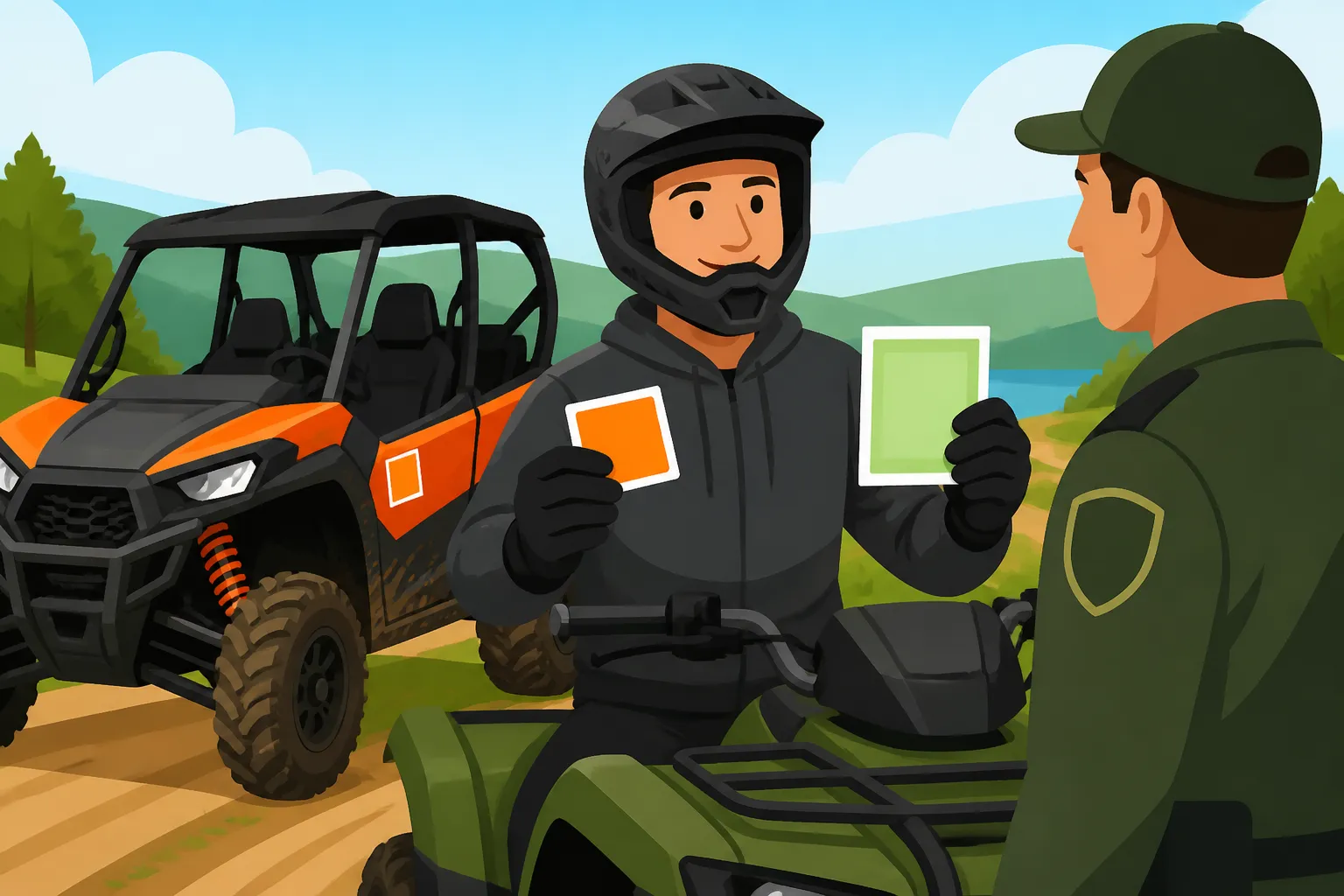
Regardless of whether you're on a trail, crossing a field, or, in the case of a UTV, navigating a permitted city street, you should always be prepared to present a few key items. For an ATV, this will always include your current, valid [Missouri's Three-Year ATV Decal] affixed to your machine. For a UTV operating on a permitted road, you'll need the specific local road-use permit for that jurisdiction. This might be a physical sticker, a card, or a paper document, and it should always be current.
Beyond the machine-specific documents, you, as the operator, will need to show a valid driver's license. While ATVs don't require a driver's license for trail use, if you are operating any OHV on a public road, even a permitted one, you'll typically need to be a licensed driver. [Missouri ATV Registration Age Requirement] rules apply here. Moreover, depending on the local ordinance, proof of insurance might also be required when operating on roads. [Missouri ATV Insurance Requirement] is a good read for more details on insurance. Some jurisdictions require you to carry the actual title or a copy of it, though this is less common than needing the decal/permit and your ID. It's always best practice to check the specific rules of the area where you're riding.
Scenarios Requiring Document Presentation
The need to present your documents varies greatly depending on where and how you're riding:
- Designated OHV Parks/Trails: If you're at St. Joe State Park or Chadwick Motorcycle and ATV Use Area, you'll definitely need your valid Missouri ATV decal or, for a UTV, sometimes a wider machine permit, plus any park-specific day or annual permits. Rangers routinely check these at entrance points or during patrols.
- Private Land: If you're strictly on your own private property, generally, you don't need to show anything to law enforcement unless you're involved in an incident or if there's suspicion of illegal activity. However, if you're on someone else's private land, having written permission from the landowner is a smart move, even if it's not a formal "permit."
- County Roads/City Streets (with permit): This is where the local road permit comes into play. If you're riding your UTV in a city or county that has an ordinance allowing OHVs on roads, you must have that local permit and be ready to present it along with your driver's license and proof of insurance. An officer will expect to see all relevant documents. For ATVs, road use is highly restricted, often limited to crossing or agricultural exemptions, and carrying explicit documentation for those exceptions is critical. [Missouri Rules for Crossing a Highway] outlines some of these situations.
It’s not just about avoiding a ticket; it's about demonstrating you're a responsible rider who respects the rules.
The Consequences of Missing Documentation
Ignoring Missouri's decal and permit requirements isn't just a minor oversight; it can lead to significant headaches, from frustrating delays to financial penalties.
Penalties for Missing Decal or Permit
Operating an ATV without a current Missouri decal, or a UTV on a permitted road without the proper local permit, can result in citations. These aren't just slaps on the wrist. A deputy or ranger can issue a ticket, which typically comes with a fine. The cost of a ticket will almost certainly exceed the initial cost of obtaining the decal or permit. For example, [Missouri ATV Title Cost] and [Missouri ATV Registration Cost] are relatively low compared to potential fines.
Beyond the monetary penalties, a missing decal or permit could lead to your machine being impounded, especially if it's being operated illegally on public land or roads. Imagine the inconvenience and additional costs associated with retrieving your ATV or UTV from an impound lot – towing fees, storage fees, and administrative charges can quickly add up. It's not just a momentary inconvenience; it can derail an entire riding trip and leave a lasting financial impact. Some jurisdictions might even consider repeated offenses more seriously, though this varies widely.
Ensuring Your Documentation is Always Up-to-Date
The best defense against penalties is proactive compliance. Make it a routine to check the expiration dates on your decal and any local permits. [When a Missouri ATV Decal Expires] is important to know. Missouri ATV decals are typically valid for three years, so marking your calendar for renewal is a smart move. Local road permits might have different renewal schedules, often annually, so keep track of those too.
If your decal fades, becomes damaged, or falls off due to rough riding or an impact, don't just hope for the best. You can usually get a replacement decal from the Missouri Department of Revenue for a nominal fee. Similarly, if your local road permit is no longer legible, contact the issuing authority to understand their replacement process. Think of your documents like your riding gear – you wouldn't head out with a damaged helmet, so don't head out with expired or unreadable documents.
Practical Tips for Document Management
Having the right documents is one thing; keeping them safe, secure, and accessible while you're out riding is another challenge entirely. The rugged environment of off-road riding demands practical solutions for document management.
Safely Storing Your Paperwork on the Trail
Carrying paper documents on an ATV or UTV means exposing them to dust, mud, water, and vibration. A flimsy wallet in your back pocket simply won't cut it. Investing in waterproof, durable storage solutions is paramount. Many riders use small, watertight Pelican cases or heavy-duty Ziploc bags, often stored in a secured compartment on their machine, like a glove box, under the seat, or in a sealed storage box. You want something that can withstand a creek crossing, a sudden rain shower, or a muddy splash.
Consider a small, dedicated "document kit" that contains your driver's license, proof of insurance, a copy of your ATV title (never the original unless specifically required and you're comfortable with that risk), and any local road permits. Some riders even keep a laminated card with emergency contact information and their machine's VIN in this kit. Companies like SuperATV offer a range of storage bags and boxes designed to mount securely to your ATV or UTV, providing excellent options for keeping your essentials protected from the elements.
The Power of Digital Copies
While a physical copy of your decal or permit is generally required to be on your machine or person, having digital backups on your phone can be a lifesaver. Take clear, well-lit photos of your decal, title, registration card, insurance card, and driver's license. Store these in a dedicated folder on your phone or even email them to yourself for easy retrieval. In some less formal situations, or if a physical document is temporarily misplaced, a digital copy might help clarify things for an officer, though it's rarely a substitute for the actual physical document or decal.
However, never rely solely on digital copies. Your phone battery might die, or you might lose signal in remote areas. The digital copy is a backup, a convenience, and a safeguard, but the physical decal on your machine and a physical copy of your permit and ID are what truly count when an officer is conducting an inspection. Always ensure your physical documents are paramount.
A Comparative Look at Key Documents and Their Purpose
To help clarify the various documents we've discussed, here's a quick comparison:
| Document Type | Purpose | Issued By | Where Required | Notes |
|---|---|---|---|---|
| ATV Decal | State Registration/ID for ATVs | MO Dept. of Revenue | Any land not your private property (parks, trails) | Must be affixed to the right front fork. |
| Local Road Permit | Authorization for UTVs on specific local roads | City Police / County Sheriff | Designated city streets or county roads | Varies by jurisdiction; check local ordinances. |
| Driver's License | Proof of Operator Identity & Driving Privilege | State of Issuance | Any public road, potentially some park access roads | Needed for any road use. [Missouri Driver's License Rules for ROVs] |
| Proof of Insurance | Financial Responsibility | Private Insurance Company | Often required for road-permitted UTVs, recommended for all | Check local permit requirements. |
| ATV Title | Proof of Ownership | MO Dept. of Revenue | To transfer ownership, sometimes for inspection | Should be kept safe at home, not typically carried. |
| Park/Forest Permit | Access to specific riding areas | MO State Parks / US Forest Service | St. Joe, Finger Lakes, Chadwick, Sutton Bluff, etc. | Separate from ATV decal; often purchased on-site. |
This table highlights that you're operating within a layered system of permissions and identifications. Being prepared means understanding each layer.
Staying on top of Missouri's ATV and UTV rules, especially regarding what to show during a stop, might seem like a lot to remember. But by understanding the distinct roles of your ATV decal and any local road permits, keeping your personal identification handy, and storing everything securely, you can ride with confidence. Always double-check local ordinances for specific road-use permits, keep your documents current, and consider robust storage solutions to protect your valuable paperwork. With these steps, you'll be well-prepared for whatever the trail, or the occasional law enforcement interaction, throws your way.
Disclaimer
This article is for general informational purposes only and does not constitute professional advice. Laws, prices and regulations vary by location and change over time. Consult a qualified professional for guidance on your specific situation.