Meeting a Log Truck on an Ozark Road
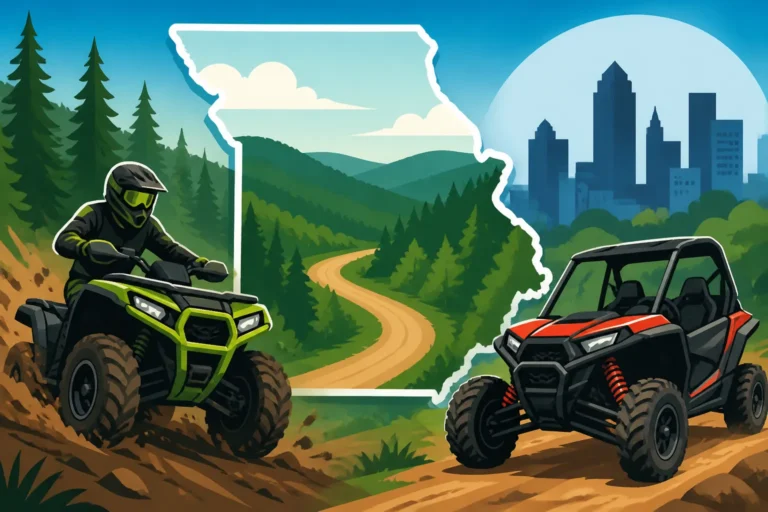
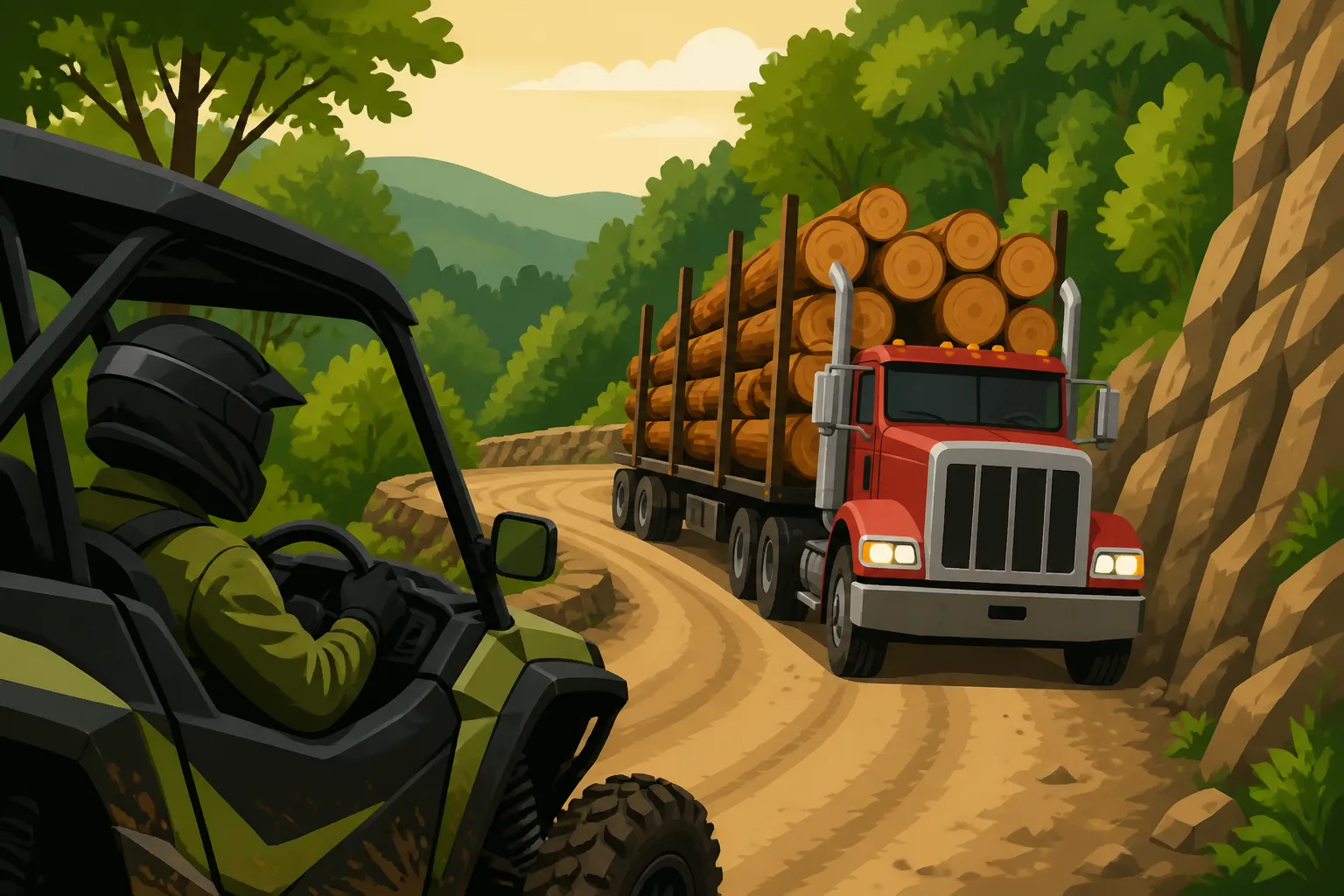
Ozark gravel roads can feel quiet until a loaded log truck appears around a blind bend. On a quad or side-by-side, there may be little room to react, and loose shoulders can be as risky as the truck itself. This guide explains how to prepare, where to move, and how to pass safely while keeping your ride within authorized routes.
Prepare before riding Ozark roads
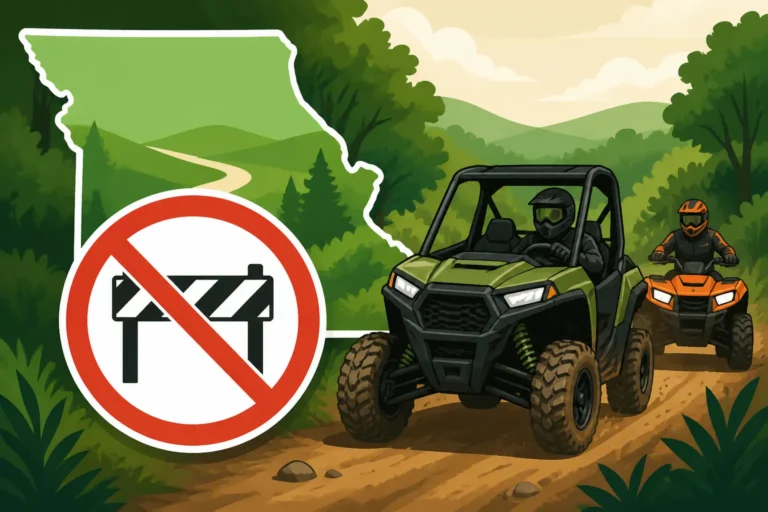
Confirm that the route is open to your machine
A road that looks public or passable is not automatically an ATV or UTV route. Before unloading, check the route’s posted signs and the managing agency’s current map or travel notices. National forest roads, county roads, private timber roads, and marked trails can have different access rules—and restrictions may change along a single ride.
If you are riding in the Mark Twain National Forest, verify that your intended route permits your type of machine. A road may be open to licensed highway vehicles but closed to off-highway machines, or it may be restricted for a particular season or purpose. Start with [Missouri Rules for Riding a National Forest] and Riding a Forest Road to the Trailhead, then confirm details with the land manager before you rely on a route.
Navigation tools can help you understand where you are, but they do not grant permission to ride. Some riders use onX Offroad to review route lines and keep track of their position, then compare that information with official maps and signs. Don’t treat an app’s displayed road or trail as proof that it is currently open to your machine.
Expect active timber traffic
Ozark back roads are working roads as well as recreation routes. Logging trucks may be moving between a timber site, a landing, and a mill, sometimes on roads that are narrow, steep, muddy, or rough. A loaded truck also needs more room to slow down and maneuver than a small ATV does.
Assume you could meet a truck at any point—even if you have not seen one yet. Listen for engines, tire noise, backup alarms, or radio chatter near a landing. Dust hanging in the air can be a clue that a vehicle is ahead, but it can also hide the truck until it is close. Ride at a speed that lets you stop within the clear distance you can see.
Before the trip, review Missouri Trail Conditions Before You Ride. Heavy rain, washouts, fresh grading, or timber work can change conditions quickly. If a road is soft or damaged, don’t assume a shoulder is firm enough to hold your machine just because it looks dry from the center.
Set up your group before you leave
Agree on a simple plan: ride at a pace that lets each person react, keep enough space to stop, and regroup only where there is room to get fully out of the way. A rider who sees a truck should signal the group promptly, but no one should assume that a hand signal alone will reach riders around a bend or through dust.
For a group ride, decide who will take the lead and who will bring up the rear. The lead rider can slow down and identify a safe place to pull over. The last rider can check that everyone is accounted for before the group moves again. Avoid bunching up at blind corners, narrow bridges, or the entrance to a work area.
If you use onX Offroad or another navigation app, set it up before you start moving. Stop somewhere safe to check your location or route rather than looking down at a screen while approaching a bend. Ozark terrain can also create dead zones, so don’t depend on mobile service to coordinate every decision; see Cell Dead Zones in the Ozarks for planning considerations.
What to do when a log truck approaches
Slow down and make yourself predictable
When you hear or see a truck, ease off the throttle and reduce speed without making a sudden move. Stay to your side of the road and look for a place where you can pull completely clear. Avoid swerving toward a ditch or loose bank simply to get out of the truck’s way; a sharp edge, hidden rock, or soft shoulder can tip a machine or trap a tire.
If the truck is approaching around a blind corner, don’t continue toward it to “find a better spot” unless the route ahead is clearly safe. Stop where you have room and visibility, and let the truck driver see you. A small machine can disappear in dust or behind brush, so make your presence obvious without stepping into the travel path.
In a tight spot, the best choice may be to back up slowly to a wider section rather than trying to squeeze past. Only do that if you can see the path behind you and can move without putting anyone at risk. If the ground is steep, slippery, or uneven, wait for a safer option instead of forcing a maneuver.
Pull off only where the ground is stable
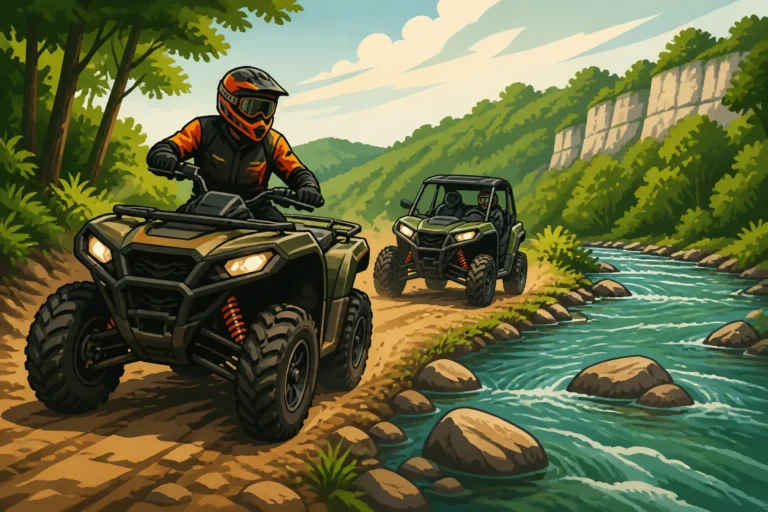
Choose a broad, firm turnout or a wide section of road with clear sightlines. Keep your machine well out of the truck’s path and away from the edge of a ditch, embankment, or soft shoulder. Do not block a gate, landing entrance, driveway, or place where the truck may need to swing wide.
On a narrow road, the truck may need nearly the full width to pass, especially on a turn. A side-by-side can be wider than it looks from the driver’s seat, and brush or rocks can limit how far its wheels can safely move aside. If there is not enough room for both vehicles, wait at a safe turnout or back away to one. Don’t ask the truck driver to squeeze through a gap that leaves your machine exposed.
Once stopped, keep the group together and out of the roadway. Riders should not stand beside the truck, behind it, or near the wheels. Stay where the driver can see you, and don’t approach the vehicle to ask a question while it is moving or maneuvering.
Let the truck pass without rushing
When the driver has a clear path, remain stopped and let the truck pass. Don’t try to slip by at the same time, follow close behind, or ride into the dust cloud before you can see the road again. The truck may need to slow, turn, or stop unexpectedly, and its load can limit the driver’s view.
Give the vehicle room to complete its turn. A long truck and trailer can swing wide, and the rear can track differently from the cab. Stay well clear of the outside of a turn and never assume the visible gap beside the cab will remain open as the trailer follows.
Wait until the truck is fully past and the dust has settled enough for you to see the route clearly. Then check the road surface before moving on. If you are unsure whether the truck has finished maneuvering, wait. A few extra seconds are far better than trying to pass while the driver is still repositioning.
Handle narrow, rough, and low-visibility sections
Use extra caution on blind bends and hills
On a blind bend, ride slowly enough to stop before the part of the road you cannot see. Keep to the right where safe, but don’t hug an unstable edge. If you hear a truck approaching and cannot see a turnout ahead, stop in a visible, safer spot and wait rather than entering the blind section.
A steep hill creates another challenge: neither you nor the truck may be able to stop or restart easily on loose gravel. If you can see a truck climbing or descending, give it space and avoid stopping where it may need to pass you on a slope. When the road narrows, wait at a level, wider area if one is available.
Riding rules depend on the type of road and the route’s authorization. Review Missouri Rules for Riding a Gravel Road and Missouri Rules for Riding a County Road before your trip. Don’t assume a road is open to off-highway vehicles just because local traffic or work trucks use it.
Treat dust and mud as visibility hazards
Dust can reduce visibility for both the rider and the truck driver. If a truck passes, wait until the cloud clears rather than following close behind. Riding into dust can hide ruts, loose rock, standing water, parked equipment, or another vehicle.
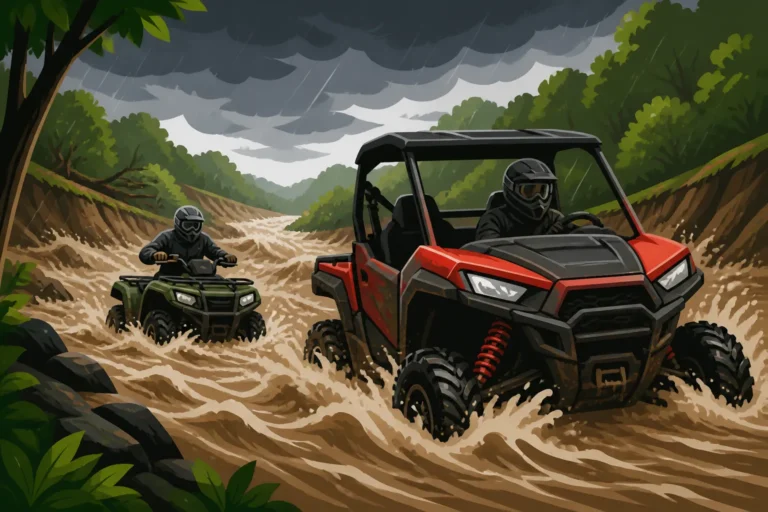
Mud creates a different problem: braking and steering may be less predictable, while the shoulder may be much softer than it appears. Avoid sudden turns or hard braking on slick ground. If the route is badly damaged, turn around only where there is enough space and where the maneuver is safe; don’t ride around a closure or create a new track to bypass an obstacle.
After heavy rain, a washout or damaged culvert may be concealed by water, mud, or debris. Check Spotting a Washed-Out Culvert After Heavy Rain before riding a route that has been affected by storms. If a section looks unsafe, stop and choose another authorized route rather than testing it with your machine.
Keep clear of timber operations and equipment
A logging landing is a worksite, not a convenient place to stop and watch. Avoid entering a landing, driving around barriers, or approaching parked machinery unless access is clearly allowed. Trucks may back up, turn, or load material with little warning, and operators may not see a small machine in their blind spots.
If you encounter active work, follow posted instructions and give workers room. Don’t stop where you block a gate or haul road, even for a quick break. If you are uncertain whether a road is open during operations, turn around at a safe, permitted location and check with the responsible land manager.
Stay on the route rather than riding around obstacles or onto the shoulder to get a better view. Missouri Trail Etiquette on Shared Ground and [Missouri Rules for Riding Off the Trail] offer useful reminders about sharing public land responsibly and avoiding damage beyond the established route.
A simple safety plan for the ride
Use this stop-and-pass routine
When a log truck approaches, take the steps in order:
- Ease off the throttle and slow down smoothly.
- Look ahead for a wide, stable place to pull completely clear.
- Signal your group and stop where the driver can see you.
- Keep riders and machines away from the truck’s path, wheels, and turning space.
- Wait for the truck to pass and for dust or debris to clear.
- Check the road surface and confirm the route remains open before continuing.
If there is no safe place to pass, don’t force it. Back away only when you can see a safe path, or wait for the truck to reach a wider area. If the situation feels uncertain, staying stopped is usually the more controlled choice.
Choose stopping places with care
A useful turnout is wide enough for your whole group, firm underfoot, and visible to approaching traffic. It should not be directly on a blind corner, at the crest of a hill, or beside a drop-off. When possible, stop before a narrow stretch so a truck does not meet your group halfway through it.
Do not assume a roadside pull-off is suitable just because another vehicle has used it. Brush can hide a ditch, and the ground may give way under a machine’s weight. If you are traveling with a trailer, plan where to park before unloading; Parking a Rig at a Mark Twain Lot can help you think through the separate challenge of finding an appropriate staging area.
Know when to turn around
Turn back if the road is closed, the surface is unstable, active work leaves no safe way through, or you cannot find a reasonable place to yield. Reaching a planned destination is never more important than avoiding a blind encounter or a dangerous pass.
Before you unload, check posted notices and route information again, especially after storms or when timber activity is underway. Keep your machine on authorized roads and trails, ride at a speed that matches visibility, and give working vehicles the space they need. That approach makes it easier for everyone—riders, truck drivers, and road crews—to share the Ozark backcountry safely.
Disclaimer
This article is for general informational purposes only and does not constitute professional advice. Laws, prices and regulations vary by location and change over time. Consult a qualified professional for guidance on your specific situation.