Missouri’s 86-Decibel Limit at a Park Gate
Missouri’s 86-decibel park-gate limit can turn a planned ride into a frustrating turnaround if an ATV or UTV is too loud. Knowing what the limit means, what can affect a sound check, and how to inspect your machine beforehand helps you avoid preventable problems and ride with less guesswork.
What Missouri’s 86-Decibel Limit Means at a Park Gate
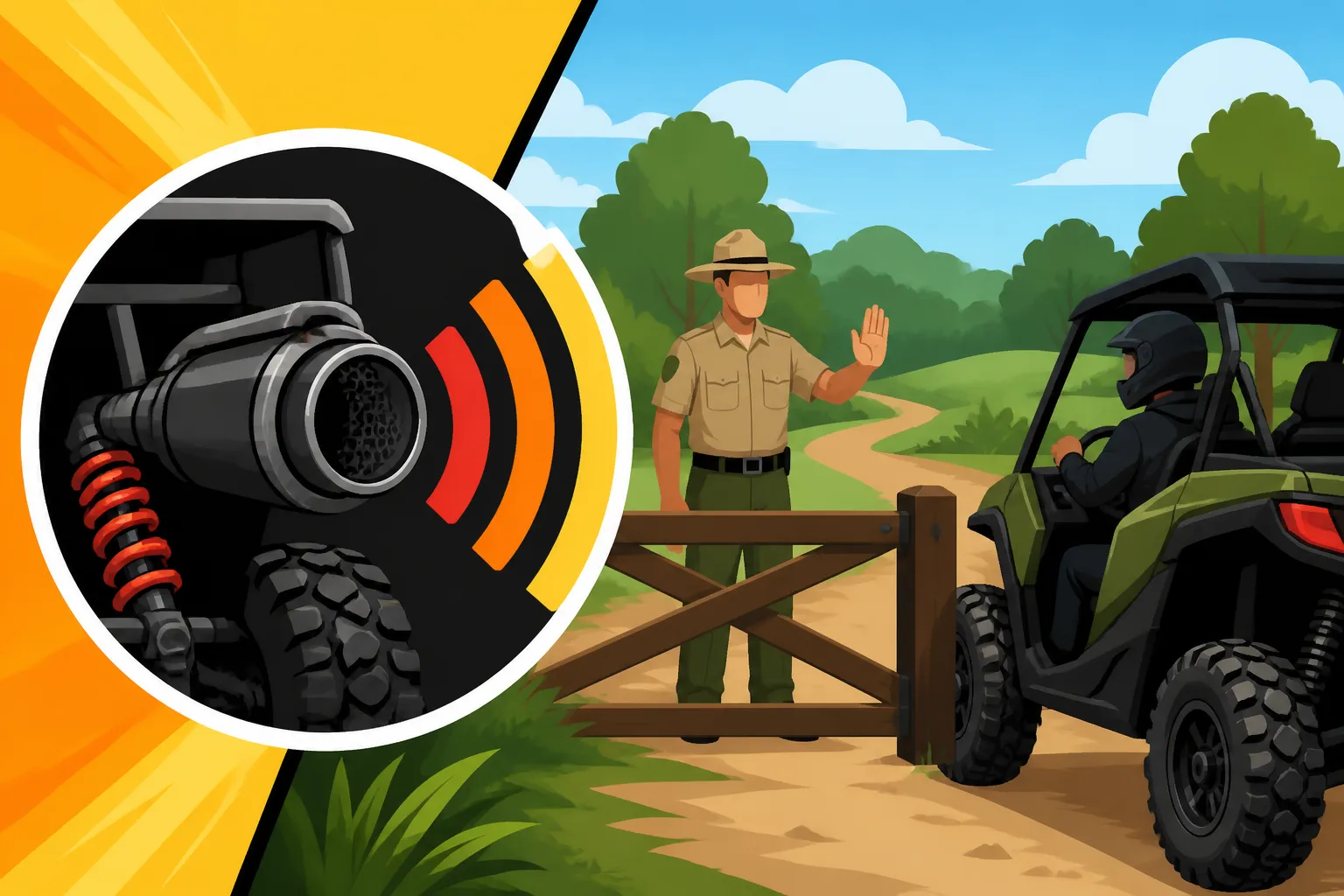
The 86-decibel limit is a sound standard that can matter when an off-road machine enters a Missouri state park riding area. If a machine is too loud under the park’s check, staff may refuse it entry. A current permit or a valid registration decal does not make an over-limit machine acceptable: paperwork and noise compliance are separate requirements.
Decibels measure sound, but the number alone does not tell you exactly how a machine will fare at the gate. A reading depends on how and where the sound is measured, how the machine is operated during the check, and the surrounding conditions. Follow the instructions of park staff rather than relying on a sound check you performed at home using a different setup.
A few practical points help put the rule in context:
- It is not simply a judgment about whether the machine sounds annoying. The limit is a measurable standard, not a comparison with another rider’s machine.
- A machine can have a valid exhaust system and still be too loud. Damage, missing parts, modifications, or a poor fit can change how much sound it produces.
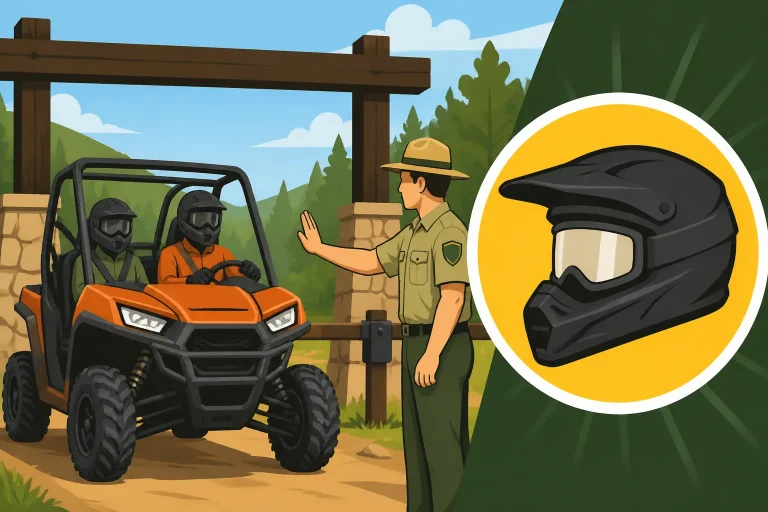
- Sound compliance is only one part of riding requirements. Permits, machine dimensions, flags, helmets, and other park rules may apply too.
- A machine that passes one check is not guaranteed to pass every check. Conditions and testing procedures may differ, so avoid treating a past result as a permanent pass.
Decibels use a logarithmic scale, so a small numerical difference does not translate neatly into a small change in perceived sound. That is one reason a rider’s impression—“it doesn’t seem much louder”—is not a dependable way to predict a reading.
The 86-decibel figure is especially relevant at a park gate because riders often encounter the rule as part of entry or staging procedures. It does not mean every riding area in Missouri follows the exact same sound rule or uses an identical testing process. Public land can have different requirements, and private riding parks set their own rules. Before loading up, check the current rules for the specific place you plan to ride. Missouri Sound Limits on Public Land gives a broader look at sound rules beyond the park gate.
It also helps to separate the noise limit from a machine’s trail permit. A state park permit provides access subject to the park’s rules; it does not certify the exhaust or guarantee that a machine meets the sound standard. If you are sorting out which permit applies, start with Missouri ORV Permits Explained. Then check the specific park’s current entry requirements, including sound, width, safety equipment, and operating restrictions.
How a Park-Gate Sound Check Can Affect Your Ride
A sound check can interrupt a trip before you reach the trails. The park’s staff decide how to handle the check and what to do if a machine does not meet the applicable standard. Follow their directions and ask what options are available rather than assuming you can change the machine at the staging area and immediately re-enter.
A smooth visit starts before the drive. Check the park’s official information close to your ride date, especially if you are traveling from out of town or coordinating a group. Entry details can change, and a rule that applied at one site may not apply the same way at another. Make sure each rider knows the sound requirement; one loud machine can complicate plans for an entire group.
What to confirm before you leave
Look for the specific riding area’s current rules, not just a general list of trail destinations. Confirm:
- Whether the area conducts or enforces a sound check at entry
- The stated sound limit and any instructions about how machines are checked
- Whether a failed machine must leave, can be corrected, or has another permitted option
- Any separate requirements for a spark arrester, machine width, flag, helmet, or permit
- Whether the area has temporary closures or special operating conditions
Do not rely on an old social-media post, a friend’s memory, or a machine passing at a different site. The relevant question is what the park requires for your visit. Missouri Trail Closures to Check First can help with the separate but equally important task of confirming that the riding area is open.
What to do if your machine is checked
Stay calm and let the staff member explain the process. Keep the machine in the condition requested for the test: the rider should not rev, reposition, or alter anything unless asked. If the result is above the limit, ask what the next step is and whether the park can explain the test conditions. A respectful question can clarify what happened; arguing about how the machine sounds to you is unlikely to resolve the measurement.
If you ride with friends, make a plan for a machine that cannot enter. The rest of the group may be able to continue, but that depends on the park’s procedures and your group’s arrangements. Decide ahead of time who can transport a machine back, whether the group is willing to split up, and what communication method you will use if riders separate. Avoid leaving a machine or trailer in an unauthorized area while the group rides.
A failed check is also useful diagnostic information. It may point to an exhaust problem, a modification that needs attention, or a mismatch between the machine and the riding area’s requirements. Don’t try to defeat or evade a test. Fix the cause, confirm compliance, and check the site rules before making another trip.
Why an ATV or UTV Can Exceed the Limit
A machine can become louder gradually, which makes the change easy to miss. Riders become familiar with its normal sound, and hearing protection can make it harder to notice a shift. A passenger or riding companion may recognize a new rattle or sharper exhaust note sooner than the operator does.
Common causes include:
- A damaged or deteriorated muffler. Internal components can wear or break, changing the exhaust sound even when the outside looks intact.
- A missing, loose, or incorrectly fitted part. Exhaust joints, heat shields, fasteners, and other components can vibrate or leak.
- A modified exhaust. An aftermarket part, a changed baffle, or other alterations can increase sound or move the machine away from the configuration intended to reduce it.
- An exhaust leak. A leak at a joint or damaged section may produce a harsher sound and can create a safety concern beyond noise.
- Mechanical noise. A loose panel, bearing, belt, or other component can add rattles, knocks, or whines that make the machine sound abnormal.
- Unusual operation during a test. The way a machine is operated during an official check matters. Follow the staff member’s instructions rather than guessing what engine speed is appropriate.
The exhaust deserves special attention because it is both a noise-control component and a safety system. Don’t remove, drill, modify, or bypass parts to gain performance or change the sound. A machine that seems to run well may still have an exhaust system that no longer controls noise effectively. If you are not sure whether an exhaust part is intact or suitable for the machine, ask a qualified repair shop to inspect it.
A spark arrester is a separate issue. It is intended to reduce the chance that hot particles escape the exhaust, and public-land rules may require one even when a sound check is not part of the visit. A spark arrester does not automatically make a machine quiet enough, and a quiet machine is not automatically equipped with one. See Missouri Spark Arrester Rules for the distinction.
Likewise, a factory exhaust is not a permanent guarantee of compliance. Age, damage, repairs, and later modifications all matter. Conversely, a machine that sounds loud to one person is not automatically over the limit. The reliable approach is to keep the exhaust in good condition and follow the park’s actual measurement process.
If a machine has recently developed a new popping sound, unusually sharp exhaust note, or persistent rattle, investigate before riding. Besides creating a possible gate problem, an exhaust issue can indicate a component that needs repair. A basic inspection can identify visible damage, but it cannot replace a proper diagnosis where the exhaust or engine needs service.
How to Check and Prepare Your Machine Before a Visit
A home check is useful for finding changes and deciding whether to get a repair. It is not a substitute for the park’s own measurement. Phone apps and inexpensive sound meters can give a rough indication, but their results depend on the device, position, surrounding noise, and procedure. A home reading below 86 decibels should not be treated as proof that the machine will pass at the gate.
Start with a visual and listening check
With the machine off and cool, look over the exhaust system for visible damage, loose connections, missing parts, or signs of leakage. Check for anything that appears to have been changed from the intended configuration. If a part is loose or damaged, do not assume tightening it is enough; the component may need replacement or professional attention.
Start the machine only in a safe, well-ventilated place. Listen for changes from its usual sound, such as a new metallic buzz, exhaust puff, or sharp increase in volume. Keep hands, clothing, and tools away from hot and moving parts. If the machine is unusually loud or has an exhaust leak, have it checked before riding.
You can use a sound meter at home as a screening tool, but keep the limitations clear. For example, a meter purchased through Amazon may help compare readings from the same machine under similar conditions. It does not establish that a park’s procedure has been met. A phone app is even less useful as an official measurement because phone microphones and app settings are not necessarily calibrated for enforcement.
Ask a shop for a meaningful inspection
A repair shop can inspect whether the exhaust system is complete, correctly fitted, and in good condition. Explain that you plan to ride at a location with an 86-decibel limit. If the shop can test sound, ask what method and conditions it uses and whether they resemble the park’s stated procedure. A shop’s reading can help diagnose a problem, but it still may not predict the gate result exactly.
Bring the machine’s make, model, year, and details about any exhaust work or modifications. That information can help a technician identify the right parts and determine whether the system has been altered. If the machine has a history of failed checks, share that too; otherwise, a mechanic may not know to focus on a particular component.
Avoid last-minute sound fixes
Some quick changes can create more trouble than they solve. Don’t stuff material into an exhaust, make an improvised baffle, or adjust a part in a way the manufacturer did not intend. Improvised changes may damage the machine, affect engine operation, or fail the park’s check. Repair the cause with suitable parts and confirm the repair before traveling.
A useful pre-trip sequence is:
- Check the current rules for the riding area.
- Inspect the exhaust and listen for new or abnormal noises.
- Repair damage or remove unsuitable modifications.
- Ask a repair professional to evaluate a machine that is unusually loud or has failed a check.
- Pack required permits and safety equipment separately from the noise check.
- Leave enough time to address a problem without pressuring park staff to make an exception.
If a trip includes more than one riding area, do not assume that passing one site’s inspection covers the next. Check each location’s requirements in advance. Park gate rules can differ from forest rules, and neither a permit nor an earlier sound reading should be treated as a universal pass.
Sound Compliance Is One Part of Park Access
Noise is only one reason an otherwise rideable machine may be turned away or restricted. Missouri riding areas can have separate requirements for access permits, width, flags, helmets, spark arresters, and age or supervision. These rules address different concerns, so satisfying one does not waive another.
For example, some park-specific rules use a flag setup that differs from requirements for road use. A highway flag standard is not necessarily the one used on a state park trail. If you are preparing equipment, check Why a State Park Flag Rides a 72-Inch Mast rather than assuming that one flag rule applies everywhere.
Machine dimensions can also matter. A side-by-side that meets the sound limit may still be too wide for a particular trail or gate. Check the riding area’s width restrictions before setting out, especially if you have modified tires, wheels, or suspension. Measuring 64 Inches at the Gate explains why measurement matters for park access.
Permits are another separate layer. A state park trail permit does not replace a forest permit, and an ATV registration decal does not necessarily cover park access. Confirm what you need for the exact location and machine type. What Gets Checked at a Forest Trailhead explains a different access setting, where riders may encounter its own permit and compliance checks.
If a ranger or other authorized staff member identifies a problem, ask what rule applies and what action is required. The most useful questions are specific: Is the issue the sound reading, exhaust condition, missing equipment, or permit? What step must be taken before entry? Where can you find the current written requirement? That makes it easier to solve the right problem and avoid repeating it on another trip. For broader enforcement context, see What a State Park Ranger Can Cite You For.
Treat the sound limit as part of choosing where and how to ride, not as an afterthought at the gate. If your machine is modified, unusually loud, or due for exhaust service, check it before committing to a long drive. If it is in sound condition, carry the right permits and equipment, and verify the park’s current rules, you will be better prepared for the rest of the visit.
Frequently Asked Questions
Does a valid Missouri ATV decal let a loud machine enter a state park?
No. A registration decal and a park’s sound requirement are separate matters. A machine may have valid paperwork and still be denied entry if it does not meet the applicable sound standard.
Can a phone app prove that my ATV meets the 86-decibel limit?
No. A phone app can offer a rough comparison, but its microphone and settings may not be calibrated, and its setup may differ from the park’s test. Use it only as a screening aid, not as proof of compliance.
Will a stock exhaust automatically pass?
Not necessarily. A stock system can be damaged, worn, loose, or altered. Inspect it and address unusual noise before traveling; the park’s check determines whether the machine meets its requirement.
Does a spark arrester mean the machine is quiet enough?
No. A spark arrester and a noise limit address different concerns. A machine may need to meet both requirements, so check the rules for the specific riding area.
Disclaimer
This article is for general informational purposes only and does not constitute professional advice. Laws, prices and regulations vary by location and change over time. Consult a qualified professional for guidance on your specific situation.