Riding Lake Ozark’s Streets
There's nothing quite like the dream of cruising along the picturesque streets of Lake Ozark in your UTV, feeling the breeze and taking in the beautiful scenery. For years, many of us in Missouri have felt that frustration of seeing others do it, hearing whispers of "it's allowed there", but not knowing the exact rules. You just want to enjoy your machine responsibly, but navigating the patchwork of state laws and local ordinances can feel like trying to find your way through a dense Ozark forest without a map. This guide is here to clear up the confusion and give you the real scoop on how you can legally ride your UTV or ROV on the streets of Lake Ozark.
Missouri's General Approach to Off-Road Vehicles on Public Roads
Let's be honest, Missouri law isn't exactly a huge fan of off-road vehicles (ORVs) on public roads in general. For a long time, the default answer was a pretty firm "no." This created a lot of headaches for folks who just wanted to get from their campsite to the general store or access a trail. The state statutes draw clear lines, defining what an All-Terrain Vehicle (ATV) is, and then separately defining Utility Vehicles (UTVs) and Recreational Off-Highway Vehicles (ROVs). These distinctions are absolutely crucial when we talk about street legality.
The primary reason for these restrictions often boils down to safety concerns. Traditional ATVs, with their straddle seats and handlebar steering, just aren't designed for the same kind of stability and control on paved roads as a car. UTVs and ROVs, with their side-by-side seating, steering wheels, and often more robust safety features like roll cages and seatbelts, started to carve out a different conversation. While the state still largely restricts these machines from state and federal highways, it has made provisions for local control, allowing individual cities and counties to decide what makes sense for their communities. This is where places like Lake Ozark come into play, stepping up to address the needs and desires of their residents and visitors. If you're looking for the short answer to the broader question, you'll find a lot of clarity in [Street Legal ATVs in Missouri: The Short Answer].
Distinguishing Between ATVs, UTVs, and ROVs for Road Use
It's really easy to lump all "four-wheelers" together, but the law makes some very important distinctions that directly impact whether you can ride on a public road, even in a city with an ordinance.
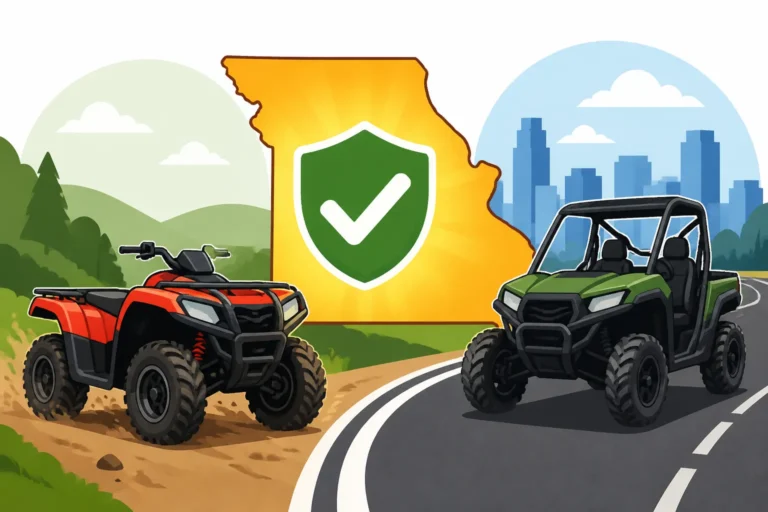
- All-Terrain Vehicles (ATVs): These are generally defined as motorized vehicles with three or more low-pressure tires, a seat designed to be straddled by the operator, and handlebars for steering. Think traditional quads or three-wheelers. Due to their design, ATVs are almost universally excluded from street-legal ordinances, even in towns that embrace side-by-sides. They simply don't have the same safety features or handling characteristics that legislators and city councils feel are necessary for road use. You'll find that if Lake Ozark's ordinance allows anything, it's not going to be these.
- Utility Vehicles (UTVs) and Recreational Off-Highway Vehicles (ROVs): These terms are often used interchangeably, but legally, Missouri defines them with specific characteristics. Generally, they are designed for side-by-side seating, have a steering wheel, foot pedals for acceleration and braking, and often come equipped with seatbelts and a roll-over protective structure (ROPS). Think Polaris Rangers, Can-Am Defenders, or Kawasaki Mules. These are the machines that cities like Lake Ozark are usually looking at when they craft ordinances to allow limited street use. The differences between these two can get technical, but for the purpose of a city ordinance, they often fall under the same umbrella of "side-by-side" vehicles. It's vital to know which category your specific machine falls into, as this will dictate whether you even have a chance of riding legally on city streets. [Why Missouri Splits ATVs, UTVs and ROVs] delves deeper into these specific categories and why the state treats them differently.
When State Law Allows Limited Road Use (Outside of City Ordinances)
Even without a specific city ordinance, Missouri state law does provide a few very narrow exceptions for ATVs, UTVs, and ROVs on public roadways. It's important to understand these as they're distinct from local city permits.
One common exception is for agricultural purposes. Farmers are often permitted to operate their ORVs on public roads for short distances between fields or to access agricultural land, usually during daylight hours. This is typically tied to specific equipment or tasks related to farming. Another exception can be made for disabled individuals who use an ORV for transport, but this also comes with strict requirements and limitations. Lastly, there's the specific [Missouri's 3-Mile Rule for Side-by-Sides], which allows ROVs to be operated on state roads within a three-mile radius of the operator's home, but this comes with a host of equipment and licensing requirements, and it's a state law, not a city one. While these state-level exceptions exist, they are generally not what allows casual recreational riding through towns like Lake Ozark. For that, you need a specific local ordinance.
Lake Ozark's Specific Ordinance for Street Use
Here's where the rubber meets the road, quite literally! Lake Ozark is one of the forward-thinking communities in Missouri that has recognized the appeal and utility of UTVs and ROVs, particularly for residents and tourists wanting to navigate the area's unique landscape. They've passed an ordinance that carves out a legal path for these machines to operate on most city streets, offering a fantastic opportunity for riders. However, this isn't a free-for-all; there are specific rules and requirements you absolutely must meet.
The core of Lake Ozark's approach, much like other cities in Missouri that allow UTVs, is to treat them more like traditional motor vehicles when they're on the street. This means you can't just jump in your side-by-side and go; you need to ensure your machine is properly equipped, your paperwork is in order, and you understand the local driving rules. This is a big win for enthusiasts, as it provides a clear, legal framework instead of the uncertainty many riders face elsewhere. Understanding [How a City Ordinance Opens a Street to UTVs] is key to appreciating why these local rules exist and what they aim to achieve.
The Mandatory City Permit
To ride legally on Lake Ozark's streets, you must obtain a permit directly from the city. This isn't just a suggestion; it's a requirement that acts as your official permission slip. This permit ensures that the city knows who is operating these vehicles and that they've acknowledged the rules.
Typically, you'll need to visit the Lake Ozark City Hall or the local police department to apply. The process will involve filling out an application, providing proof of ownership for your UTV or ROV, showing proof of insurance, and potentially undergoing a basic inspection of your vehicle to ensure it meets the necessary equipment standards. There will be a fee associated with this permit, which helps cover the administrative costs and sometimes contributes to local infrastructure or safety initiatives. While I can't give you exact numbers, expect it to be a reasonable administrative cost, not a major financial burden. Remember to check with the city directly for their current permit application process, fees, and required documents. The process for [Getting a Road Permit From a Police Department] can often be similar across different municipalities.
Essential Equipment Requirements
Lake Ozark's ordinance will mandate that your UTV or ROV is equipped with certain safety features to make it more visible and controllable on public roads. These requirements are put in place to ensure your safety and the safety of others sharing the road.
Here’s a general rundown of what you’ll likely need:
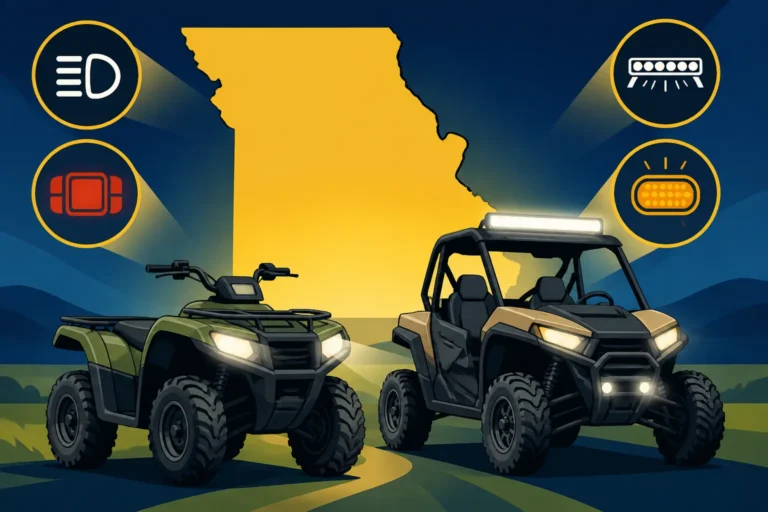
- Headlights and Taillights: These must be fully functional and used during hours of darkness or when visibility is poor, just like any car.
- Brake Lights: Crucial for signaling when you're slowing down or stopping.
- Turn Signals: Essential for indicating your intentions to other drivers. Many UTVs don't come with these factory-installed, so this is often an aftermarket addition. Companies like SuperATV offer excellent universal turn signal kits that can make your machine compliant.
- Mirrors: At least one rear-view mirror is typically required, allowing you to see traffic behind you.
- Horn: A working horn is necessary for signaling warnings to pedestrians or other vehicles.
- Seatbelts: Your UTV or ROV must have seatbelts for all occupants, and they must be worn at all times while operating on city streets.
- Roll Cage/ROPS: A factory-installed roll-over protective structure is usually a prerequisite, as it's a fundamental safety feature of UTVs and ROVs.
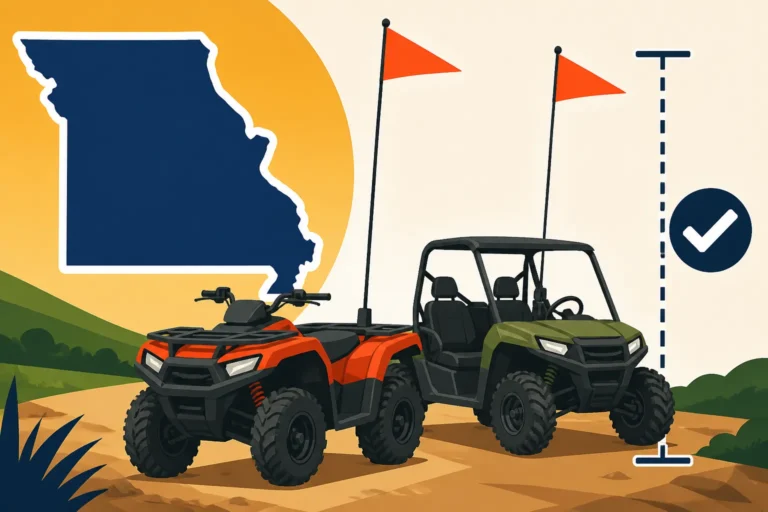
- Safety Flag: Often required, especially if your machine is shorter than typical road vehicles. This flag, mounted on a pole, significantly increases your visibility to other drivers, particularly those in larger vehicles who might not easily see a UTV. Missouri law often specifies [Missouri's 7-Foot Safety Flag] for other road-legal ORV applications, and city ordinances often adopt similar standards for height and visibility.
It’s important to ensure all these components are in good working order before applying for your permit and every time you head out on the streets. Think of it like a mini-motor vehicle inspection.
Here's a quick summary of common equipment requirements:
| Feature | Description |
|---|---|
| Headlights | Must be functional and used at night or in low visibility. |
| Taillights | Functional and visible from the rear. |
| Brake Lights | Must illuminate when brakes are applied. |
| Turn Signals | Front and rear signals required for indicating turns. Often an aftermarket addition. |
| Mirrors | At least one rear-view mirror (center or side). |
| Horn | An audible warning device. |
| Seatbelts | Required for all occupants; must be worn at all times. |
| Roll Cage / ROPS | Factory-installed roll-over protective structure. |
| Safety Flag | Often required for increased visibility, typically mounted on a tall mast (e.g., 7 feet from the ground) with fluorescent orange material. |
| Muffler | Exhaust system must be functional and not excessively loud. |
| Tires | Must be suitable for highway use, in good condition, and not excessively aggressive tread that could damage roads. |
| Width Restriction | Some ordinances might have a width limit (e.g., 64 inches or 72 inches), though Lake Ozark is generally more accommodating given its tourist-friendly nature. Always check the specific ordinance. |
Speed Limits and Operator Requirements
Just because you're on a UTV doesn't mean the rules of the road go out the window. Lake Ozark's ordinance will specify that you must obey all posted speed limits, traffic signs, and signals. In many cities with similar ordinances, UTVs might be subject to lower maximum speeds than regular vehicles, even on roads with higher posted limits. For instance, a city might limit UTVs to 30 mph on a road where cars can go 45 mph. Always pay close attention to any specific signage or speed stipulations within the ordinance.
Furthermore, the operator of the UTV or ROV must hold a valid driver's license – typically an operator's or chauffeur's license, just like driving a car. This isn't a place for unlicensed drivers. [An Operator's or Chauffeur's License in Missouri] provides more details on the specific types of licenses allowed. Additionally, while Missouri's helmet law for ATVs generally applies to riders under 18, cities like Lake Ozark might have their own specific rules for UTVs on city streets, so always check the local ordinance. Even if not legally required, a helmet is always a smart choice for safety.
What You Need to Do Before You Ride in Lake Ozark
Alright, so you're itching to hit those Lake Ozark streets in your side-by-side. That's awesome! But before you load up and head out, let's talk about the practical steps you need to take to ensure your ride is not only fun but also completely legal. Nobody wants to get pulled over on vacation or while running errands, especially when it's easily avoidable. Getting everything squared away upfront means more carefree cruising later.
Secure Your Lake Ozark City Permit
This is your first, non-negotiable step. As we discussed, a city-issued permit is the key that unlocks Lake Ozark's streets for your UTV or ROV.
- Contact Lake Ozark City Hall or Police Department: Start by visiting their official website or giving them a call. They will have the most up-to-date information on the application process, required documents, fees, and office hours. Don't rely on old forum posts or hearsay; go straight to the source.
- Gather Your Documents: You'll likely need:
- Proof of ownership (title or bill of sale) for your UTV/ROV.
- Proof of valid liability insurance.
- Your valid driver's license.
- The UTV/ROV itself for a visual inspection to ensure it meets equipment requirements.
- Complete the Application and Pay the Fee: Fill out all necessary paperwork accurately. Be prepared to pay the permit fee. This fee is typically an annual cost, meaning you'll need to renew it each year to continue riding legally.
- Display Your Permit: Once issued, the city will likely provide a decal or sticker that must be prominently displayed on your machine, proving you're legally permitted to operate it on city streets. This makes it easy for law enforcement to identify compliant vehicles. This process is very similar to what you'd experience if you were [Getting a Road Permit From a Police Department] in other Missouri towns.
Equip Your Machine for Compliance
Beyond the permit, your UTV or ROV itself needs to be up to snuff. Most factory UTVs come with some basic lighting, but rarely do they have all the features required for street legal operation. This is where you might need to invest a little in aftermarket parts.
- Add Missing Lighting and Signals: If your UTV doesn't have turn signals or a horn from the factory, you'll need to add them. There are many kits available specifically for UTVs that integrate seamlessly. For example, companies like SuperATV offer comprehensive street-legal kits that include turn signals, a horn, and often mirrors, making it a one-stop shop for compliance.
- Check Existing Equipment: Even if you have headlights, taillights, and brake lights, make sure they are all working perfectly. Replace any burnt-out bulbs or address any wiring issues.
- Install a Safety Flag: If required, measure and install a safety flag that meets the city's height and visibility specifications. Many riders opt for a whip antenna mount for easy installation and removal. The flag should be a bright, fluorescent color like orange, with a good amount of surface area (e.g., 30 square inches) to ensure maximum visibility, especially above the roofline of your UTV.
- Inspect Tires and Brakes: Ensure your tires have adequate tread and are in good condition. Your brakes should be fully functional and able to stop your machine safely and effectively.
Verify Your Insurance Coverage
This is an often-overlooked but incredibly important step. Standard off-road ATV/UTV insurance policies might not cover you for liability or damage when operating on public roads.
- Contact Your Insurance Provider: Before you ever hit the pavement, call your insurance agent. Explain that you plan to operate your UTV/ROV on the public streets of Lake Ozark under a city ordinance. Ask if your current policy provides adequate liability coverage for this type of use.
- Adjust Your Policy if Necessary: You may need to add a specific endorsement or switch to a different policy type to ensure you're covered. This small investment can save you from a massive financial headache if an accident occurs. Never assume; always verify.
Know the Local Driving Rules and Boundaries
Lake Ozark's ordinance isn't just about what your machine has; it's also about how you operate it and where you can go.
- Study the Ordinance: Get a copy of the official city ordinance from City Hall or their website and read it thoroughly. Understand the specific speed limits for UTVs, any time-of-day restrictions, and designated routes.
- Stay on Permitted Roads: Most city ordinances will specify that you can ride on city-maintained streets but will explicitly forbid riding on state or federal highways that pass through the city, or on sidewalks. Crossing a state highway might be allowed, but riding on it usually is not. [Does a City Permit Work in the Next Town?] is a good reminder that this permit is specifically for Lake Ozark; it won't apply if you cross into a neighboring municipality without their own separate permit.
- Practice Safe Driving: Drive defensively. Remember, UTVs handle differently than cars, especially at higher speeds or in emergency maneuvers. Be extra cautious around pedestrians, cyclists, and other vehicles. Always be predictable with your movements and signals.
By taking these steps, you'll ensure your Lake Ozark UTV adventure is safe, legal, and truly enjoyable.
Important Considerations and Limitations
While Lake Ozark's ordinance opens up exciting possibilities for UTV and ROV owners, it's crucial to understand that there are still some very real limitations and responsibilities that come with this privilege. Riding responsibly and knowing these boundaries will help keep the streets open for everyone and prevent any unnecessary tickets or accidents. It's not a free pass to treat city streets like a trail.
Why Traditional ATVs Are Still Mostly Out of Luck
We've touched on this, but it bears repeating: city ordinances like Lake Ozark's are almost exclusively for UTVs and ROVs, not traditional ATVs. This is a common point of confusion and frustration for many quad owners.
The primary reason boils down to the fundamental design differences. ATVs, with their straddle seat and handlebar steering, are designed for dynamic weight shifting and off-road maneuverability. On paved surfaces and in traffic, these characteristics can make them less stable and harder to control than a UTV with a steering wheel and side-by-side seating. Lawmakers and city officials generally view UTVs/ROVs as having more car-like safety features (like seatbelts, roll cages, and often better lighting options) that make them more suitable for shared road use. So, if you have a traditional quad, even a large one, the Lake Ozark ordinance likely won't apply to you.
State Highways Are Still Off-Limits (Mostly)
Even with a city permit, you generally cannot operate your UTV or ROV on state or federal highways that run through Lake Ozark. These roads fall under state jurisdiction, and local ordinances typically don't override state law in this regard.
For example, if a state route runs directly through the heart of Lake Ozark, you might be allowed to cross it at an intersection to get from one city street to another, but you usually won't be permitted to ride down that state highway for any significant distance. This is a critical distinction, and misunderstanding it can quickly lead to a citation from state highway patrol or county sheriffs, regardless of your city permit. Always know which roads are city-maintained and which are state or federal routes. For specific guidance on crossing, check out [Missouri Rules for Crossing a Highway].
Consequences of Non-Compliance
Breaking the rules, whether it's riding without a permit, operating an unequipped machine, or speeding, can lead to real consequences. Lake Ozark's police department will enforce their ordinance, and non-compliance can result in:
- Fines and Citations: These can be costly and put a damper on your fun.
- Impoundment of Your Vehicle: In severe or repeated cases, your UTV/ROV could be impounded, leading to further fees and headaches.
- Loss of Driving Privileges: Depending on the severity of the offense, it could even impact your regular driver's license.
- Revocation of Permit: The city can revoke your UTV permit, meaning you lose the privilege to ride on their streets.
It's far easier and more enjoyable to simply follow the rules. Knowing what [Missouri Fines for Illegal ATV Road Use] look like can certainly be a strong motivator to stay compliant.
Passenger Rules and Age Restrictions
Just like with cars, there are rules about who can operate a UTV or ROV on city streets and who can be a passenger.
- Operator Age: As mentioned, the operator must have a valid driver's license, which inherently means they meet the state's minimum driving age.
- Passenger Capacity: Your UTV or ROV is only allowed to carry as many passengers as there are manufacturer-installed seats and seatbelts. If your side-by-side is designed for two people, you can't cram four in there. Every passenger must have their own designated seat and must be wearing a seatbelt.
- Minor Passengers: When it comes to children, common sense and safety precautions are paramount. While specific age requirements for passengers might vary by ordinance, it's always safest to ensure children can sit properly, reach the floor, and be securely belted in. For general guidance on younger riders, [Missouri Rules for a Passenger in a UTV] offers some helpful context, though specific city ordinances may have their own nuances.
Helmet Rules and Other Safety Gear
While Missouri generally has more relaxed helmet laws for adults on ATVs off-road compared to some other states, when you bring a UTV onto city streets, some of those rules can shift or be supplemented by local ordinances.
- State Law vs. Local Ordinance: Missouri's state law on helmets for ORVs typically requires riders and passengers under the age of 18 to wear a helmet. However, a city ordinance might introduce additional requirements for all ages when operating on city streets, especially if the UTV is treated more like a motorcycle in specific contexts, or for increased safety. Always check the specific Lake Ozark ordinance.
- Personal Choice: Even if not legally required for adults, wearing a helmet is always a smart choice when operating any vehicle on public roads. An open-face helmet can provide protection while still allowing you to enjoy the open-air feel of a UTV.
- Eye Protection: At a minimum, eye protection (goggles or a face shield) is highly recommended, regardless of helmet requirements, to shield your eyes from dust, debris, and insects.
By understanding and respecting these considerations and limitations, you contribute to a safe and enjoyable environment for all, ensuring that the privilege of riding your UTV on Lake Ozark's streets remains available for years to come.
Disclaimer
This article is for general informational purposes only and does not constitute professional advice. Laws, prices and regulations vary by location and change over time. Consult a qualified professional for guidance on your specific situation.