Missouri ATV Safety Course Options
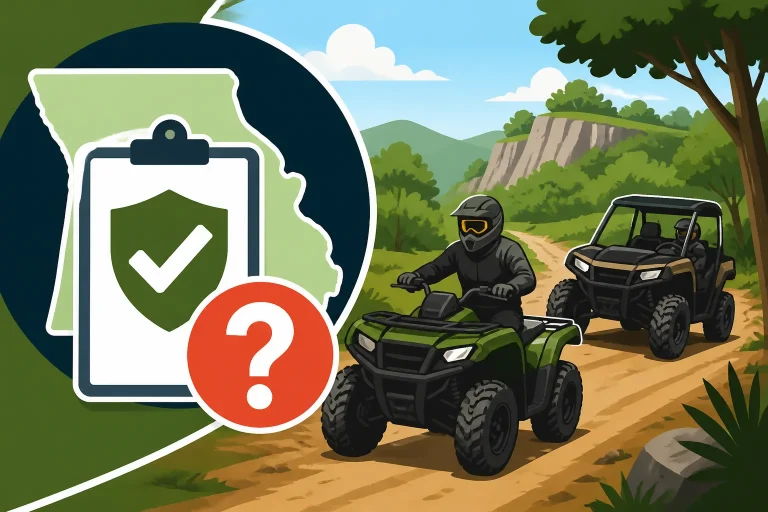
A safety course can make a first ATV or UTV ride safer, but it is not always clear whether Missouri requires one or where to find useful training. The key distinction is that a course may build skills without replacing a riding permit, land-manager rules, or supervision requirements.
Does Missouri require an ATV safety course?
Missouri does not generally require riders to earn a statewide ATV safety certificate before riding. A course is still a practical option for new riders, young operators, returning riders, and anyone moving from an ATV to a side-by-side. The details of the state’s approach are covered in Does Missouri Require an ATV Safety Course? and Why Missouri Has No Rider Certificate.
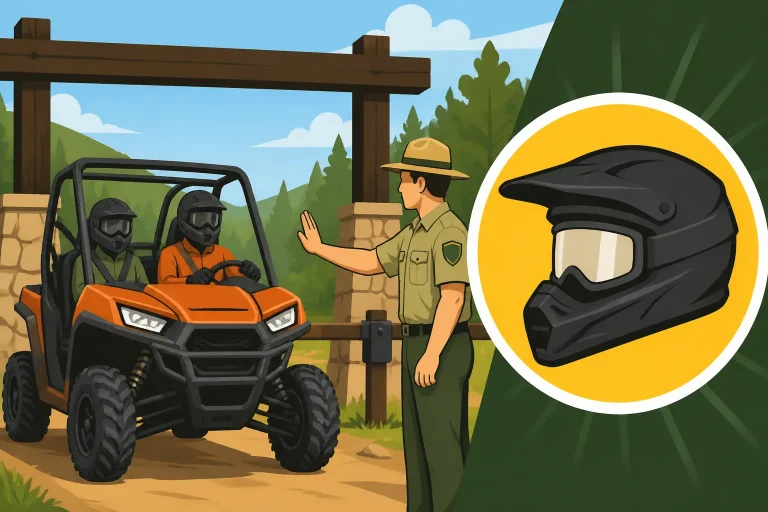
That baseline does not mean every ride is unrestricted. Rules can depend on where you ride, the type of machine, the rider’s age, and whether the machine is rented or being used at an organized event. A public riding area may set its own entry conditions, and private operators can establish training or orientation requirements. Check the rules for your destination before traveling rather than assuming a course—or the lack of one—settles every question.
A course also does not replace the separate permits and approvals that may apply to a ride. Missouri’s off-road permits are tied to the land or riding area, not to completing a general safety class. Review Missouri ORV Permits Explained and Do You Need a Permit for Missouri State Park Trails? before heading to a public trail system. For a broader look at land-specific rules, see Missouri Rules for Riding Public Land.
| What you need to check | What a safety course does | What it does not automatically do |
|---|---|---|
| Statewide rider rules | Teaches safe operating practices | Create a Missouri rider certificate requirement |
| Trail or park access | Helps prepare you to ride responsibly | Serve as a trail permit |
| Rental requirements | May prepare a renter to operate a machine | Replace a rental company’s orientation or paperwork |
| Youth riding rules | Can teach a young rider basic skills | Override age, supervision, or area restrictions |
| Riding in another state | Can provide useful skills that travel with you | Guarantee that another state accepts a course or registration |
Treat course completion as preparation, not as a universal legal pass. If a park, rental business, club, or event asks for proof of training, ask what kind of course or documentation it accepts before enrolling. If you ride across a state line, check that state’s rules separately; Missouri’s requirements do not automatically apply elsewhere. Missouri Reciprocity With Kansas is a useful starting point for understanding why out-of-state riding rules deserve their own check.
Safety course options for Missouri ATV and UTV riders
The best option depends on what you need from training. A short online lesson may help you understand basic rules and hazards, while an in-person course can give you supervised practice with controls, braking, turning, and terrain. Neither format is automatically right for every rider.
In-person, hands-on training
A hands-on course is often the most useful choice for someone who has never operated an ATV, is returning after a long break, or wants coaching before riding trails with rocks, slopes, loose gravel, or water crossings. The instructor can demonstrate riding techniques and observe how the student handles the machine. That feedback is hard to reproduce by reading or watching a video.
Some rider-training programs are offered through specialty vehicle organizations, manufacturers, dealers, or local riding schools. Availability varies by location and season, so confirm that a current class is actually being held within a practical distance. Ask whether the course is designed for ATVs, UTVs, or both. Training on one kind of machine is useful background, but it may not cover the different controls, size, passenger setup, and rollover risks of the other.
Before booking, ask:
- What machine type is covered: ATV, UTV, or both?
- Is the class classroom-only, hands-on, or a mix?
- Does the rider need to bring a machine, or is one supplied?
- Are there minimum age or size requirements?
- What clothing, footwear, helmet, or other protective equipment is required?
- What proof of completion is provided, and who recognizes it?
- What happens if weather or a low enrollment count affects the class?
Do not assume that an advertised course is a legal credential. Ask the course provider what the completion document means and whether a specific riding area, rental company, or event accepts it.
Online courses and video-based learning
Online instruction is convenient for learning basic safety concepts, terminology, and planning habits. A good course can explain protective gear, riding posture, pre-ride checks, safe speed, terrain awareness, and what to do when conditions change. It can also give a new rider a useful foundation before an in-person lesson.
Its main limitation is straightforward: completing a screen-based course does not show that a rider can control a machine. It cannot provide real-time correction on throttle use, braking, balance, body position, or obstacle avoidance. A certificate from an online course may also be treated differently by different organizations. Check the provider’s description and any destination-specific rules before relying on it.
Online learning works best as preparation or a refresher, not as a substitute for supervised practice when a rider is inexperienced. If you choose this option, use a course that clearly identifies the machine type and intended audience. Be cautious about assuming that a general ATV course covers UTV operation or that a completion certificate is accepted everywhere.
Dealer, rental, club, and local instruction
A dealership may be able to point customers toward manufacturer education or nearby instructors. A rental business may provide a required operating briefing before handing over a machine. Riding clubs and local schools may also know about practical training opportunities, although availability and standards can differ.
A rental orientation is helpful, but do not assume it is equivalent to a full safety course. It may focus on the controls and rules for the rental property rather than build broad riding skills. If you are renting, ask what instruction is included and whether it is required for every operator. The considerations in Missouri Rules for a Rented Machine are worth checking alongside the rental company’s own terms.
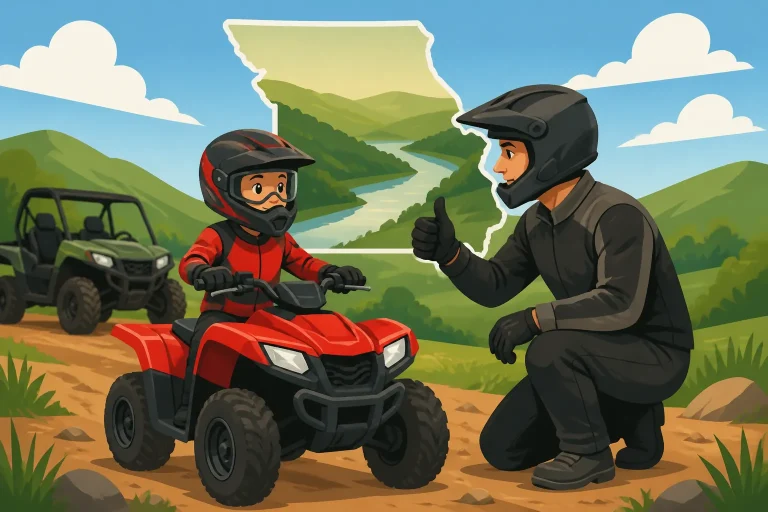
If a club or event offers instruction, ask who teaches it, what machines are used, and whether students receive individual feedback. For young riders, check that the lesson is appropriate for the child’s size and experience. An adult course may not suit a child merely because both ride ATVs.
How to choose a course that fits your ride
Start with the rider, not the certificate. A beginner who has never used an ATV has different needs from an experienced rider who wants to learn UTV handling. A parent preparing a child for a youth area needs age-appropriate instruction and must still follow the applicable supervision rules. See [Missouri Supervision Rules for Young Riders] for the legal side of that issue.
Then match the class to the machine and the terrain. ATVs and UTVs differ in seating, steering, passenger arrangements, weight, and how the operator responds to a turn or slope. Trail conditions matter too: practice on flat, open ground does not necessarily prepare someone for steep, narrow, or rocky routes. If a course does not include the machine or riding conditions you expect, ask what skills it can reasonably teach and what practice you should arrange separately.
Use these questions to compare options:
- Does it teach the machine you will ride? Look for explicit coverage of ATV or UTV operation rather than relying on a broad title.
- Does it include supervised practice? If the rider is new, practical instruction and instructor feedback are especially valuable.
- Is the class suitable for the rider’s age and experience? Confirm any age limits, size expectations, and parent or guardian requirements directly with the provider.
- What does completion mean? Find out whether the course provides a record, certificate, or simply instruction, and whether the organization that requested training accepts it.
- Is the setting appropriate? A beginner should have a chance to practice away from traffic, crowds, and difficult obstacles before attempting challenging terrain.
- Are safety equipment and machine arrangements clear? Confirm what is supplied and what the rider must bring.
- Can you verify the course is current and available? Course schedules, locations, instructors, and participation requirements can change.
A sound course should cover more than how to start and stop. Look for instruction on protective equipment, pre-ride inspection, passenger limits, safe spacing, speed control, turning, hills, surface changes, and stopping when visibility or traction is poor. For a UTV class, ask whether it addresses seat belts, occupant positions, rollover protection, and the importance of keeping arms and legs inside the vehicle. For an ATV class, ask whether it addresses carrying passengers and how to maintain control while shifting body position.
Training should also include judgment. Riders need to recognize when a trail, slope, water crossing, or weather condition is beyond their ability or machine. A course cannot guarantee that a rider will make safe choices later, but it can give them a vocabulary and basic habits for evaluating risk.
What to do after training
Use the course as a starting point. Before your first trail ride, practice in a controlled, open area where the rider can become comfortable with the machine’s controls, braking, and turning. Start slowly and add difficulty only when the rider can manage the basics consistently. A new rider should not be placed in a group moving at a pace or on terrain they cannot handle.
Make a separate checklist for the ride’s legal and practical requirements:
- Confirm whether the destination requires a permit, reservation, decal, or other proof of access.
- Check current trail openings, closures, machine-width limits, and equipment rules.
- Review the site’s age and supervision requirements.
- Confirm whether passengers are allowed on that machine and at that location.
- Inspect the ATV or UTV, including tires, brakes, steering, lights, and controls.
- Carry the protective equipment required by the site and appropriate for the conditions.
- Agree on a group plan, stopping points, and what riders should do if separated.
If you are visiting from another state, do not treat a course certificate as a substitute for checking Missouri’s access rules. Out-of-state registration and reciprocity are separate questions from rider education; Riding Missouri With an Out-of-State Decal can help clarify that distinction. Likewise, a Missouri course does not necessarily satisfy another state’s rules when you travel.
For a young rider, training should match the machine and the child’s ability, but adult oversight remains important. A certificate is not proof that a child can safely ride every trail or keep pace with a group. Follow the rules for the specific area, and choose a route that gives the rider room to stop, turn around, and ask for help without pressure.
The most useful course is one that prepares the rider for the machine they will actually use, includes the right amount of practical instruction, and sets realistic expectations. Missouri riders can benefit from training even when a general statewide certificate is not required. Keep the course separate from the permit checklist: training builds competence, while the riding area’s rules determine what you need for access.
Disclaimer
This article is for general informational purposes only and does not constitute professional advice. Laws, prices and regulations vary by location and change over time. Consult a qualified professional for guidance on your specific situation.