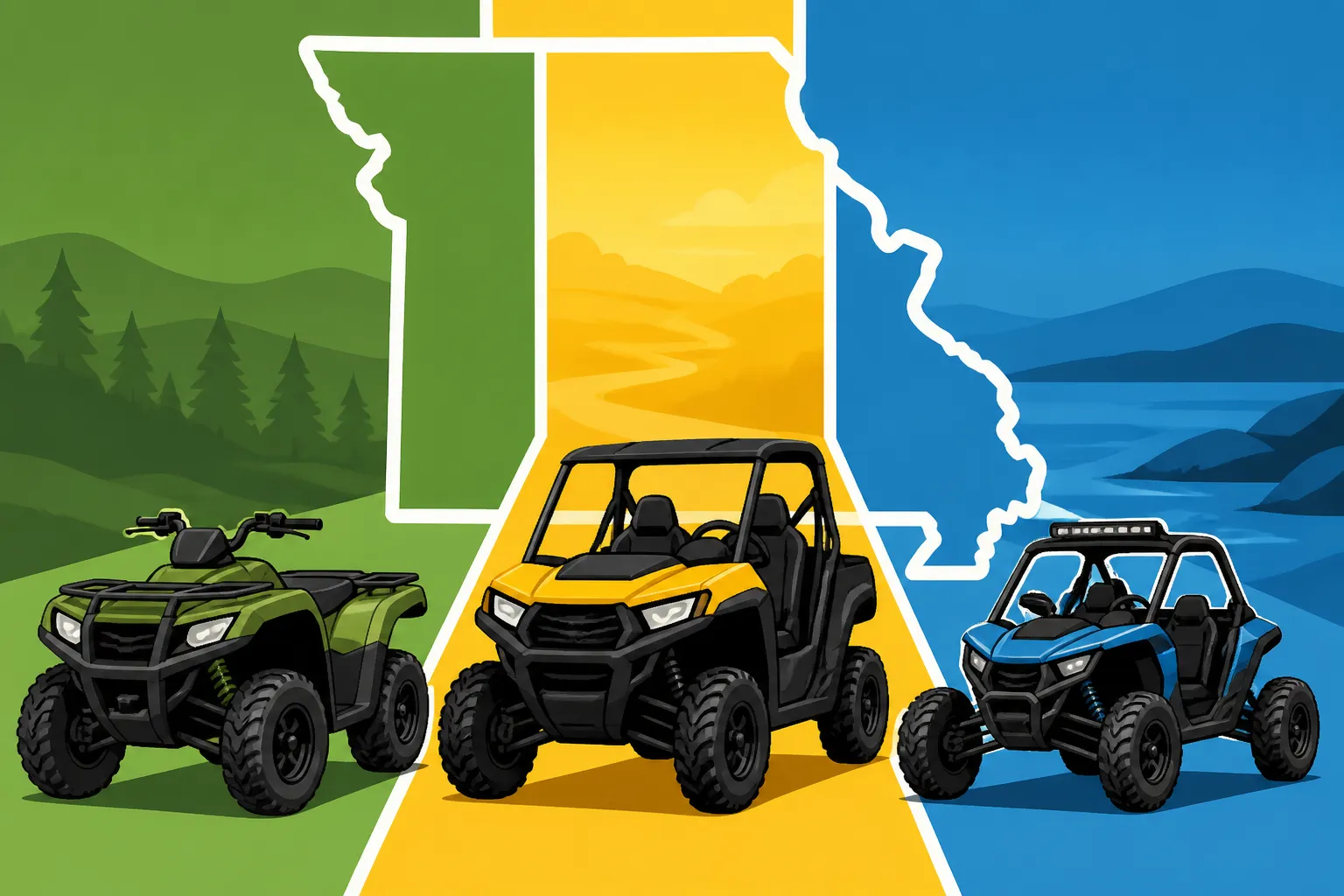
Why Missouri Splits ATVs, UTVs and ROVs
It can be incredibly frustrating trying to figure out the rules for riding ATVs and UTVs on public roads in Missouri. One minute you hear about someone driving their side-by-side down a county road, and the next you're told ATVs are strictly forbidden. This confusion often stems from how Missouri law differentiates between what seems like similar off-road machines. This guide will help you understand precisely why the Show-Me State draws these important lines, what it means for your machine, and how you can stay on the right side of the law.
Understanding the Core Definitions
The first step to navigating Missouri's off-road vehicle laws is understanding the specific language the state uses. It's not just semantics; these definitions dictate everything from whether your machine needs a title to where you can legally ride it. Trust me, ignoring these distinctions can lead to headaches, fines, and even losing access to your favorite riding spots.
What Missouri Considers an ATV
When Missouri law talks about an "all-terrain vehicle," or ATV, it has a very particular image in mind. We're talking about those machines designed to be straddled by the operator, much like a motorcycle, but with three or more wheels. They're steered with handlebars, not a steering wheel. The legal definition also specifies a dry weight of less than 1,500 pounds. This is a crucial detail many riders overlook. If your machine is heavier than that 1,500-pound threshold, it generally falls into a different category, even if it looks and feels like a traditional quad.
The intent behind these machines is primarily off-road recreation. They're built for agility, navigating challenging terrain, and providing a dynamic riding experience. Think about your classic four-wheeler, with its powerful engine and ability to conquer mud, rocks, and trails. This design, while excellent for the backcountry, is also part of why Missouri has strict rules about where these vehicles can go, especially when it comes to paved roads. Knowing [What Missouri Counts as an ATV] is your first defense against misunderstanding the rules.
The Specifics of a Utility Vehicle UTV
Now, let's talk about the Utility Vehicle, or UTV. These are the side-by-sides, the machines where you sit in them, not on them. Picture a small off-road car, often with a steering wheel, foot pedals, and bucket or bench seats that accommodate one or more passengers side-by-side. They usually have a cargo bed or storage area, hinting at their utility-focused design, though many are now just as performance-oriented as their recreational counterparts.
While they share many off-road capabilities with ATVs, their design fundamentally changes how they're viewed under Missouri law. The roll cage, seatbelts, and automotive-style controls are significant differentiators. These features often make them seem safer for certain types of road use, which is a big part of why the state has different rules for them. They're typically heavier and wider than traditional ATVs, too, which also influences their legal classification for road access.
Recreational Off-Highway Vehicles ROVs in Missouri Law
This is where it can get a little tricky, because the term "Recreational Off-Highway Vehicle," or ROV, is often used interchangeably with "UTV" in common conversation, but legally, it's a specific designation within Missouri statutes that allows for certain road uses. Essentially, an ROV is a UTV that meets specific criteria for safety equipment (like seatbelts, roll bars, headlamps, and tail lamps) that might allow it on public roads under specific conditions.
Think of an ROV as a specific type of UTV that has been equipped and designed in a way that the state deems marginally more suitable for limited road interaction. This distinction is paramount when discussing street legality. While your side-by-side might be a UTV, it only truly qualifies for the specific road access rules if it fits the ROV definition and is properly equipped. It's this ROV classification that really opens (limited) doors for road use, unlike the general prohibition on ATVs.
The Crucial Difference: Why the State Segregates Machines
Missouri didn't just arbitrarily decide to create different categories for these machines. There's a method to the madness, driven by concerns over public safety, the design characteristics of the vehicles themselves, and how these machines interact with traditional road traffic. Understanding why these distinctions exist helps clarify what rules apply to your specific off-road vehicle.
Safety Considerations Driving the Split
The primary reason Missouri differentiates between ATVs, UTVs, and ROVs, especially concerning road use, comes down to safety. ATVs, with their straddle seating and handlebar steering, require significant body ENGLISH to control, making them less stable and predictable on paved surfaces and at higher speeds, particularly when encountering unexpected obstacles or uneven roads. They're designed for dynamic off-road maneuvering, not sharing lanes with cars and trucks. The risk of rollover is higher on hard surfaces, and operators are generally more exposed in the event of an accident.
UTVs and ROVs, conversely, offer a more enclosed riding experience. Features like roll cages, seatbelts, and steering wheels mimic traditional automobiles more closely. While they are still off-road vehicles and not cars, these design elements provide a layer of passive safety that ATVs lack. This doesn't make them inherently safe for all road use, but it does mean they pose a different risk profile that the state has addressed with separate regulations. For instance, a SuperATV roll cage or seatbelt upgrade can enhance safety, but it doesn't automatically grant you road access if your machine is fundamentally classified as an ATV.
Legislative History and Evolution
The legal distinctions we see today aren't ancient. They've evolved over time as the popularity and capabilities of off-road vehicles have expanded. Initially, ATVs were the dominant off-road machine, and laws primarily focused on them. As side-by-sides gained traction, especially with their perceived utility and multi-passenger capabilities, new legislative questions arose. Lawmakers had to grapple with how to regulate these new machines, which didn't fit neatly into the existing ATV framework but also weren't quite cars or trucks.
Missouri's approach reflects a common trend among states trying to balance recreational access with public safety. Rather than a blanket ban or open access, they created nuanced categories. This allows for specific rules to be applied to different machine types based on their design and perceived risk. The gradual implementation of rules for ROVs, including specific equipment requirements and local permit options, shows an attempt to adapt to these evolving vehicles without completely overhauling existing ATV laws.
Impact on Titling and Registration
One of the most immediate and impactful consequences of Missouri's classification system is how it affects the administrative side of ownership: titling and registration. If you own an ATV, you absolutely need to get it titled through the Missouri Department of Revenue. This process establishes legal ownership and is a requirement before you can obtain the state's three-year decal for off-road use. [Titling an ATV in Missouri] is a non-negotiable step.
For UTVs and ROVs, however, the situation is markedly different. Missouri does not have a statewide registration system for these vehicles in the same way it does for ATVs or street-legal automobiles. This means you won't find a "UTV registration" or state-issued decal for most side-by-sides. This can be a huge source of confusion for new owners. [Why Missouri Does Not Register Side-by-Sides] often surprises people, leading them to believe their machine is exempt from all oversight, which isn't the case. While you don't register it, you still need a title as proof of ownership, and any road use requires separate local permits and specific equipment.
Road Use Rules: Where the Classifications Truly Matter
This is where the rubber meets the road—literally. The way Missouri classifies your off-road machine directly determines whether, and under what conditions, you can legally operate it on public streets and highways. This is often the most confusing part for owners, leading to many questions and, unfortunately, many citations.
Why ATVs Are Generally Barred from Missouri Public Roads
For the vast majority of ATV owners, the answer is simple: your quad is not street legal in Missouri. Full stop. The state statutes generally prohibit ATVs from being operated on public streets, roads, or highways. This includes county roads, state routes, and city streets. The only significant exceptions are for agricultural purposes, and even then, it's highly restricted and usually involves crossing a road to access fields, not cruising down the road for miles.
This prohibition goes back to the safety concerns we discussed earlier. The design of an ATV simply isn't suited for mixing with traditional traffic. They lack many of the safety features found in road-legal vehicles, like turn signals, rearview mirrors, and protective enclosures. Attempting to ride your ATV on public roads without meeting very narrow, specific exceptions is a surefire way to get a ticket and potentially endanger yourself and others.
The Unique Position of UTVs/ROVs on Missouri Roads
This is where the distinction between ATVs and ROVs (which are essentially street-permittable UTVs) becomes critical. Unlike ATVs, Missouri law does provide specific pathways for ROVs to be legally operated on certain public roads. This isn't a free pass, however; these pathways come with strict conditions and apply only to ROVs, not traditional ATVs.
The most common provisions for ROVs include the "3-mile rule" and various local ordinances. [Missouri's 3-Mile Rule for Side-by-Sides] allows ROVs to be operated on state highways for a distance of up to three miles to access private property, provided the ROV meets specific equipment requirements and the operator has a valid driver's license. Furthermore, ROVs can often be used for agricultural purposes on public roads, again with specific rules. For any permitted road use, an ROV must have features like adequate lighting (headlamps, tail lamps, brake lights), a safety flag, and often a horn. This is where investing in aftermarket accessories, like those from SuperATV, to add turn signals or mirrors can make a difference in meeting local permit requirements.
Navigating Local Ordinances
Adding another layer of complexity to the UTV/ROV road use puzzle are local ordinances. Missouri law grants cities and counties the authority to pass their own ordinances allowing ROVs on certain public roads within their jurisdiction. This means that while your ROV might not be generally street legal statewide, a specific city or county might have enacted rules that permit their use on local streets, often with a permit system.
This patchwork of local rules means you absolutely cannot assume that what's legal in one town is legal in the next. Some communities have embraced ROV use, recognizing their popularity and economic benefits, while others remain more restrictive. If you plan to ride your UTV/ROV on local roads, you must check with the specific city or county's police department or sheriff's office to understand their regulations. They will outline permit requirements, approved roads, hours of operation, and any additional equipment needed beyond state minimums.
Titling, Decals, and Legal Obligations
Beyond simply knowing where you can ride, understanding the administrative requirements for your off-road machine in Missouri is crucial. This covers how you prove ownership, what kind of identifying markers you need, and what you don't need, which can be just as important.
ATV Titling and Decal Requirements
If you own an ATV in Missouri, the law is clear: you need a title. The state requires all ATVs to be titled through the Department of Revenue, much like a car or truck. This title serves as the official record of ownership. Once titled, your ATV also needs a state-issued decal. This decal acts as your "registration" for off-road use and is valid for three years. [Missouri's Three-Year ATV Decal] is a brightly colored sticker that must be prominently displayed on your machine, specifically on the right front fork for most ATVs.
Failing to title your ATV or operate it without a current decal can lead to fines and legal issues. The decal funds go towards maintaining off-road trails and programs, so it's not just a bureaucratic hurdle—it's part of supporting the riding community. Always make sure your decal is current and properly affixed, following the rules for [Where the Missouri Decal Mounts].
The Absence of State Registration for UTVs/ROVs
This is a point of significant confusion for many new side-by-side owners: Missouri generally does not require state-level registration for UTVs or ROVs. Unlike ATVs, there's no state decal program for them. This means you won't be heading to the Department of Revenue for a UTV "plate" or "registration sticker." [Do You Need to Register a UTV in Missouri?] The answer, for state purposes, is generally no, beyond obtaining a title for ownership.
While this might sound like less red tape, it's also why many owners mistakenly believe their UTV or ROV can automatically go on public roads without further permits. The lack of state registration simply means the state hasn't created a blanket system for all ROV road use; it pushes the responsibility down to local jurisdictions and specific statutory exceptions.
What a Side-by-Side Owner Does Instead
So, if you don't "register" your UTV or ROV in the traditional sense, what do you need to do? First and foremost, you still need a title for your machine. This is your proof of ownership, essential for buying, selling, or recovering a stolen vehicle. The title is processed through the Missouri Department of Revenue, similar to how a car title works.
Beyond the title, any permission to operate your side-by-side on public roads comes from local city or county permits. This means you'll typically apply for a local permit through your municipal police department or county sheriff's office. This permit will usually be a sticker or placard that you display on your machine. This local permit, combined with specific state-mandated safety equipment and a valid driver's license, is [What a Side-by-Side Owner Does Instead in Missouri] to gain legal road access. Without such a permit and the necessary equipment, your side-by-side is generally limited to private land or designated off-road parks.
Practical Implications for Riders and Owners
The Missouri classification system has real-world consequences for anyone who owns, buys, or plans to ride an off-road vehicle in the state. Being aware of these implications can save you money, trouble, and ensure you get the most enjoyment out of your machine.
Choosing the Right Machine for Your Intentions
Before you even make a purchase, it's vital to consider your primary riding intentions in Missouri. If your heart is set on traditional trail riding, mudding, or tackling challenging terrain in designated off-road parks, a classic ATV might be exactly what you need. These machines are built for that specific purpose. However, if your vision includes using your machine for light work around your property, running errands on local roads (where permitted), or cruising country lanes with passengers, then a UTV or ROV is likely a better fit.
Understanding Missouri's distinctions means that buying a powerful, multi-passenger UTV won't necessarily grant you the same road access that some of your neighbors might have if your machine doesn't meet the ROV equipment standards or if your local municipality hasn't passed an ordinance. It's a key factor in avoiding buyer's remorse and ensuring your machine aligns with your planned usage, especially if road access is important to you.
Out-of-State Machines and Missouri's Rules
Missouri's distinct classification system can be particularly confusing for visitors or new residents bringing in an off-road machine from another state. Just because your ATV or UTV was street legal or registered in Kansas, Arkansas, or Illinois doesn't mean it automatically enjoys the same privileges in Missouri. Reciprocity for off-road vehicles is rarely as straightforward as it is for cars.
For ATVs, if you're a nonresident just passing through or visiting for a short period, your out-of-state registration and title might be honored for off-road trail use, but it won't grant you general road access. For UTVs/ROVs, since Missouri doesn't have a statewide registration system, your out-of-state "street legal" designation is unlikely to be recognized without first obtaining a local Missouri permit if you intend to ride on public roads. Always check the specific rules for [Nonresident Machines in Missouri] to avoid unexpected issues.
Common Misconceptions and Costly Mistakes
The biggest misconception is often that "if it has a title, it's street legal," or "if my neighbor does it, I can too." Neither is true. Because Missouri titles all ATVs and UTVs/ROVs for ownership, many assume that title automatically confers road privileges. It does not. Another common mistake is failing to understand the local nature of many UTV/ROV road access rules. A permit in one county means nothing in the next, and an ATV is almost never included in these local allowances.
Costly mistakes include:
- Operating an ATV on public roads: This can lead to significant fines and impoundment.
- Assuming a UTV/ROV is street legal: Without a local permit, proper equipment, and a valid driver's license, you risk a citation.
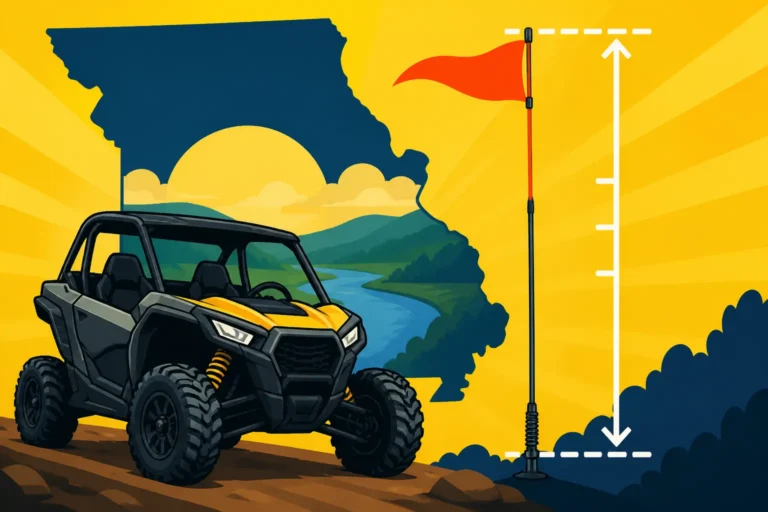
- Ignoring equipment requirements: Even with a permit, if your ROV lacks the required headlamps, tail lamps, brake lights, seatbelts, or a [Missouri's 7-Foot Safety Flag], you're still in violation.
- Not checking local ordinances: Relying on what you hear instead of verifying with the local authorities.
Always prioritize verifying the specific rules that apply to your machine in your intended riding location.
Equipment and Safety for Road-Legal Machines (ROVs)
If you're one of the fortunate ROV owners who can obtain a local permit or qualify for the 3-mile rule, your journey doesn't end there. Missouri law, and often local ordinances, mandate specific safety equipment to help ensure your machine is as visible and safe as possible when sharing the road with other vehicles.
Mandatory Safety Gear for Permitted ROVs
When an ROV is permitted for road use in Missouri, it must meet certain equipment standards that go beyond what's typically needed for pure off-road riding. These requirements are in place to make the ROV more visible and controllable on public thoroughfares. Key items generally include:
- Headlamps and Tail Lamps: These must be operational, visible, and used during times of low visibility or at night.
- Brake Lights: Functioning brake lights are crucial for alerting drivers behind you.
- Turn Signals (often required by local permits): While not always state-mandated for the 3-mile rule, many local ordinances for broader road access require turn signals for safe lane changes and turns.
- Seatbelts: Occupants must be restrained by seatbelts if the ROV is equipped with them (which most UTVs/ROVs are).
- Roll Bars/Cages: The factory roll-over protection system is expected.
- Rearview Mirror: A mirror for observing traffic behind you.
- Safety Flag: Often required, especially for the 3-mile rule, which mandates [Missouri's 7-Foot Safety Flag] flying above the machine for visibility.
These requirements aim to bridge the gap between an off-road machine and a traditional vehicle, making the ROV a safer (though still specialized) presence on the road. Many owners turn to aftermarket suppliers like SuperATV for lighting kits, mirrors, or other accessories to ensure their UTV meets these crucial safety and visibility standards.
Insurance Requirements for Road Use
Another critical aspect of operating an ROV on Missouri roads is insurance. While Missouri does not universally mandate ATV or UTV insurance for off-road use on private land, this changes dramatically when you move onto public roads. If your ROV is legally permitted for street use, either through a local ordinance or under the 3-mile rule, you will almost certainly be required to carry liability insurance.
This is similar to the requirements for operating a car or truck. The insurance policy must meet the state's minimum liability coverage limits to protect against damages or injuries you might cause to others. Without this coverage, even if you have all the right permits and equipment, you could face penalties for operating an uninsured vehicle on the road. Always confirm the specific [Missouri ATV Insurance Requirement] for any permitted road use, as this can vary by local jurisdiction.
Modifications and Accessories
For many ROV owners, customizing their machine is part of the fun. When considering road-legal use, however, modifications become less about aesthetics and more about compliance. Aftermarket accessories, like those from SuperATV, can be instrumental in making your ROV road-ready. This could include adding a turn signal kit, installing a horn, upgrading lighting, or even adding a windshield for comfort and safety.
However, it's crucial that any modifications are done in a way that meets or exceeds the legal requirements, not just for personal preference. For example, if a local ordinance specifies a certain type of headlamp, simply slapping on a light bar might not cut it. Always consult the specific regulations to ensure your modifications genuinely comply. Remember, while a modified ROV might look "street legal," it's the actual adherence to the statute and local ordinance that determines its legality, not just its appearance.
Why This System, and Is it Changing?
Missouri's approach to classifying and regulating ATVs, UTVs, and ROVs, particularly regarding road access, is undeniably complex. It's a system that has evolved and continues to face scrutiny from riders and lawmakers alike. Understanding the underlying reasons for this complexity and keeping an eye on potential changes is key for any off-road enthusiast in the state.
The Rationale Behind Missouri's Approach
At its heart, Missouri's split classification system attempts to strike a balance between several competing interests: public safety, recreational access, and property rights.
- Public Safety: This is paramount. The state views ATVs as inherently less safe for road use due to their design, while ROVs, with their more automotive-like features, are seen as capable of limited, controlled road interaction under specific conditions. This tiered approach is meant to reduce accidents involving off-road vehicles and traditional traffic.
- Resource Management: By requiring decals for ATVs, the state generates revenue that often goes back into maintaining and developing off-road trails and parks. Since ROVs don't have a similar state registration, their impact on trail funding is different.
- Local Control: Empowering cities and counties to regulate ROV road use allows communities to tailor rules to their specific needs and concerns, rather than imposing a blanket statewide solution that might not fit every area. This acknowledges the diverse landscapes and population densities across Missouri.
This nuanced system is an effort to allow diverse types of off-road recreation and utility while attempting to mitigate the risks associated with mixing these vehicles with standard road traffic.
Staying Informed About Evolving Laws
Given the evolving nature of off-road vehicle technology and the increasing demand for diverse riding opportunities, Missouri's laws regarding ATVs, UTVs, and ROVs are not static. It's not uncommon for new legislation to be proposed or for existing laws to be amended. Local ordinances, too, can change as communities reassess their needs and the impact of off-road vehicle use.
As an owner or enthusiast, it is your responsibility to stay informed. Regularly check the Missouri Department of Revenue website for updates on titles and decals. For road access, always consult the specific city or county government website or contact their local law enforcement agency. Don't rely on old information or hearsay. What was legal last year might have changed, and what applies in a neighboring county might not apply in yours. Checking resources like [Missouri Driver's License Rules for ROVs] is crucial before you head out.
Advocating for Change If Applicable
For riders who find Missouri's current system overly complex or restrictive, there are avenues for advocacy. Rider organizations, such as ATV and UTV clubs, often play a significant role in communicating with lawmakers, sharing rider perspectives, and advocating for changes that could improve access or clarify regulations. These groups work to ensure the voice of the off-road community is heard in legislative discussions.
If you feel strongly about expanding road access, simplifying regulations, or addressing specific issues with the current laws, consider joining a local or state-level riding association. Collective voices often have more impact than individual complaints. Engaging with these groups is a constructive way to contribute to the future of off-road riding in Missouri and potentially shape a more streamlined and rider-friendly regulatory environment.
Comparison of Missouri ATV and ROV Characteristics for Road Use
To help clarify the distinctions, here's a quick comparison of how Missouri generally treats ATVs versus ROVs (Recreational Off-Highway Vehicles, which are UTVs that meet road-use criteria). This table highlights the critical differences, especially when considering public road access.
| Feature | All-Terrain Vehicle (ATV) | Recreational Off-Highway Vehicle (ROV) / Permitted UTV |
|---|---|---|
| Seating | Straddle seat, handlebars | Side-by-side seating, steering wheel, foot pedals |
| Dry Weight | < 1,500 lbs (typically) | Often > 1,500 lbs (varies) |
| State Registration/Decal | Required (Three-year decal) | Not required (No state-issued decal) |
| Title | Required (Proof of ownership) | Required (Proof of ownership) |
| General Road Use | Generally Prohibited | Limited, Conditional Access (See below) |
| 3-Mile Rule | Not applicable | Allowed if properly equipped & licensed, for up to 3 miles |
| Agricultural Use | Limited exceptions, specific conditions | Allowed, specific conditions |
| Local Ordinance Access | Generally not applicable (cities rarely permit ATVs on roads) | Possible with local permit & specific equipment (check city/county) |
| Mandatory Safety Gear for Road Use | N/A (as generally prohibited) | Headlamps, tail lamps, brake lights, seatbelts, safety flag (often) |
| Driver's License | N/A | Required for road use |
| Insurance for Road Use | N/A | Required for road use |
Disclaimer
This article is for general informational purposes only and does not constitute professional advice. Laws, prices and regulations vary by location and change over time. Consult a qualified professional for guidance on your specific situation.