How the Passenger Rule Treats a Two-Seat Machine
There's nothing quite like the open air and the thrill of exploring Missouri's beautiful landscapes on an ATV or UTV. But if you've ever tried to figure out who can ride with you, especially on those machines designed for more than one person, you've likely hit a wall of confusion. Missouri's rules around passengers, particularly when it comes to "two-seat" machines and road use, can feel like a tangled mess of statutes and local ordinances. This guide aims to untangle that knot, offering a clear, empathetic look at how Missouri treats passengers on your ATV or UTV, especially focusing on those models built with multiple seats.
The Basics of Missouri's Passenger Rules for ATVs and UTVs
When you first start looking into the rules for riding ATVs and UTVs in Missouri, it quickly becomes clear that not all off-road vehicles are treated equally. This distinction is crucial, especially when it comes to carrying passengers, and it often leads to a lot of head-scratching for enthusiasts just trying to enjoy a ride with family or friends.
Why Missouri Differentiates Between Machine Types
Missouri law, like many states, draws significant lines between different types of off-road machines, primarily categorizing them into All-Terrain Vehicles (ATVs), Utility Vehicles (UTVs), and Recreational Off-Highway Vehicles (ROVs). These aren't just fancy names; they dictate how and where you can ride, and most importantly for our discussion, who can ride with you.
An ATV, for instance, is typically defined by its straddle seat and handlebar steering. These machines are generally designed for a single operator. Think of the classic quad you see roaring down a trail. UTVs and ROVs, on the other hand, usually feature side-by-side seating, a steering wheel, and often a roll bar or cage, resembling a miniature car. While the terms "UTV" and "ROV" are sometimes used interchangeably, Missouri law often groups these multi-passenger, steering-wheel-equipped machines under specific categories that unlock different road-use possibilities, like those mentioned in [What the Law Calls a Recreational Off-Highway Vehicle]. The core reason for these distinctions boils down to safety and design intent. A manufacturer builds a single-seat ATV for a solo rider, anticipating the dynamic, often aggressive riding style associated with it. A multi-seat UTV or ROV, however, is designed with stability and passenger containment in mind, often including features like seat belts and roll-over protection. These design differences inherently affect the state's approach to allowing additional riders, especially when you venture onto public roads.
The General Rule: No Passengers on ATVs on Public Land or Roads
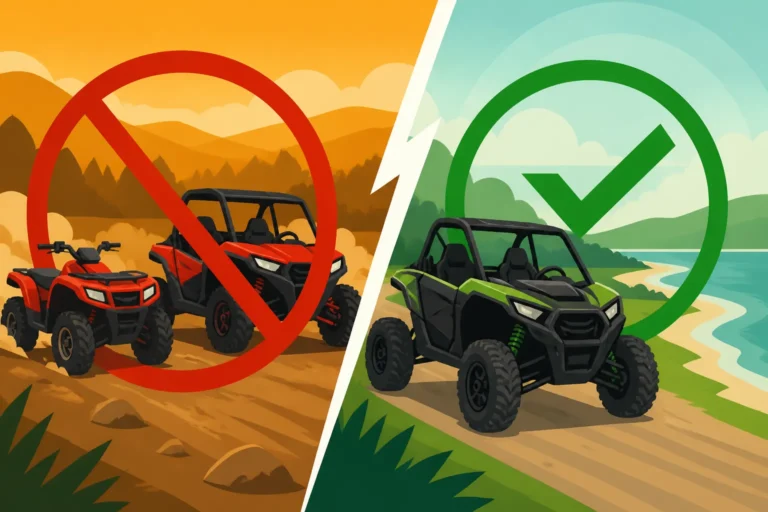
Here's the frustrating reality for many traditional ATV owners: generally speaking, Missouri law prohibits carrying passengers on ATVs when operating on public lands, including state parks, conservation areas, and especially public roads. This rule is rooted in the safety design of a typical ATV, which is built for a single rider to shift their weight and balance dynamically during operation. Adding a passenger disrupts this balance, significantly increasing the risk of rollovers or loss of control, particularly on uneven terrain or at higher speeds.
This means if you have a traditional quad, even if you've jury-rigged a spot for someone to sit behind you, it's a no-go on any public thoroughfare or designated riding area. This can be a real bummer when you want to share the experience, but the law errs on the side of caution. Even if your ATV "feels" stable enough, the legal framework is clear: if it's classified as an ATV, expect a single-rider rule in most public settings. Violating this can lead to citations and penalties, putting a damper on your ride and your wallet.
When Farm Work Allows a Passenger on an ATV
Ah, the "farm exception" – a common point of confusion and a glimmer of hope for some. Missouri law does offer a specific, albeit narrow, exception for ATVs engaged in agricultural operations. Under this provision, an ATV can carry a passenger when it is being used for "agricultural purposes" on a public road, but only for short distances and from "sunrise to sunset." The key here is "agricultural purposes." This isn't a blanket pass to take your spouse for a joyride down the county road on your quad just because you live on a farm.
This exception is truly meant for specific tasks like checking fences, herding livestock, or transporting tools to a field—activities directly related to farming or ranching. It's about functionality, not recreation. And even then, it's expected to be for short distances. A deputy won't bat an eye if you're crossing a rural road to get from one pasture to another with your partner, but if you're cruising through town for an ice cream cone, that "agricultural purpose" defense will likely fall flat. Understanding [Missouri Agricultural Use From Sunrise to Sunset] is vital here; it’s a very specific context, not a loophole for general passenger use.
Understanding "Two-Seat" Machines in Missouri Law
The term "two-seat machine" can be a bit of a gray area, leading to confusion, especially when you're comparing a traditional ATV with an aftermarket seat to a factory-built side-by-side. Missouri law is pretty particular about what constitutes a machine designed to safely carry more than one person, and understanding this distinction is paramount for staying on the right side of the rules.
Defining a Machine Built for Two: Manufacturer's Intent
When Missouri law, or indeed most vehicle regulations, considers a "two-seat" machine, it largely hinges on the manufacturer's original design and intent. This is a crucial distinction. A machine built for two means it came off the assembly line with explicit features to safely accommodate two or more occupants. We're talking about dedicated, separate seating positions, typically side-by-side, complete with integrated safety features like seat belts and a robust roll-over protective structure (ROPS) or roll cage.
Think of it this way: if the factory designed it with two distinct, secure seats, that's what the law generally recognizes as a "two-seat machine." This typically applies to UTVs and ROVs. Adding an aftermarket seat kit to a traditional ATV, even if it looks secure, does not magically transform a single-rider ATV into a legal two-seat machine in the eyes of the law, especially when it comes to public road use. The manufacturer's Certificate of Origin or the vehicle's labeling will usually clarify its intended occupancy. A genuine two-seat machine is engineered from the ground up to distribute weight safely and protect multiple occupants in the event of an incident, a stark contrast to a single-seat ATV.
How the Passenger Rule Treats a Two-Seat Machine
Here's where genuine "two-seat machines," specifically ROVs and UTVs, gain an advantage over traditional ATVs when it comes to passengers on public roads. For these machines, if you are operating under a valid local ordinance or [Missouri's Special Permit for Road Use], passengers are generally allowed up to the manufacturer's designed capacity. This means if your side-by-side is explicitly built for two, four, or even six occupants, you can carry that many, provided you're complying with all other requirements of the specific road-use authorization.
The underlying rationale is that these vehicles are engineered with occupant safety in mind. They often have factory-installed seat belts for each seating position and a protective cage or roll bar. When a city or county passes an ordinance allowing UTVs/ROVs on certain streets, they are typically doing so with the understanding that these vehicles offer a higher degree of passive safety for multiple occupants compared to a traditional ATV. However, it's absolutely critical to confirm the specifics of any local ordinance or permit. Some may have additional stipulations regarding passenger age, or even limit where those passengers can ride within the permitted area. Always check the fine print of your local authorization.
The Importance of Seat Belts and Roll Bars
For any multi-passenger off-road vehicle operating where passengers are legally allowed, especially on public roads, the presence and proper use of seat belts and roll bars (or a full roll cage) are non-negotiable. These aren't just recommendations; they are fundamental safety features that underpin the legal allowance for passengers in UTVs and ROVs. Most factory-built two-seat (or more) UTVs and ROVs come equipped with these features as standard.
The roll bar or cage provides a crucial protection zone for occupants in the event of a rollover, which, let's be honest, can happen off-road or even on an unfamiliar paved surface. Seat belts, on the other hand, are designed to keep occupants contained within that protective structure and prevent ejection during sudden stops, turns, or impacts. Without these, the risk of serious injury in a crash escalates dramatically. If you're considering an aftermarket cage or seat belt upgrade, ensure it meets or exceeds manufacturer standards. Reputable brands like SuperATV offer a range of aftermarket safety accessories, but always verify they comply with any local or state requirements for road-legal use. Many ordinances specifically state that all occupants must be properly restrained, so buckling up isn't just a good idea, it's often a legal requirement.
Navigating Missouri's Street Legal Exceptions for Multi-Passenger Machines
Missouri's approach to allowing ATVs and UTVs on public roads is a patchwork of state statutes and local ordinances. For those with multi-passenger machines, understanding these nuances is critical to avoiding fines and ensuring the safety of your passengers. It’s not a one-size-fits-all solution, and what works in one county might be illegal just across the border.
City and County Ordinances: The Primary Path for ROV Passengers
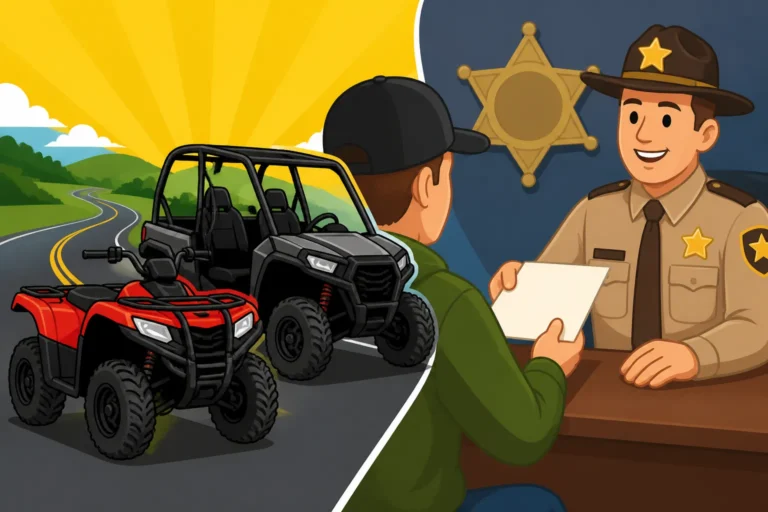
For most Missouri residents looking to ride their multi-passenger UTVs or ROVs on public roads with passengers, city and county ordinances are the main avenue. State law allows local jurisdictions to pass ordinances permitting the operation of these vehicles on their streets, often with specific conditions. This means that a growing number of towns and counties have embraced the popularity of side-by-sides, recognizing their utility and recreational appeal. When a local government enacts such an ordinance, it typically outlines where these vehicles can operate (e.g., all city streets, only streets with speed limits under 45 mph), the hours of operation, required safety equipment (like lights, turn signals, safety flags, and yes, seat belts for all occupants), and often a permit process.
These ordinances are usually the only way you can legally carry passengers in your UTV or ROV on city or county roads. Without a valid local permit and ordinance, even a factory four-seater ROV is generally restricted from public road use with passengers. It's crucial to check with your local city hall or county sheriff's department to understand the specific rules in your area. Many communities that allow such use will require all occupants to be seated in designated seating positions and properly buckled, emphasizing the importance of those factory safety features.
The 3-Mile Rule and Carrying Passengers
Missouri does have a specific "3-mile rule" that allows ROVs (but typically not traditional ATVs) to be operated on certain public roads for a limited distance from the operator's residence. This rule, outlined in [Missouri's 3-Mile Rule for Side-by-Sides], permits an ROV owner to travel up to three miles from their home on roads with a speed limit of 45 mph or less, primarily to access a trail or another property. The good news for multi-passenger machine owners is that under this specific state statute, passengers are generally allowed, provided the vehicle is designed by the manufacturer to carry them and all occupants are properly restrained.
However, it's vital to remember the strict limitations of this rule: it's only for ROVs (side-by-sides), only within three miles of your residence, and only on roads with a 45 mph speed limit or less. It's not a free pass for extended recreational cruises. If you're driving beyond the three-mile radius or on higher-speed roads, you're likely violating the law, and any passengers would also be riding illegally. This rule is designed for convenience, not for general street-legal status, and enforcement officers are generally quite familiar with its narrow scope.
Agricultural and Industrial Exceptions for Multiple Riders
Beyond the 3-mile rule and local ordinances, Missouri law also provides specific exceptions for UTVs and ROVs used for agricultural or industrial purposes. Similar to the ATV farm exception we discussed, these vehicles can be operated on public roads, and this often includes carrying additional riders, when directly involved in farm work or industrial tasks. This could mean transporting farmhands, tools, or supplies between fields, or moving personnel within a large industrial complex that might involve crossing public access roads.
For these larger, more stable machines, the allowance for passengers aligns with their design as utility vehicles. The emphasis remains on the purpose of the trip: it must be genuinely agricultural or industrial. As with the ATV rule, these exceptions are not meant for recreational outings. You might see a farmer with a UTV, complete with a SuperATV cargo bed extension, carrying a couple of workers down a county road to mend a fence, and that's generally permissible. However, taking the kids for a leisure ride to the store under the guise of "industrial use" would likely be a quick trip to a citation. These exceptions highlight Missouri's recognition of the practical role these multi-passenger machines play in various industries.
Common Pitfalls and Misconceptions About ATV/UTV Passengers
Even with the best intentions, it's easy to get tripped up by the nuances of Missouri's ATV and UTV passenger rules. Many riders fall into common traps, often based on assumptions or trying to make their single-rider machine do more than it's legally (and safely) capable of. Let's clear up some of these widespread misunderstandings.
Adding an Aftermarket Buddy Seat to an ATV
This is perhaps one of the most common pitfalls: the belief that if you can bolt a second seat onto your ATV, you can now legally carry a passenger. Unfortunately, this is almost universally false when it comes to riding on public roads or designated public trails in Missouri. As we've discussed, traditional ATVs are designed for single-rider operation. Their suspension, steering, and overall balance characteristics are calibrated for one person to actively manage the machine's dynamics.
Adding an aftermarket "buddy seat," even a sturdy one from a reputable manufacturer, does not change the fundamental classification of your ATV in the eyes of the law. It doesn't transform it into a multi-passenger vehicle. In fact, doing so can compromise the ATV's stability, making it more prone to tipping, and potentially lead to severe injury for both the operator and the passenger. A law enforcement officer seeing a passenger on an ATV, regardless of an added seat, will almost certainly issue a citation for illegal operation and potentially for unsafe equipment. This applies across most public riding scenarios, reinforcing the "one rider per ATV" rule for public access.
Distinguishing Between Public and Private Land
A crucial distinction that often gets overlooked is the difference between operating on public land versus private property. The vast majority of Missouri's regulations regarding ATV and UTV passengers, licensing, and equipment requirements apply specifically to public roads, trails, state parks, and other publicly accessible areas.
On your own private land, or on private land where you have explicit permission from the landowner, the state's passenger rules generally do not apply. This is where you might see people riding double on a quad, or a whole family piled into a UTV, without legal repercussion. If you own a large tract of land or have access to a private riding park, you typically have more leeway. However, even on private land, it's always wise to exercise common sense and adhere to manufacturer recommendations for passenger limits and safety gear. Just because it's legal doesn't mean it's always safe. The moment you leave private property and enter a public road or trail, however, all state and local laws regarding passengers immediately come into play.
Penalties for Violating Passenger Rules
Ignoring Missouri's passenger rules for ATVs and UTVs can lead to more than just a stern talking-to. The penalties for such violations can range from fines to more serious charges, depending on the specific circumstances and the type of public access road you're on. Generally, operating an ATV with an unauthorized passenger on a public road where it's not explicitly permitted can result in a traffic citation, similar to other moving violations. The cost of these fines can vary by jurisdiction, but they can quickly add up and certainly put a damper on your riding day.
Beyond the immediate financial penalty, there can be other consequences. In some cases, especially if an incident occurs or if the operation is deemed reckless, a Class C Misdemeanor charge could be levied. This goes beyond a simple ticket and can appear on your record. Furthermore, if an accident happens while carrying an unauthorized passenger, your insurance might refuse coverage, leaving you personally liable for damages or injuries. It's a high-stakes gamble that simply isn't worth the risk. Understanding these potential repercussions, also detailed in [A Class C Misdemeanor in Missouri], should be a strong deterrent against bending or breaking the rules.
Safety Considerations Beyond the Law
While legal compliance is essential, the discussion around carrying passengers on ATVs and UTVs should always extend to practical safety. Laws set the minimum standard, but a responsible rider goes above and beyond, prioritizing the well-being of everyone on board. Riding off-road, or even on permitted roads, presents inherent risks that good judgment and proper precautions can mitigate.
Manufacturer Guidelines and Weight Limits
Every ATV and UTV comes with a set of manufacturer guidelines, and chief among these are recommendations for occupancy and weight limits. These aren't arbitrary numbers; they are derived from extensive engineering, testing, and safety evaluations. The gross vehicle weight rating (GVWR) dictates the maximum allowable weight of the vehicle itself, plus all passengers, cargo, and accessories. Exceeding this limit compromises handling, braking, and suspension performance, making the machine unstable and unsafe.
For multi-passenger UTVs and ROVs, the manufacturer specifies the number of intended occupants. This is a crucial guideline. Do not attempt to squeeze more people into a machine than it was designed for, even if they are small. Doing so not only exceeds the weight limit but also means some individuals won't have a designated seat with a seatbelt, negating a critical safety feature. Always check your owner's manual for specific weight and occupancy limits for your particular machine. Features from companies like SuperATV that increase cargo capacity are great, but they don't increase your passenger capacity or the overall GVWR.
Rider Skill and Passenger Experience
The skill level of the operator and the experience of the passengers play a significant role in safe riding, especially with multiple people on board. Carrying passengers, even in a purpose-built multi-seat UTV, changes the dynamics of the vehicle. The machine will handle differently, particularly when cornering, braking, and navigating uneven terrain. A novice rider might struggle to compensate for this added weight and altered center of gravity.
Furthermore, passengers, especially those unfamiliar with off-road riding, need to understand how to ride safely. They should be instructed to keep their hands and feet inside the vehicle at all times, remain seated, and not make sudden movements that could upset the machine's balance. For young or inexperienced passengers, consider starting on gentle, predictable terrain before venturing into more challenging environments. It's the operator's responsibility to ensure everyone understands the ground rules and that their own skills are adequate to safely manage the machine with additional weight.
Essential Gear for All Occupants
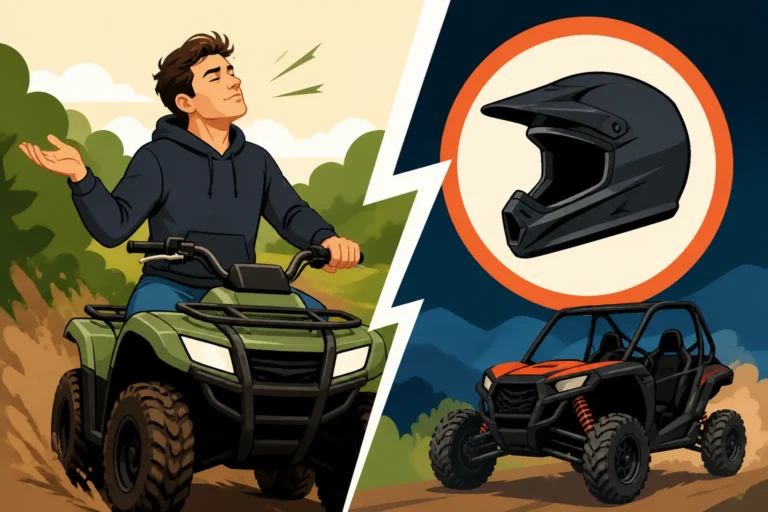
Beyond simply having a designated seat and a seat belt, ensuring all occupants wear appropriate safety gear is paramount. While Missouri's helmet law primarily focuses on riders under 18 for public lands, it's always a good idea for everyone to wear a helmet, regardless of age, when riding off-road or on permitted streets. A helmet is the single most effective piece of equipment for preventing head injuries in the event of a crash or rollover.
In addition to helmets, consider eye protection (goggles or safety glasses), long pants, long-sleeved shirts, sturdy over-the-ankle boots, and gloves. These items offer protection against flying debris, branches, and abrasions in a slide or fall. The open-air nature of ATVs and UTVs means occupants are exposed to the elements and potential hazards. Investing in proper gear for every passenger is a small price to pay for significant peace of mind and protection.
Here's a quick reference table to help clarify Missouri's passenger rules:
| Machine Type | Public Roads (No Permit) | Public Roads (Local Ordinance/Permit) | Private Land | Agricultural Use (Limited) |
|---|---|---|---|---|
| Traditional ATV | No passengers | No passengers (unless farm use) | Generally allowed | Yes, for specific tasks (1) |
| UTV/ROV (Multi-seat) | No passengers (unless 3-mile rule) | Yes, up to Mfg. capacity (2) | Generally allowed | Yes, for specific tasks (3) |
| ATV with "Buddy Seat" | No passengers | No passengers | Generally allowed | No, still a single-rider ATV |
(1) Limited to specific agricultural purposes, sunrise to sunset, short distances. Operator assumes all risk.
(2) Requires compliance with all ordinance/permit rules (speed, safety gear, etc.). Must have seat belts and roll bars. May be subject to [Missouri Driver's License Rules for ROVs].
(3) Limited to specific agricultural or industrial purposes, often with requirements for safety gear.
Disclaimer
This article is for general informational purposes only and does not constitute professional advice. Laws, prices and regulations vary by location and change over time. Consult a qualified professional for guidance on your specific situation.