Meeting 86 Decibels at a Park Entrance
A machine that sounds normal on your property can still fail a Missouri park’s 86-decibel check. That can mean a wasted trip, especially if you hauled your ATV or UTV a long way. The practical fix is to understand what the gate check is for, inspect the parts that affect noise, and confirm the park’s current testing procedure before you leave home.
What the 86-decibel check means at a park entrance
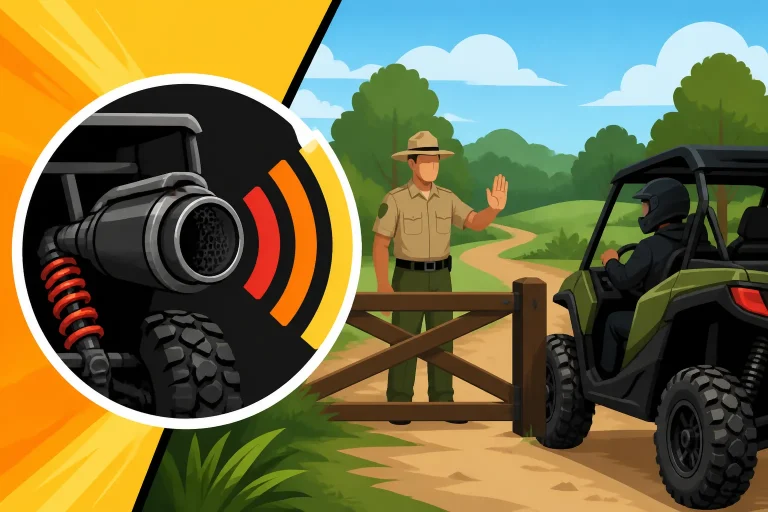
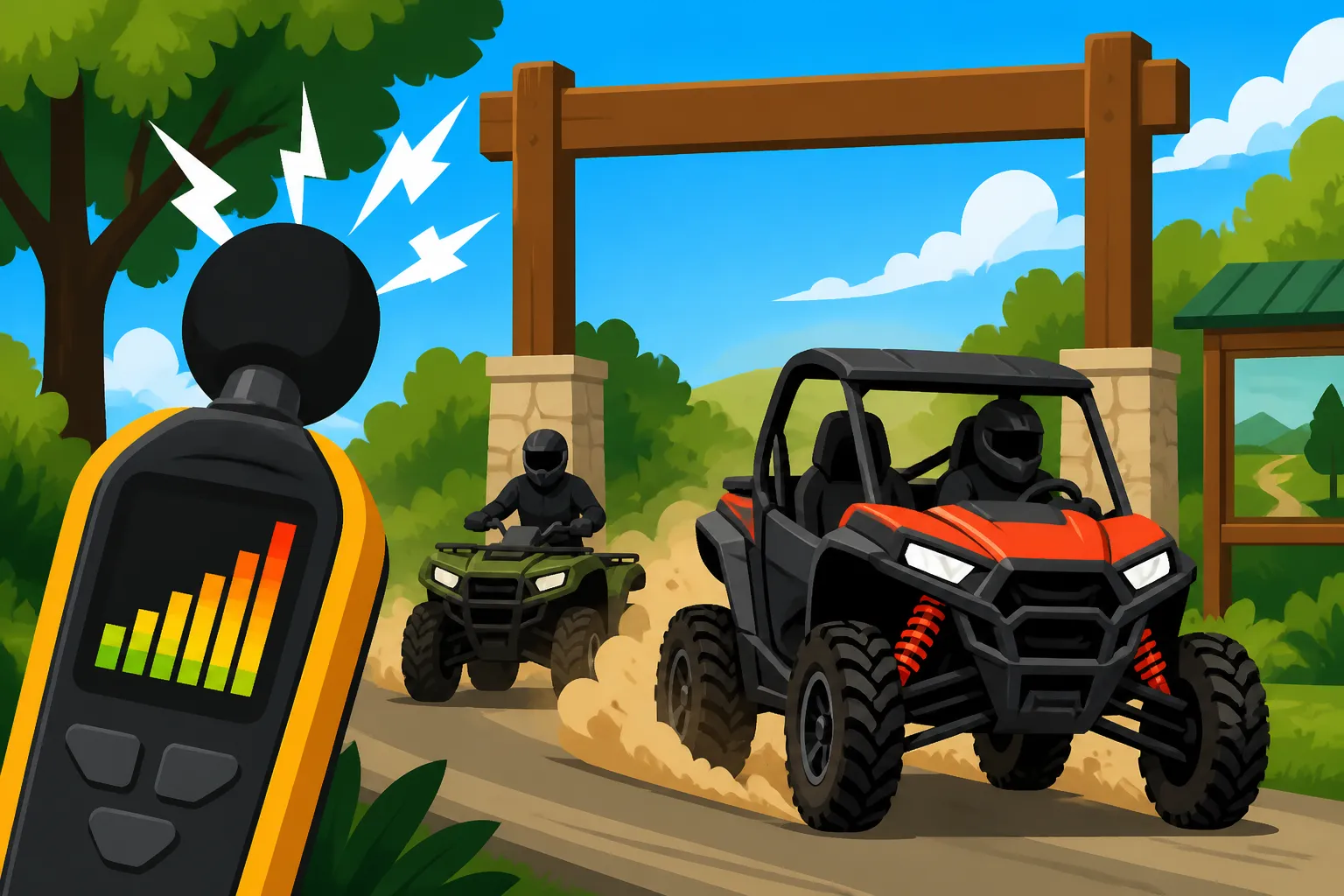
At a Missouri park entrance with an ORV noise check, the 86-decibel limit is a condition of riding there, not a suggested target. A machine that exceeds the applicable limit may not be allowed on the trails. A state registration decal or ORV permit does not override a failed sound check.
The number is a measurement of sound, not a direct measure of how loud a machine feels to its rider. Your helmet, distance from the exhaust, other engines and the setting all affect what you hear. A meter measures sound at a particular location and under particular conditions, so a reading from your driveway is not automatically comparable with a reading at a park gate.
The test also isn’t the same as a general roadside noise rule or a sound reading at a different public riding area. Parks and land managers can have distinct equipment checks and riding requirements. Check the rules for the place you plan to visit, including Missouri Sound Limits on Public Land and Missouri ORV Permits Explained. A permit confirms that you have met a permit requirement; it does not guarantee that your machine will pass every other check.
The word “decibel” can make a limit sound simpler than it is. A test result depends on the meter, its position, the machine’s operating condition and the procedure being used. Don’t assume a phone app, an online chart or a measurement taken from an arbitrary distance will predict an official result.
Before loading up, check the park’s current information or contact staff to confirm:
- Whether the 86-decibel check applies at your chosen riding area.
- Where the measurement is taken and whether the park has a specific test procedure.
- Whether sound checks are performed at arrival or another point.
- What options are available if a machine does not pass.
- Whether other requirements, such as spark-arrester or flag rules, apply separately.
This matters particularly when traveling to an unfamiliar park. Requirements can differ between a state park trail system, a national forest trail and a private riding area. The What Gets Checked at a Forest Trailhead checklist is useful for understanding that public riding areas may inspect different things.
Why a machine can exceed the limit
The exhaust system is the first place to look. A modified muffler, a missing or altered sound-control component, or an exhaust leak can make a machine noticeably louder. Parts that appear to fit can still change noise levels, and a machine that runs well is not necessarily quiet enough for a park check.
Inspect the system while the engine is cool. Look for a loose muffler, missing fasteners, cracked joints, damaged gaskets and visible gaps where exhaust can escape. Listen for an unusual ticking, popping or sharp hiss around the exhaust area when the machine is running in a safe place. If you suspect a leak or are unsure whether a component is installed correctly, have a qualified repair shop inspect it. Don’t put your hands near a hot exhaust or try to seal a leak with an improvised repair.
Other issues can contribute to the noise staff hear:
- An altered exhaust or intake: Aftermarket parts can change the sound even when the machine still runs normally. Check that parts are appropriate for your make and model and installed as intended.
- Loose bodywork or heat shields: A vibrating panel or shield can add rattling or metallic noise. Check mounting points and fasteners.
- Engine trouble: A change in engine sound may signal a maintenance problem rather than a simple compliance issue. Address abnormal knocking, backfiring or harsh mechanical noise before riding.
- Operating the machine aggressively: Repeated revving, hard acceleration or unnecessary throttle in the queue can create noise and may not match the park’s prescribed test conditions.
- The wrong machine for the posted requirement: A UTV and an ATV may have different exhaust layouts and operating characteristics. Check the rule for the machine you will actually bring rather than relying on another rider’s result.
A recently purchased machine deserves particular attention if it has been modified by a previous owner. Ask what exhaust components were changed, compare the setup with the manufacturer’s configuration and inspect for missing parts. A machine advertised as “trail ready” has not necessarily been checked against the rules at a particular Missouri park.
| What you notice | Possible reason | Practical next step |
|---|---|---|
| Louder sound after a repair or upgrade | Different muffler, exhaust component or installation | Check the part and installation against the manufacturer’s specifications |
| Sudden sharp popping or hissing | Possible exhaust leak | Stop using the machine until the system has been inspected |
| Rattle that changes with engine speed | Loose shield, panel or fastener | Secure the part or have it repaired before the trip |
| High reading on a home meter | Test conditions may differ from the park’s | Confirm the official procedure and use the reading only as a warning |
| Machine sounds louder than it used to | Wear, damage or a mechanical change | Inspect and service it rather than trying to mask the noise |
Don’t try to meet the limit by making an unapproved change just before the trip. A makeshift baffle or improvised packing can affect performance, create a safety issue or fail to solve the problem. Use parts designed for the machine, follow the manufacturer’s instructions and ask the park or a repair professional when you’re uncertain.
How to prepare before you travel
The most useful preparation is a combination of a visual inspection and an honest assessment of the machine’s sound. Start early enough to fix a problem; discovering a failed or missing exhaust component in the staging line leaves few good options.
- Check the park’s current rules. Confirm that the 86-decibel check applies to your destination and ask staff about the test method. The Missouri’s 86-Decibel Limit at a Park Gate page provides related context, but the park’s own current instructions should guide your preparation.
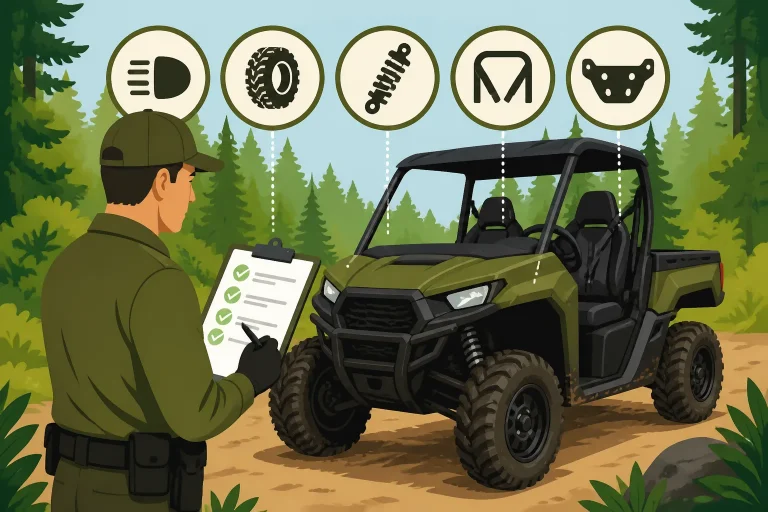
- Inspect the exhaust and surrounding parts. With the machine cool, check the muffler, connections, fasteners, gaskets and heat shields. Look for damage, missing parts or signs of an exhaust leak.
- Review modifications. If the machine has an aftermarket exhaust or other sound-affecting parts, verify that it is assembled properly and appropriate for the machine. If the previous owner made changes, don’t assume the parts are compliant simply because they are installed.
- Listen for changes. Compare the sound with what is normal for that machine. A sudden increase in volume, new rattling or a sharp exhaust note warrants an inspection before you ride.
- Use a home meter cautiously. A basic sound-level meter can help flag a machine that seems especially loud. For example, a meter sold through Amazon may be useful for a rough screening check, but a home reading is not a substitute for the park’s test. Phone apps are even less dependable as proof because devices and settings vary.
- Pack for the whole inspection. Check other equipment requirements as well as noise. A sound check and a spark-arrester check are separate issues; see Spark Arrester Checks at a Staging Lot and How Park Flag Rules Differ From Highway Rules for related requirements.
- Arrive ready to follow directions. Keep the machine in good operating condition, avoid revving while waiting and follow staff instructions about where to stop and how to operate it during a test.
A home measurement is useful mainly as an early warning. For it to be even roughly informative, keep conditions consistent: use the same location, avoid nearby traffic or other engines, and follow the meter’s instructions. Even then, a different distance, angle, background noise level or engine setting can produce a different result. Don’t use a favorable reading at home to argue that a park’s reading must be wrong.
If the machine has been modified and you cannot confirm how it will perform, call the park before hauling it there. Ask whether staff can explain the test procedure and what they recommend for a machine with an altered exhaust. They may not be able to predict a pass or guarantee a result, but a direct answer can help you decide whether to make repairs, bring another machine or choose a different activity.
What to do if your machine fails
If staff tell you the machine did not meet the limit, stay calm and follow their instructions. Ask what result was recorded and whether the park can explain the test procedure. You can ask for clarification without revving the machine repeatedly or disrupting the entrance. A second reading, if available, should be handled by staff under their process.
Don’t assume you can ride elsewhere in the park, move to another trailhead or switch to a different riding area without checking. A failed noise check may mean you cannot ride that machine at the facility. Ask staff what options are allowed, including whether you may take the machine away for repair or whether any retest procedure is available. Policies and practical options can vary, so don’t rely on what happened to another visitor at another location.
If the problem is a loose part or obvious exhaust damage, don’t attempt a roadside fix that could make the system unsafe or create another violation. Shut the machine down if you suspect an exhaust leak or mechanical fault, and arrange a proper repair. If the cause is an aftermarket part, replacing it with a suitable manufacturer-specified component may be the long-term solution, but the repair should be completed and checked before you return.
A failed gate check is also a reason to reconsider how you use the machine elsewhere. Noise rules can apply beyond state park entrances, and a machine that is excessively loud may create problems on other public land or private property. Don’t treat a different location as a workaround without checking its requirements. Start with Missouri Rules for Riding Public Land and Missouri Private Riding Parks to compare the broader setting, then verify the specific site’s rules.
Finally, plan for the possibility that a repair takes longer than expected. If a group is traveling together, identify in advance whether everyone can ride if one machine is turned away. Confirm the destination’s permit and operating requirements separately, including Missouri State Park ORV Hours. A little checking before departure is less frustrating than finding out at the entrance that a machine is too loud, a permit is missing or the riding area is closed.
Disclaimer
This article is for general informational purposes only and does not constitute professional advice. Laws, prices and regulations vary by location and change over time. Consult a qualified professional for guidance on your specific situation.