Spark Arrester Checks at a Staging Lot
A spark-arrester check at a Missouri riding area can be quick, but a quiet exhaust or a screen that looks intact may not prove your machine meets the site’s rules. The important details are whether the device is the right type, correctly fitted and still working. Check those points before unloading, and confirm the rules for the specific trail system you plan to ride.
What a spark-arrester check is meant to confirm
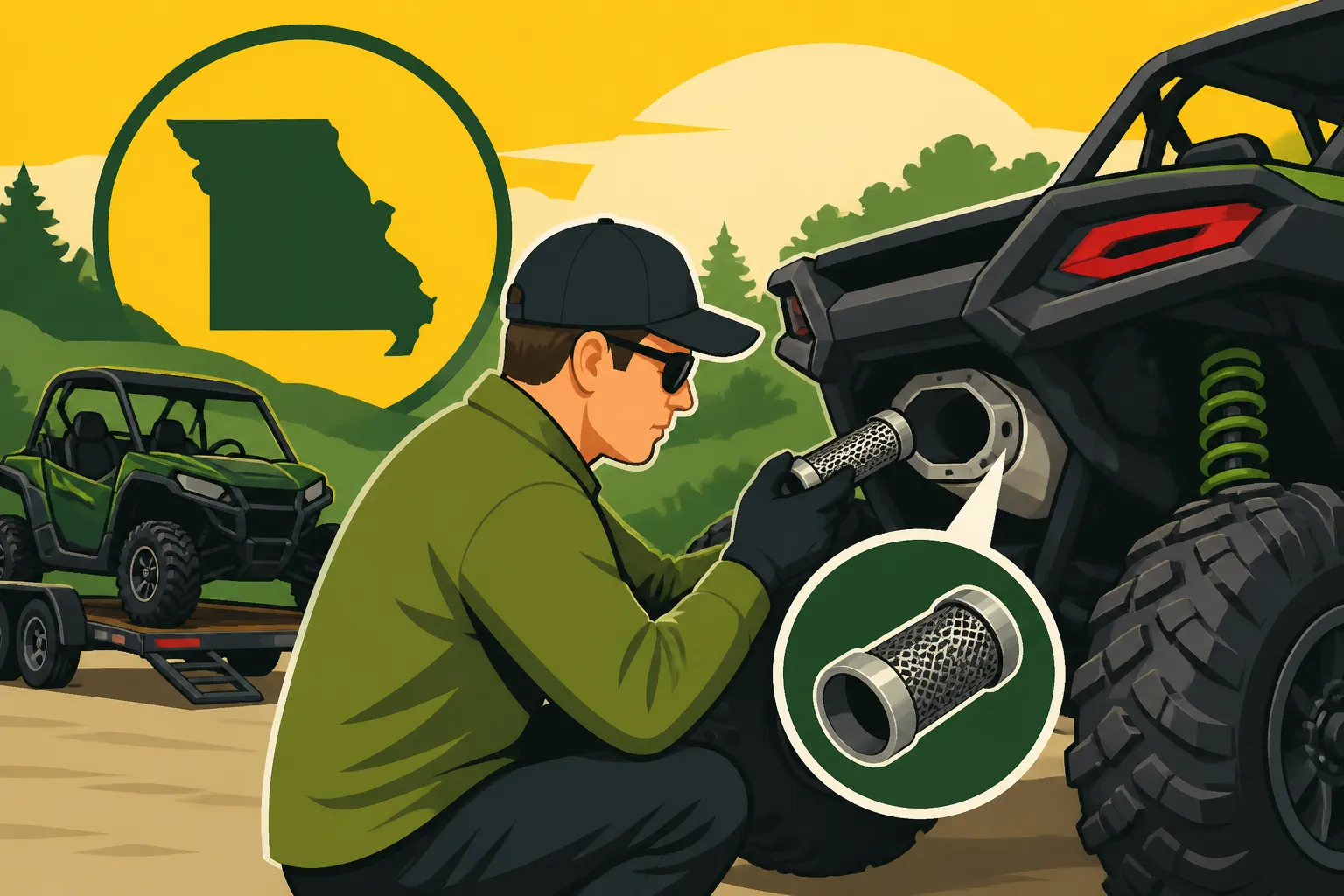
A spark arrester is a device in the exhaust system designed to trap or cool sparks before they can escape. On public land, that matters because a spark can start a fire, especially when vegetation and trail conditions are dry. A spark arrester is not simply a muffler: a muffler reduces noise, while an arrester addresses sparks. One component may serve both functions, but being quiet does not by itself show that a machine has an effective arrester.
At a staging lot, a ranger, staff member or other authorized official may look at the exhaust outlet and ask whether the machine has a spark arrester. The level of inspection can vary. A visual check may be all that happens, or staff may ask to see a label, model information or documentation. Do not assume that every lot uses the same procedure, or that a machine checked at one location is automatically acceptable at another.
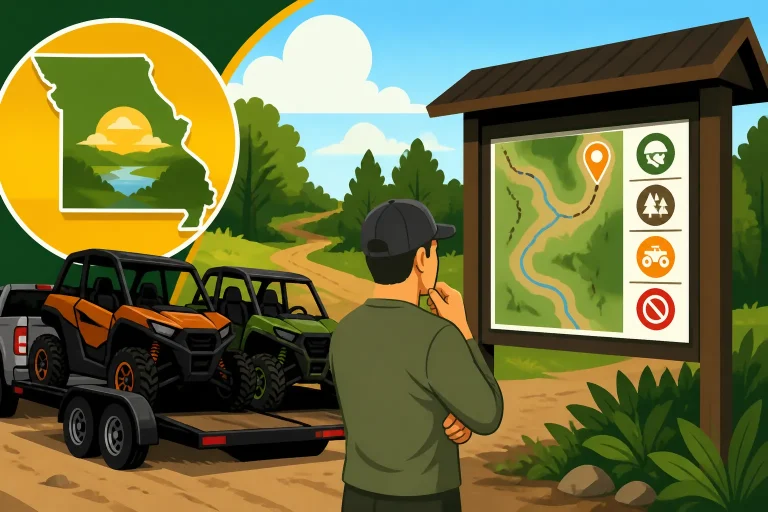
Rules also depend on where you ride. National forest land and state-managed riding areas can have their own requirements. Before traveling, check the current rules for the specific area and trail system. The overview in Spark Arresters on Missouri Public Land can help you understand why the requirement matters, while What Gets Checked at a Forest Trailhead covers other things you may be asked to show.
A practical check typically focuses on the following:
| Check | What to verify | Why it matters |
|---|---|---|
| Device type | The exhaust has a spark arrester, not just a muffler or decorative tip | Noise control and spark control are different functions |
| Fit | The device is intended for the machine and installed as directed | A loose or mismatched part may not work properly |
| Condition | The outlet and arrester are not damaged, clogged or altered | Physical damage or modifications can undermine the device |
| Evidence | Any required label, marking or documentation is available | An official may need a way to identify the device |
| Site rules | The machine meets the requirements for that riding area | Requirements and inspection practices can differ by site |
The check is about compliance, not whether an exhaust part appears substantial. A large muffler, a spark screen you added yourself or a seller’s claim that the machine is trail-ready may not settle the question. If your machine’s equipment is original, review the owner’s manual and parts information to confirm what was installed. If the exhaust has been replaced or modified, verify the replacement rather than relying on the machine’s original specification.
How to verify your machine before you leave
The easiest time to find a missing or questionable arrester is at home, not in a staging area with a trailer behind you. Give yourself enough time to identify the exhaust setup, check the part and contact the riding area if anything is unclear.
-
Identify the riding area and its current rules. Confirm whether you are going to a state park, national forest trail or another property, and check the requirements for that location. Do not rely on a rule you remember from a different park. For more on the broader permit system, see Missouri ORV Permits Explained and What the Mark Twain Forest ATV Permit Covers.
-
Find the exhaust information for your exact machine. Use the owner’s manual, manufacturer parts information or documentation for the installed exhaust. The model and year matter, as do modifications made since the machine left the factory. If you bought it used, do not assume the exhaust is original.
-
Inspect the outlet and surrounding parts. With the machine cool, look for an arrester or other documented spark-control device in the exhaust assembly. Check for obvious cracks, looseness, missing fasteners, heavy blockage or signs that the device has been removed. Avoid reaching into a hot exhaust or dismantling parts unless the manufacturer’s instructions call for it.
-
Look for identification or supporting paperwork. Some devices have a marking or label; others may be identified through a part number or product documentation. Keep relevant information accessible on your phone or in your ride paperwork. A photo can help you explain what is installed, but it may not replace an inspection or documentation that a particular site requires.
-
Ask the site if you cannot confirm compliance. Give staff the machine details and the exhaust or arrester part number, if available. Ask what evidence they accept and whether there are any additional site-specific requirements. A vague question such as “Does my ATV have the right exhaust?” may not be enough for staff to identify the setup.
If you need a replacement, match it to the exact make, model, year and exhaust configuration. A part listed for a similar-looking machine may not fit or meet the relevant requirements. You might find replacement components through a dealer, manufacturer or retailer such as Amazon, but verify the specification and compatibility before buying. A product listing or customer review is not a substitute for checking the manufacturer’s information and the riding area’s rules.
For a used machine, make the exhaust part of the pre-purchase inspection. Ask whether the exhaust has been changed and request any paperwork for aftermarket parts. If the seller cannot identify the device, treat it as an unresolved issue rather than assuming it will pass at the trailhead. Checking a Used Quad in Missouri offers a broader inspection checklist.
What can cause a problem at the staging lot
A staging area is not always a repair station. If an official cannot confirm that your machine meets the site’s requirements, you may have to resolve the issue before riding. Depending on the location and the circumstances, that could mean being told not to operate the machine there, returning with the proper equipment or following another instruction from staff. Do not assume you can ride first and fix the issue later.
Common problems include:
- No arrester is installed. The machine may have an ordinary muffler or an exhaust tip, but no confirmed spark-control device.
- The arrester was removed during an exhaust modification. A machine that once met the requirement may no longer do so after a replacement pipe or silencer was fitted.
- The part is damaged or loose. A device that is cracked, partly detached or visibly altered may not be accepted as functional.
- The device is clogged or poorly maintained. Carbon buildup or other debris can affect exhaust flow and performance. Follow the manufacturer’s maintenance directions rather than scraping or modifying the part in a way that changes its design.
- There is no way to identify the equipment. A rider may know a device is installed but have no marking, paperwork or reliable part information to support that claim.
- The rider has relied on another location’s decision. A prior check is useful background, but it does not guarantee approval under a different site’s rules or inspection process.
If an official raises a concern, stay calm and ask what specifically needs to be verified. You can show the part information or documentation you brought, but do not argue that the machine should pass because it passed somewhere else. Follow staff instructions and contact the relevant office if you need clarification. For other trailhead checks and ways to prepare, see Reading the Trailhead Board Before You Unload and Checking a Missouri Trail Notice Before You Load.
Do not try to defeat or bypass an inspection. Removing a component, concealing an altered exhaust or claiming that a muffler is an arrester when you cannot verify it may create a safety and compliance problem. If the device needs repair, use the appropriate part and installation method before returning to the riding area.
A simple pre-ride routine
A short routine can prevent a long drive from ending at the gate. Make the spark arrester one part of your overall equipment check, alongside permits, trail restrictions and required safety equipment.
Before loading, confirm the riding location and review its current rules. Check whether the machine’s width, type and permit are accepted there; a registration decal does not necessarily replace a trail permit. Does Your Decal Cover the Park Trail Permit? explains why those systems are not interchangeable.
Next, inspect the exhaust while the machine is cool. Confirm that the arrester is present, secured and in serviceable condition, and keep the manual or part details somewhere you can retrieve them. If the machine has an aftermarket exhaust, verify the specific component rather than assuming the original equipment information still applies.
Finally, check the trailhead information when you arrive. Conditions and closures can change, and staff may have local directions that are not obvious from the route you drove. Missouri Trail Conditions Before You Ride and Missouri Trail Closures to Check First can help with that broader planning. If there is doubt about your exhaust setup, call the site before unloading rather than treating the staging lot as the place to find out.
A properly maintained spark arrester is only one part of being ready to ride, but it is one that is easier to verify at home. Match the device to your machine, keep evidence of what is installed, and confirm the rules for the place you are visiting. That approach reduces avoidable delays and helps protect the land you came to enjoy.
Disclaimer
This article is for general informational purposes only and does not constitute professional advice. Laws, prices and regulations vary by location and change over time. Consult a qualified professional for guidance on your specific situation.