Missouri Rules for Riding a Sandbar
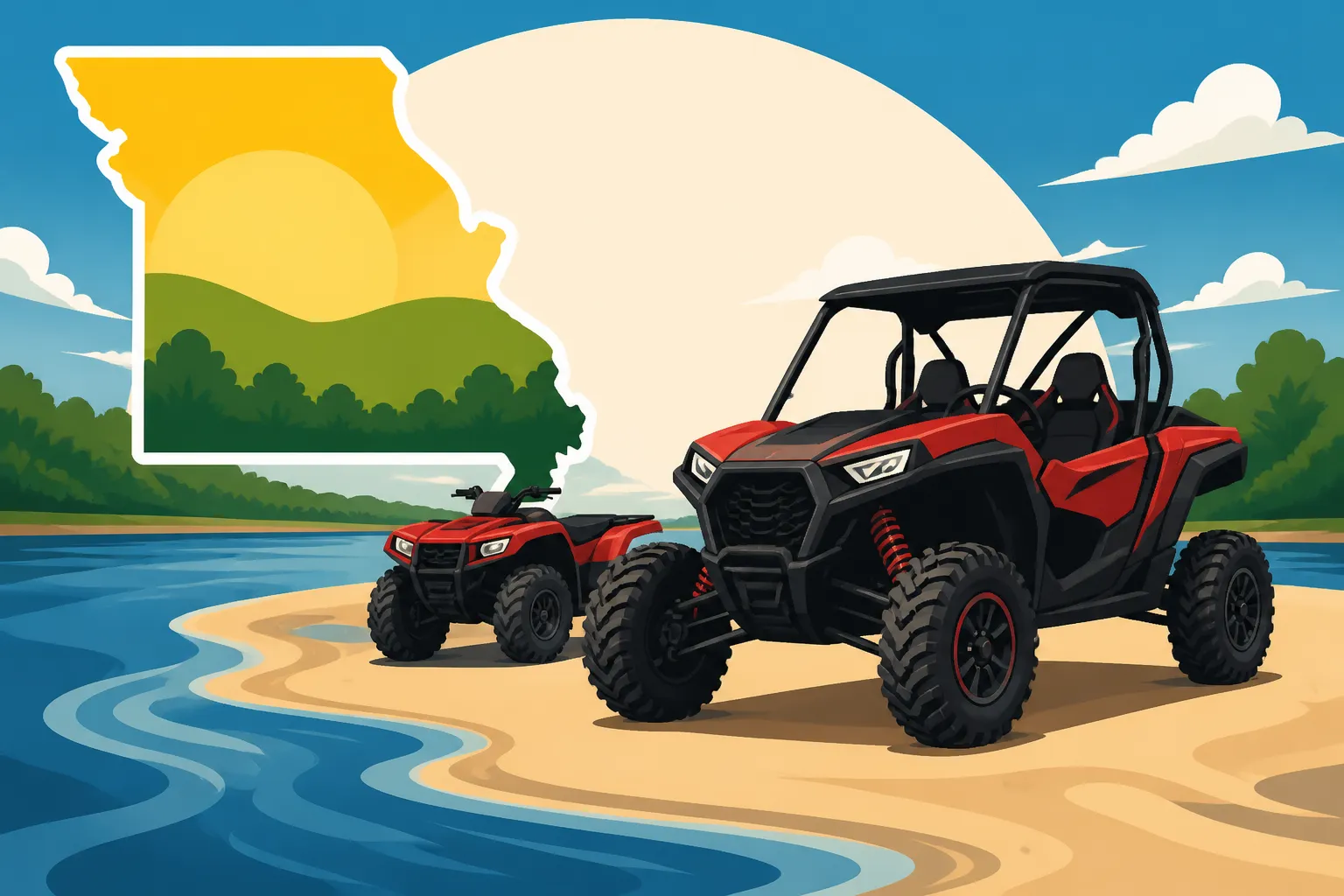
There's nothing quite like the draw of a wide-open sandbar next to a meandering Missouri river, especially when you're looking for a new place to explore on your ATV or UTV. That expansive, sandy landscape looks like an off-road paradise, a perfect spot to let loose and enjoy the power of your machine. However, what looks like an ideal riding spot can quickly become a legal headache, as the rules for riding on sandbars in Missouri are often misunderstood and frequently lead to fines and frustrations. This guide will clarify the realities of sandbar riding in the Show-Me State, helping you understand where you can and cannot go, and why.
The Lure and the Legal Landscape of Missouri Sandbars
For many off-road enthusiasts, the thought of conquering a vast, open sandbar with their ATV or UTV is incredibly appealing. It evokes a sense of freedom, adventure, and a unique riding experience distinct from wooded trails or muddy tracks. But this allure often masks a complex legal reality that can catch even seasoned riders off guard.
Why Sandbars Call to Riders
Imagine the feeling: the sun on your face, the roar of your engine, and an endless expanse of soft sand stretching before you. Sandbars offer a unique challenge and a different kind of thrill. They’re often seen as open canvases where you can push your machine's limits, test your handling skills, and enjoy unobstructed views of the river and surrounding landscape. Unlike tight trails, sandbars seem to promise miles of open terrain, perfect for spirited riding, testing out new accessories, or simply soaking in the natural beauty.
There's also a strong social component. Sandbars can feel like a natural gathering place, somewhere you can meet up with friends and family, set up a temporary camp, and enjoy the outdoors together. It feels more remote, more "wild," than a developed park. Many riders assume that because it’s a natural, undeveloped space, it’s automatically public access for any type of recreation, including off-roading. This perception often leads to an honest but mistaken belief that sandbars are fair game for ATVs and UTVs.
The Unspoken Truth: Most Sandbars Aren't Open
Here's where reality often diverges sharply from expectation. While a sandbar might look like public land, the truth is that most riverbeds and sandbars in Missouri are subject to specific ownership and jurisdiction, and rarely are they open for general ATV or UTV recreation. You might see tracks there already, or hear stories from friends, but those activities are almost certainly unauthorized. This isn't just a quirky rule; it's rooted in long-standing property laws, environmental concerns, and the way Missouri manages its natural resources.
Sandbars can fall under a variety of ownership categories. They might be part of private land that extends to the river's edge, managed by the state through the Missouri Department of Conservation (MDC) or Missouri State Parks, or overseen by federal agencies like the U.S. Army Corps of Engineers. Each of these entities has its own set of rules, and almost universally, riding ATVs and UTVs on undesignated sandbars is prohibited. The simple fact that a sandbar is "nature" or "undeveloped" does not automatically grant you permission to drive your off-road vehicle on it. It’s a common frustration, but it’s a crucial distinction to understand if you want to avoid serious trouble.
Understanding Jurisdiction and Permission
The key to legally enjoying any sandbar in Missouri on your ATV or UTV boils down to one critical factor: permission. Without explicit authorization from the rightful owner or managing agency, you are likely trespassing or violating environmental regulations, even if you had no ill intent.
Private Property: The Easiest (and Hardest) Path
If a sandbar is located on or adjacent to private land, your journey to legal riding starts and ends with the landowner. In Missouri, land ownership often extends to the middle of a non-navigable stream or to the ordinary high-water mark of a navigable one. This means that a seemingly "wild" sandbar might actually be someone's private property. The easiest path to ride here is to obtain permission directly from the landowner.
However, this can also be the hardest path. You need to identify who owns the land next to the river. This often involves looking up county property records, which isn't always straightforward, especially for remote riverfront parcels. Once you've found the owner, you need to approach them, explain your intentions, and secure their permission. Crucially, always strive for [Missouri Landowner Permission Rules] to be in writing. A verbal agreement can be easily misunderstood or disputed later, and a written note, even a simple email or text message, provides a layer of protection for both you and the landowner. Without it, you are subject to trespass laws, which can lead to fines, your machine being impounded, or even civil lawsuits. Respecting private property is paramount, and a friendly, respectful approach with a clear request for written permission is your best (and only) bet here.
State and Federal Lands: Strict Regulations
Beyond private ownership, many of Missouri's rivers and their sandbars are managed by various state and federal agencies. These lands come with their own distinct, and often very strict, regulations regarding off-road vehicle use.
-
Missouri Department of Conservation (MDC): The MDC manages a vast network of conservation areas across the state. While these areas are wonderful for hunting, fishing, hiking, and wildlife viewing, they are generally closed to off-road vehicle use unless explicitly designated otherwise. Sandbars and riverbeds within MDC properties are almost always off-limits to ATVs and UTVs. The MDC's mission is conservation and protection of natural resources, and unauthorized ORV use can cause significant damage to sensitive riparian habitats. Therefore, attempting to ride a sandbar in a conservation area without explicit, rare designation is a sure way to incur a fine. For more information, you might look into [Missouri Rules on Conservation Areas].
-
Missouri State Parks: Similar to MDC lands, Missouri State Parks are primarily managed for passive recreation and conservation. While some state parks, like the famous St. Joe State Park, have fantastic designated ORV riding areas that include extensive sand flats, riding on undesignated sandbars or riverbeds within other state park boundaries is prohibited. These parks have specific trail systems and rules, and venturing off them, especially onto environmentally sensitive sandbars, is not permitted. Even at parks like St. Joe, there are designated areas for sand riding, and you can't just ride any sandbar you come across. For insights into park regulations, consider [Missouri Rules for Riding a State Park Road] or [St. Joe State Park's Sand Flats in Missouri].
-
U.S. Army Corps of Engineers (USACE): Many of Missouri's major rivers, particularly the Missouri and Mississippi, have extensive stretches managed by the U.S. Army Corps of Engineers. The Corps oversees flood control, navigation, and recreation along these waterways. Their regulations regarding motorized vehicles on sandbars, levees, and riverbanks are typically very strict. Unauthorized ATV/UTV use is almost universally forbidden on Corps-managed lands due to concerns about erosion, environmental damage, and public safety. If you are considering riding near one of these major rivers, you must consult the specific district office for the Corps of Engineers to understand their rules. Ignorance of these rules is not a defense, and fines can be substantial. For a broader look at this topic, refer to [Missouri Rules on Corps of Engineers Land].
-
Mark Twain National Forest: Parts of Missouri are covered by the Mark Twain National Forest, a federal land designation. While the forest does offer some designated ORV trails, these are typically hardened trails through wooded areas, not open sandbars along rivers. Riding riverbeds, creeks, or undesignated sandbars within the National Forest is generally prohibited. The focus here is on protecting forest ecosystems and managing use to prevent erosion and habitat destruction. Information on designated areas and restrictions can be found by researching [Missouri's National Forest Riding].
"Navigable" Waters and Public Access: A Misconception for ATVs
A common source of confusion stems from the concept of "navigable waters" and public access. It's true that the public generally has a right to travel on navigable waterways—meaning you can boat, kayak, or canoe down the river. However, this right of passage on the water does not automatically extend to driving a motorized vehicle on the land features within or adjacent to those waters, such as sandbars, riverbanks, or beaches.
The right to navigate a river in a boat is distinct from the right to operate an off-road vehicle on the land features of that river. Sandbars are land, even if they're temporarily exposed by low water, and they are subject to land ownership and management rules. Just because you can float past a sandbar doesn't mean you can drive your quad onto it. This misunderstanding is a frequent cause of citations, as riders believe they are within their rights when, in fact, they are illegally operating their machines on sensitive and regulated terrain.
Practical Advice and Potential Consequences
Given the complexities of sandbar ownership and regulation in Missouri, it's clear that caution and thorough research are your best companions before heading out with your ATV or UTV. The desire for an open, sandy ride is understandable, but the risks of ignoring the rules far outweigh the perceived reward.
Doing Your Homework Before You Ride
Before you even load your machine onto the trailer, your first step should always be extensive research. Don't rely on hearsay or the assumption that "everyone does it." That's a surefire way to find yourself in trouble.
Start by identifying the specific sandbar or river stretch you're interested in. Then, reach out to the relevant local authorities. This might include the county sheriff's office, the nearest Missouri Department of Conservation agent, or the district office of the U.S. Army Corps of Engineers. They are the ultimate authorities on what is and isn't allowed in their jurisdiction. Be polite, explain your intentions, and ask directly about ATV/UTV access on sandbars in that specific area. Remember, rules can even vary from one section of a river to another, or even from one sandbar to the next, depending on who owns the adjacent land or manages that segment of the waterway.
Using online mapping tools can be incredibly helpful for identifying potential land ownership boundaries. While not always definitive, they can give you a strong indication of whether a sandbar is likely private, state, or federal land. Don't be afraid to cross-reference information and double-check. It's far better to spend an hour making phone calls and checking maps than to face a hefty fine and an impounded machine. Always make sure to check [Missouri Trail Closures to Check] as well, as weather events can impact access even to legal areas.
The Risks of Riding Illegally
The consequences of riding your ATV or UTV on a sandbar without proper authorization can be severe and long-lasting. This isn't just about a slap on the wrist; it can involve significant financial penalties, legal troubles, and even the loss of your beloved machine.
- Trespass: This is the most common and immediate risk. Whether it's private land, MDC property, or Corps of Engineers land, riding where you don't have permission is trespassing. Penalties for trespassing in Missouri can range from significant fines to, in some cases, even more severe legal action, especially if damage occurs. An officer can issue a citation, and your machine could be seized. This is why having [Missouri Landowner Permission Rules] in writing is so vital if you do find a private owner willing to let you ride.
- Environmental Damage: Sandbars and riverbeds are often delicate ecosystems. They serve as critical habitats for nesting birds, spawning fish, and other aquatic and terrestrial wildlife. They also play a crucial role in riverbank stabilization. The churning tires of ATVs and UTVs can destroy vegetation, disrupt nesting sites, compact soil, and contribute to erosion. This environmental damage isn't just ecologically harmful; it can lead to additional, often severe, penalties beyond simple trespass fines. Law enforcement agencies, particularly the MDC, take environmental protection very seriously.
- Machine Impoundment and Fines: If caught riding illegally, law enforcement has the authority to impound your ATV or UTV. Reclaiming your machine can be an expensive, time-consuming, and frustrating process, often involving towing fees, storage fees, and administrative charges on top of any fines. Fines themselves can be substantial, easily running into hundreds or even thousands of dollars depending on the specific violation and the jurisdiction. For more detail on financial repercussions, review [Missouri Fines for Illegal ATV Road Use].
- Loss of Future Access: Every instance of illegal off-road riding, particularly in sensitive areas like sandbars, contributes to a negative perception of the entire off-road community. This can lead to further restrictions, closures of existing legal riding areas, and a general tightening of regulations. When riders disregard rules, it often results in areas being closed permanently to all users, penalizing those who diligently follow the rules. It’s a collective responsibility to preserve access by riding responsibly and legally.
Designated Riding Areas and Alternatives
While the allure of "wild" sandbar riding is strong, the safest and most enjoyable way to ride your ATV or UTV on sandy terrain in Missouri is to stick to designated, legal off-road parks and trails. These locations are specifically designed and managed for ORV use, providing a safe and authorized environment for all types of riding, including sandy stretches.
Missouri is home to some fantastic ORV parks that offer diverse terrain, including areas with sand. [St. Joe State Park's Sand Flats in Missouri] in Park Hills is renowned for its vast sand flats, which are the result of lead mining tailings. It's a unique and popular destination where you can legally experience high-speed sand riding, hill climbs, and open areas without the worry of trespassing. Similarly, [Finger Lakes State Park in Missouri] near Columbia, a former strip mine, offers a wide variety of terrain, including some sandy areas and mud pits, ensuring there's something for every rider. These parks have designated trails, staging areas, and specific rules designed to keep riders safe and protect the environment.
Remember that while a brand like SuperATV offers fantastic upgrades like high-performance tires, lift kits, and winches, designed to conquer challenging terrain, these accessories are meant for use in approved riding areas. A heavy-duty SuperATV skid plate might protect your undercarriage, and SuperATV mud tires might give you superior traction, but they don't grant permission to ride where it's illegal. They simply enhance your experience within the bounds of the law.
Don't overlook other legal options for diverse riding experiences, either. While distinct from open sandbars, certain gravel bars that are explicitly within public access river crossings, or other designated river-bottom trails, might offer similar open-space riding, provided they are legal. Always check local rules; [Missouri Rules for Riding a Gravel Bar in Low Water] could offer some related guidance, but again, always verify current local regulations. For a comprehensive overview of legal spots, explore resources like [Best Places to Ride an ATV in Missouri]. By choosing designated parks and trails, you can ride with peace of mind, knowing you're contributing to the longevity of the sport and protecting Missouri's beautiful natural resources for everyone.
Here's a quick overview of sandbar access based on typical land management in Missouri:
| Land Type / Management | Typical Sandbar Access for ATVs/UTVs | Key Considerations |
|---|---|---|
| Private Property | Generally NOT allowed without explicit permission | Always get written permission from the landowner; ownership can extend to the riverbed. |
| MO Dept. of Conservation | Generally NOT allowed | MDC areas are usually closed to ORVs unless specifically designated; focus is on conservation. |
| MO State Parks | Generally NOT allowed | Designated ORV parks (like St. Joe) have specific sand areas; other park sandbars are off-limits. |
| U.S. Army Corps of Engineers | Generally NOT allowed | Strict regulations; always check local Corps office for specific rules on waterways they manage. |
| Mark Twain National Forest | Generally NOT allowed outside designated trails | National Forests have specific ORV rules and designated trails, but not usually open sandbars. |
Disclaimer
This article is for general informational purposes only and does not constitute professional advice. Laws, prices and regulations vary by location and change over time. Consult a qualified professional for guidance on your specific situation.