What a State Park Ranger Can Cite You For
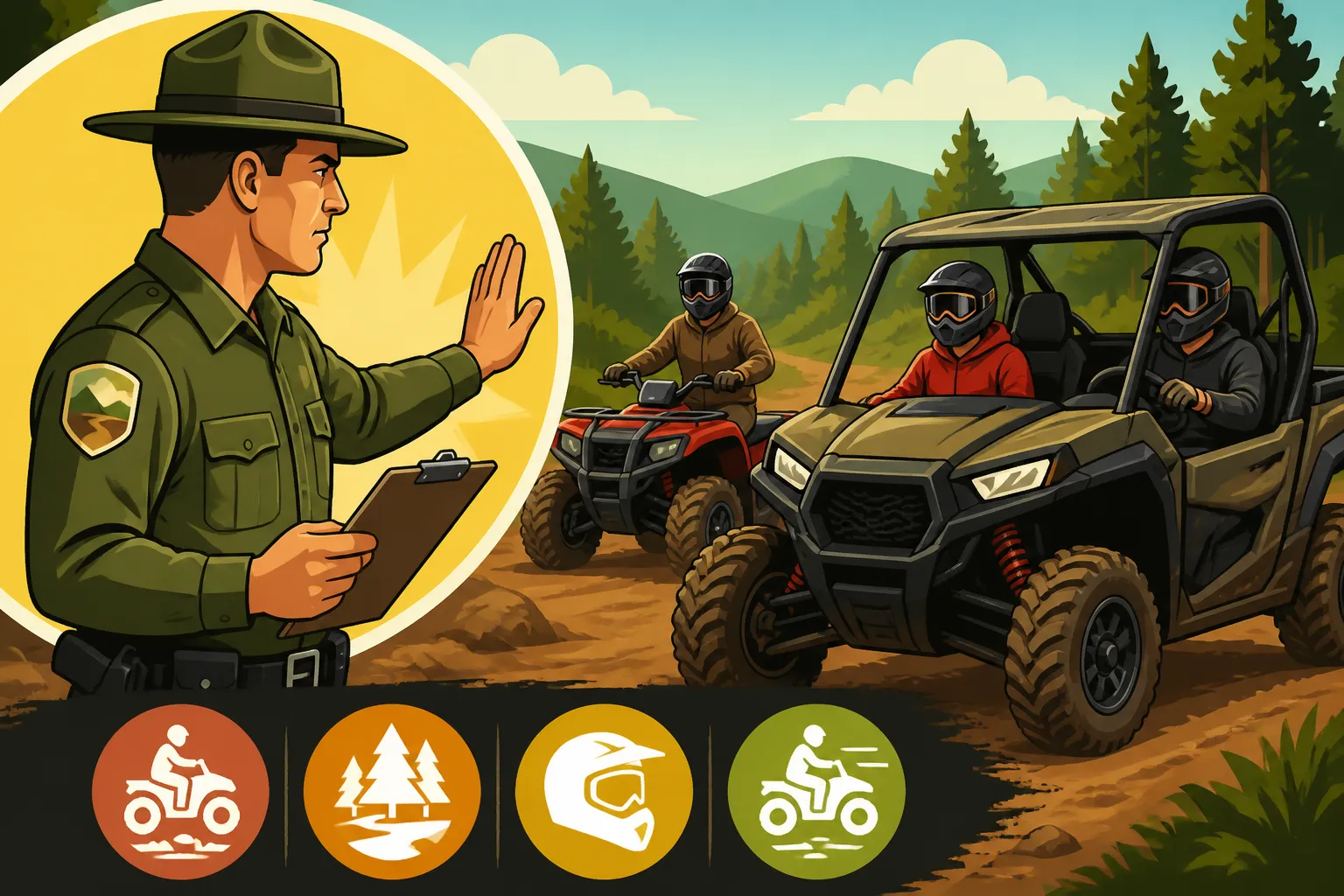
A ride can go wrong before you reach the trail: the permit may be missing, a required helmet or flag may be off, or a marked route may be closed. In a Missouri state park, a ranger can enforce park rules as well as applicable laws. Knowing the common reasons riders get cited helps you check your machine and your route before unloading.
Permit, equipment, and access violations
The first checks are often practical ones: does your machine have the required permit, does it meet the park’s equipment rules, and are you using an authorized riding area? Requirements can vary by location and may change, so read the current park information and trailhead signs before you ride.
A state park trail permit is not the same as a Missouri registration decal. The state registration system and a park’s off-road permit system serve different purposes. Having a decal does not automatically give you permission to ride on state park trails. Check Do You Need a Permit for Missouri State Park Trails? and Does Your Decal Cover the Park Trail Permit? before assuming one document covers both.
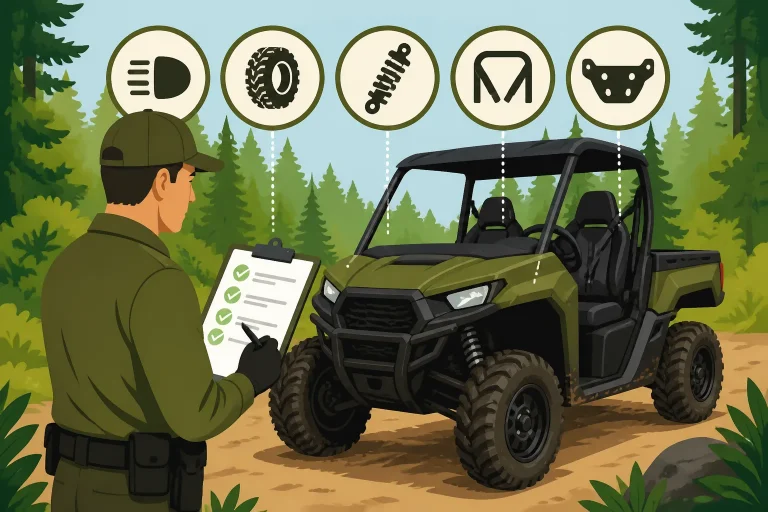
| What a ranger may check | Why it matters | What to do before riding |
|---|---|---|
| Park permit | Riding may require a separate permit for the machine or park | Confirm the current permit rules and how the permit must be displayed |
| Helmet | State park riding rules may require helmets | Wear a properly fitted helmet and check the park’s current requirements |
| Safety flag | The park may require a flag that meets its own specifications | Check the required mast and flag dimensions, not just highway rules |
| Sound level | A machine that is too loud may fail a park sound check | Keep the exhaust system in good condition and confirm the current limit |
| Spark arrester | Public-land rules may require an approved arrester | Check that the machine has the required equipment before arrival |
| Trail access | Riding may be limited to designated open routes | Read the trailhead board and follow closures and route markers |
Missing or improperly displayed permit
Riding without the required park permit, using a permit incorrectly, or failing to display it as directed can draw enforcement. A permit bought for one place or purpose may not apply elsewhere. State park access and Mark Twain National Forest riding, for example, have separate rules and permit systems. A permit for one is not automatically valid for the other.
Before you unload, confirm which machine the permit applies to, where it must be placed or shown, and whether it is valid for the riding area you plan to use. If you have a digital permit, follow the park’s instructions for presenting it. A phone with a dead battery or a permit that cannot be matched to the machine can turn a simple check into a delay. For forest rules, see What Gets Checked at a Forest Trailhead; don’t assume they are identical to park requirements.
Helmet, flag, sound, and spark-arrester issues
A missing helmet can be a reason for enforcement where park rules require one. Put it on before riding, not only when you see a ranger. If children are riding, review the park’s age and supervision requirements as well as helmet rules. Helmets at a Missouri State Park explains the park-specific expectations.
A park safety flag may have different requirements from a flag used on a public road. A mast that seems tall enough for road use might not meet the park’s specification. Check The Missouri Park Flag on a Flexible Mast and Why Park Flag Rules Differ From Highway Rules for the distinction. Keep the flag attached and visible while riding; don’t treat it as optional equipment once you leave the staging area.
Rangers may also check noise and required exhaust equipment. A modified exhaust, damaged muffler, or missing spark arrester can create a problem even if the machine runs well. Park sound limits are enforced at the riding area, not simply judged by whether the machine seems loud to its owner. Review Missouri Sound Limits on Public Land and Spark Arrester Checks at a Staging Lot before making changes to your machine.
Riding where and how you are allowed
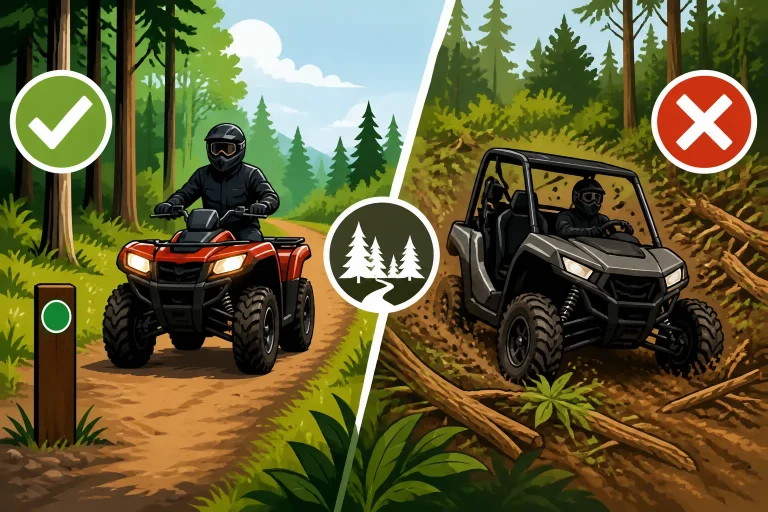
A valid permit does not give you permission to ride anywhere in a park. Use only designated routes and riding areas that are open to your type of machine. A ranger may stop or cite a rider for leaving a marked trail, entering a closed area, riding through a restricted zone, or ignoring a closure notice.
Leaving a designated trail or entering a closed area
Riding off route can damage vegetation, soil, waterways, and habitat. It can also put riders in areas that are unsafe or closed for maintenance. Stay on marked routes, and do not create a shortcut around mud, a blocked section, or a difficult obstacle. If a trail is closed, turn around and choose an open route rather than riding around a barrier.
Closures may be temporary, including after weather damage or maintenance. A route that was open on a previous visit may not be open today. Check Missouri Rules for Riding Off the Trail and Missouri Trails Closed After Rain, then read the notices at the entrance. The trailhead board is especially important when conditions have changed since you planned the trip.
Do not assume that a path is legal to ride just because it looks established or other tracks are visible. A route may be for park vehicles, emergency access, or another use. Follow posted signs and ask park staff if the route’s status is unclear.
Speed, staging areas, and other posted rules
Park rules may set lower speeds in staging areas, buffer zones, or other shared spaces than on the trail. Follow posted limits even when the area seems empty. These restrictions help protect people unloading machines, walking between vehicles, or preparing to ride.
Other conduct can also bring enforcement: ignoring signs, riding in a prohibited area, or failing to follow directions from park staff. A ranger may first give a warning in some circumstances, but you should not count on a warning. The type of response depends on the conduct, the applicable rule, and the situation.
Treat signs and barriers as enforceable instructions, not suggestions. If a ranger tells you to stop, move, or leave an area, comply calmly. If you believe a direction or citation is mistaken, ask for clarification without arguing on the trail; you can use the appropriate process later to dispute a citation.
Riders, passengers, and machine conduct
Some citations arise from who is riding and how the machine is being used, rather than from equipment or trail access. Park rules can address rider age, supervision, passengers, and safe operation. These requirements may differ from rules that apply on private property or public roads.
Age and supervision
Rules for young riders may depend on the park area and the rider’s age. A child’s ability to operate a machine safely does not by itself establish that the rider may use every trail. Some facilities have separate youth areas or limits for younger riders. Check Missouri Supervision Rules Under Sixteen and Why a 12-Year-Old Rides Only the Youth Area before bringing a young rider.
An adult should know where the child is riding, whether the machine is suitable, and what supervision the park requires. Do not assume a youth area is simply an optional practice track or that a young rider can follow an adult onto any route. Follow the facility’s signs and staff instructions.
Passengers and unsafe operation
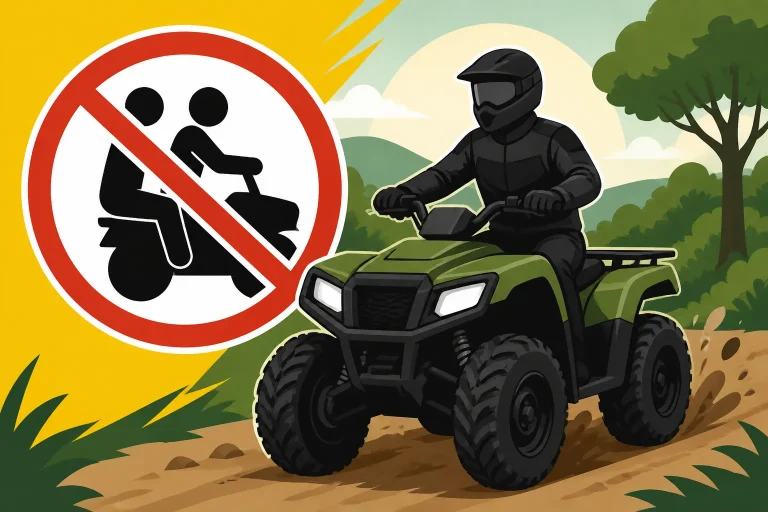
An ATV or quad may not be used to carry a passenger on park trails where passengers are barred. A second seat or a manufacturer’s passenger rating does not necessarily override a park rule. The rule can differ from the requirements that apply in other settings, so check the park’s instructions for the specific machine. See Why Passengers Are Barred on Park Trails and Missouri Rules for a Passenger in a UTV.
Unsafe operation can draw attention even when the machine has the right permit and equipment. Riding recklessly, disregarding posted restrictions, or creating a hazard for other visitors may result in enforcement. Keep a safe distance, slow down around people and at trail intersections, and yield where required. If an area is crowded or visibility is poor, reduce speed rather than assuming other visitors will move out of the way.
Passengers should never ride on a machine unless the park rules allow it and the machine is designed and equipped for that use. If you are unsure, ask park staff before starting the ride.
What to do if a ranger stops you
A stop does not always mean you will receive a citation. A ranger may be checking permits, asking about a route, or addressing a safety issue. Still, handle the interaction carefully and take the instruction seriously.
- Stop safely. Move to a safe place if directed, switch off the machine, and keep your hands visible.
- Listen to the concern. Ask which rule or condition the ranger is addressing if it is not clear.
- Provide the requested information. Have your permit and other relevant documents ready, and follow instructions about showing them.
- Correct an immediate safety issue if possible. If the problem is a loose flag or another fixable item, ask whether you may correct it before continuing.
- Do not ride away or argue on the trail. If you disagree, stay calm and ask how to challenge the citation or find the rule in writing.
- Keep the paperwork. Note the date, location, cited rule, and any instructions. Follow the response deadline or process stated on the citation.
A citation can have consequences beyond a conversation with a ranger. Depending on the rule and the circumstances, it may require a court response or lead to other penalties. The citation or official instructions should explain what to do next. Don’t ignore it, and don’t rely on a verbal explanation from another rider to determine your obligations.
Before the next trip, make a short pre-ride check: confirm the permit, helmet, flag, spark arrester, and machine condition; review the park’s current route map and closures; and make sure every rider understands age, supervision, passenger, and speed rules. A few minutes at the trailhead can prevent a citation and help keep the riding area open and safe for everyone.
Disclaimer
This article is for general informational purposes only and does not constitute professional advice. Laws, prices and regulations vary by location and change over time. Consult a qualified professional for guidance on your specific situation.