Missouri Rules for a Rider Aged 12
A 12-year-old may be ready to ride, but Missouri’s rules depend on where the machine will be used. State park trails, national forest routes, private land and public roads do not all follow the same requirements. The key is to check the rules for the specific riding area before unloading, then match the machine, supervision and permit to that location.
What Missouri’s Rules Mean for a Rider Aged 12
There is no single rule that gives every 12-year-old permission to ride every kind of off-highway vehicle across Missouri. A child’s age, the type of machine and the land manager all matter. A rule for a state park trail may not apply to a private riding area, and a permit does not automatically override age or supervision restrictions.
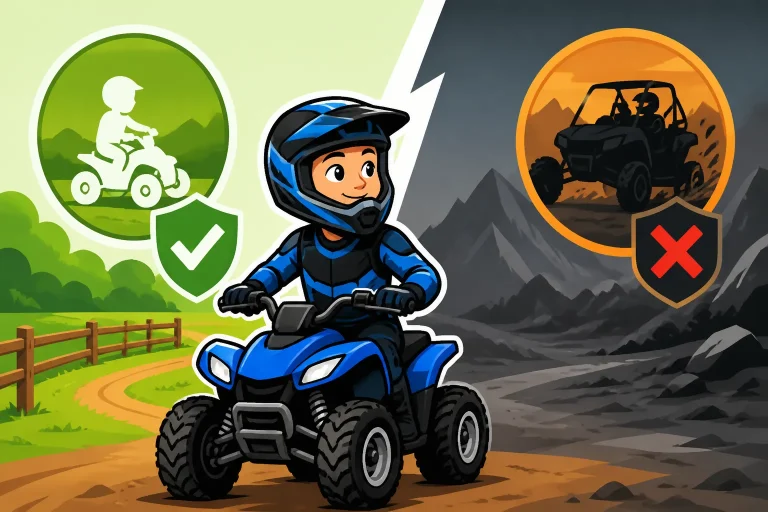
The most important distinction for many families is between a Missouri state park riding area and other riding locations. State park rules restrict riders aged 12 and under to the designated youth riding area. That means a 12-year-old should not assume they can join an adult on the general trail system, even if they have experience, can safely control the machine or are riding a smaller loop. Check Riders 12 and Under in the Youth Area and the riding-area information before planning a state park trip.
A 12-year-old is also under 16, so supervision rules may apply. Confirm who is allowed to supervise and what the area requires; do not assume that simply having an adult somewhere in the park is enough. The specifics are covered in Missouri Supervision Rules Under Sixteen. Follow any stricter instructions posted at the entrance or issued by park staff.
| Riding location | What a 12-year-old should check first | Practical takeaway |
|---|---|---|
| Missouri state park ORV area | Whether the youth area is open, youth-area limits, supervision, helmet and permit rules | Do not plan to ride the general trails unless the park’s current rules expressly allow it |
| National forest route | The district’s current route rules, allowed machine type, permit and age or supervision requirements | A state park’s youth-area rule does not answer what is allowed on a forest route |
| Private riding property | The landowner’s permission, site rules, supervision and machine restrictions | Permission to be on the property does not make every trail or machine appropriate for a child |
| Public road | Whether that road use is specifically allowed and whether the operator meets applicable requirements | An off-road permit or decal does not make a road legal for a 12-year-old |
Before you go, check the rules for both the land and the machine. An ATV, UTV and recreational off-highway vehicle may be treated differently under a site’s requirements. If the machine is a side-by-side, check its passenger and operator rules as well; the fact that it has seats and seat belts does not mean it can use every trail or youth area.
Rules Change With the Riding Location
Missouri state parks
State park riding areas have their own access conditions. For a 12-year-old, the youth-area restriction is the first question to settle. Ask whether the youth area is open on your planned day, whether the machine’s size or type is permitted there, and what supervision and safety equipment are required.
Do not treat a youth area as a general trail pass. A child may be allowed to ride in a designated area while remaining restricted from the park’s other ORV routes. The rule is about where the rider may go, not just whether a parent has agreed to accompany them. For a closer look at that distinction, see Why a 12-Year-Old Rides Only the Youth Area.
A state park riding permit is another separate requirement. A permit may cover access for an eligible machine and rider, but it does not cancel age, supervision, helmet or trail-use rules. Review Missouri ORV Permits Explained and the specific park’s posted rules before paying for access. If a permit is required, make sure you understand what it covers and whether it is tied to the machine, the rider or the visit.
National forests and other public land
National forest routes are not interchangeable with state park trails. The route may have restrictions based on vehicle type, width, season, trail condition or current closures. Age and supervision requirements can also depend on the rules that apply to that public land.
Start with the managing agency’s current information for the exact route or riding area. The general overview in [Missouri Rules for Riding a National Forest] can help identify the questions to ask, but a broad summary is not a substitute for a current route notice. Check whether the route is open to the child’s machine and whether any permit is required. A permit for one riding system does not necessarily work on another.
Conservation areas and other public properties may have different access rules again, including places where ATV riding is not allowed. Do not assume that public land is open to off-highway vehicles simply because there is an access road or a trail on a map. Confirm that the specific route is designated for the machine you plan to bring.
Private property
On private land, get permission from the owner or manager and ask which areas a child may use. Private permission is not the same as unrestricted access: the owner may set boundaries, restrict riding to certain trails or require an adult to remain nearby. A lease, hunting arrangement or invitation to visit does not necessarily include permission to ride. See [Missouri Rules for Riding Private Property] and [Missouri Landowner Permission Requirements].
Private property can be a useful place for a new rider to practice, but it still needs a safe setup. Choose a controlled area without vehicle traffic, steep drop-offs, blind crossings or hazards that are hard to see in grass or brush. Keep the child within the agreed riding area, and set a clear rule for stopping and getting help.
Public roads
A park or trail permit is not permission to ride on a public road. Missouri road-use rules depend on the vehicle, the type of road and the applicable exception or permit. Those conditions should not be confused with permission to ride off-road.
For a 12-year-old, do not plan a road ride based on an adult’s permit, an ATV decal or the fact that a road is quiet. Check the law and the local road rules for the exact situation. If the trip requires a road connection, identify a legal way to transport the machine or reach the trailhead without having the child operate it on a road.
Prepare the Child, Machine and Trip
A good plan starts by confirming eligibility before you load the trailer. Use this checklist for each riding location:
- Identify the land manager. Determine whether the destination is a state park, national forest, private property or another public area. Use the rules issued for that land, not a rule remembered from a different trail system.
- Ask where a 12-year-old may ride. At a Missouri state park ORV area, check the youth-area restriction and whether the area is open. For other locations, ask directly about the child’s age and the permitted riding area.
- Confirm supervision requirements. Find out who must accompany the child, whether the adult must ride along or remain within a specified area, and whether any additional conditions apply.
- Check the machine. Confirm that the vehicle type and dimensions are permitted on the route or in the youth area. A machine that fits the child physically may still be too wide or otherwise ineligible for a particular trail.
- Check permits and access. Find out whether the site requires a permit, what it covers and whether separate access rules apply. Do not assume a registration decal substitutes for a riding-area permit.
- Review safety equipment. Check the site’s helmet and protective-equipment rules, along with any machine-specific requirements. Missouri’s helmet rules can depend on the rider’s age and circumstances; see Missouri Helmet Law for Riders Under 18 and confirm the requirements for the location.
- Check for closures and conditions. Recent rain, trail work, seasonal restrictions or a temporary closure can change where riding is allowed. Verify conditions close to the trip.
- Set limits before riding. Agree on the route, speed, stopping points and what the child should do if separated from the adult. Explain that trail signs and boundaries are not optional.
The machine should fit the rider’s current size and ability, not merely their age. A child should be able to reach and operate the controls, maintain a stable riding position and stop the machine reliably. If the child struggles with any of those tasks, choose a smaller machine or a safer practice setting. A parent’s supervision cannot make an oversized or difficult-to-control vehicle a good fit.
Protective gear matters even when a site’s minimum rule is narrow. A properly fitting helmet, eye protection, gloves, sturdy clothing and over-the-ankle footwear help reduce exposure to common riding hazards. Check that the helmet fits securely and is in sound condition. Do not rely on a quick fit borrowed from an adult if it shifts, blocks the child’s view or leaves the chin strap loose.
Keep the first ride manageable. A short session on familiar, uncomplicated ground gives a child time to practice starting, stopping, turning and judging terrain without pressure to keep up with faster riders. Avoid putting a new rider into a group ride where the pace, dust or close spacing makes it harder to focus. Teaching a Young Rider in Missouri offers additional points to consider when building those skills.
Common Mistakes to Avoid
A frequent mistake is treating a child’s experience as an exception to the rule. A 12-year-old who has ridden for years is still subject to the age-based restrictions that apply at the destination. Ask the land manager rather than relying on a friend’s recollection or an old trip plan.
Another mistake is assuming a parent can bring a child onto any trail by riding beside them. Supervision and access are separate questions. An adult may satisfy a supervision requirement without changing which areas a 12-year-old is allowed to use. At a state park, confirm the youth-area rule before choosing a route.
It is also easy to confuse vehicle registration with trail access. A decal or registration document may serve one purpose, while a park or forest permit serves another. Neither one guarantees that the machine can use a particular trail or that a child may ride there. Check the relevant requirements separately.
Finally, do not assume one public land manager’s rules apply across Missouri. If you plan to visit more than one riding area, make a separate check for each stop. Confirm the current rules directly with the park, forest district or property manager, especially when the trip depends on a youth area being open or on a particular machine being accepted.
Disclaimer
This article is for general informational purposes only and does not constitute professional advice. Laws, prices and regulations vary by location and change over time. Consult a qualified professional for guidance on your specific situation.